



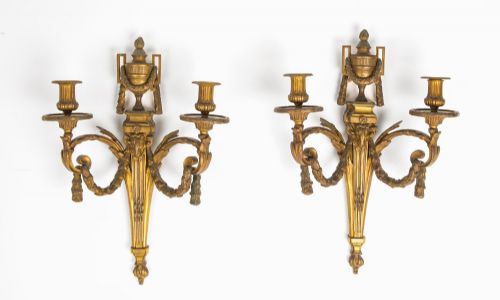
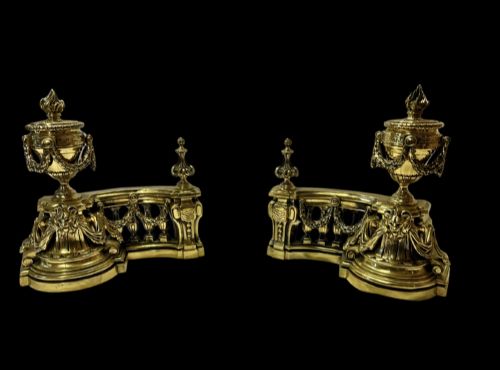


Neoclassical Brass Urn
A neoclassical brass urn brings balanced proportion and classical ornament into a room through enduring metallic craft.
Neoclassical Brass Urn
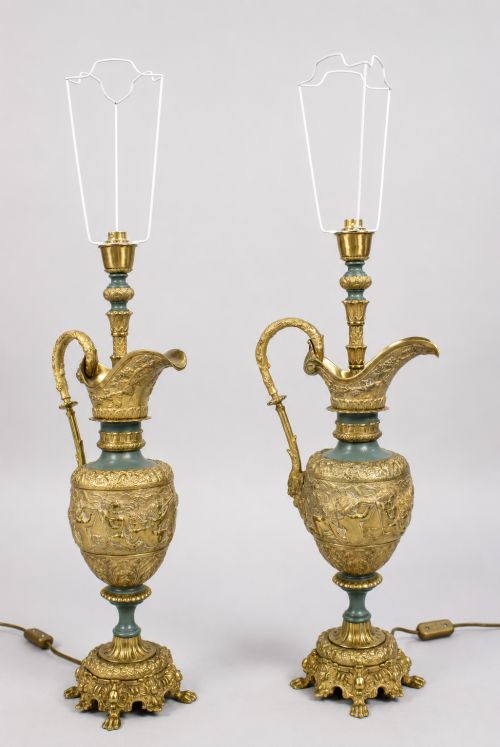
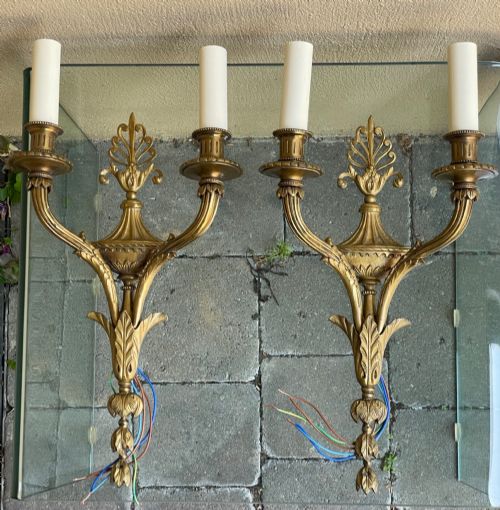
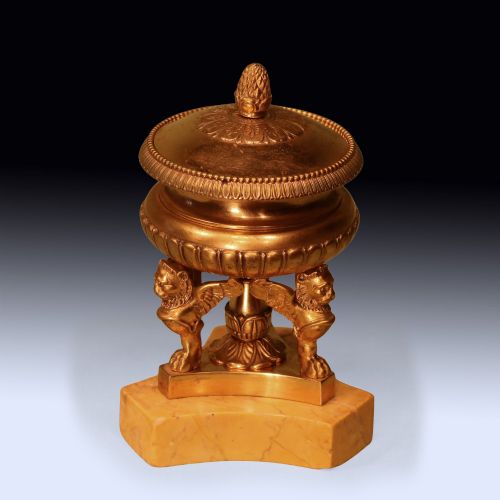
A neoclassical brass urn draws upon ancient Greek and Roman vessel shapes, often repurposed as decorative mantel ornaments, clock garnitures, or converted lighting fixtures. The examples found here span from the nineteenth century into the early twentieth century, reflecting enduring revivals of classical design.
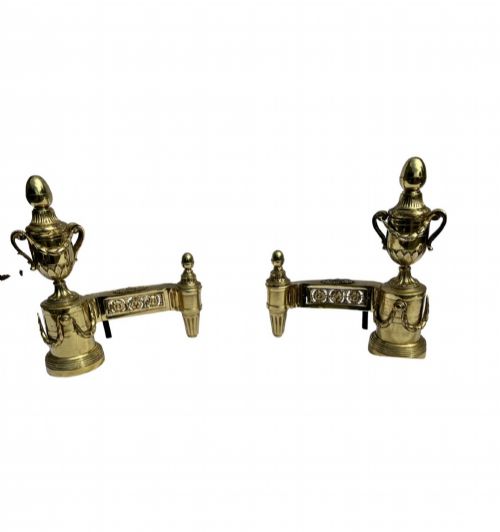
Many pieces emerge in French variations aligned with the Louis XVI style or its later revivals, frequently incorporating gilt bronze, ormolu, and contrasting marble elements. Alongside decorative vases and cassolettes, buyers encounter practical hearth furniture and lighting adapted from earlier vessel designs.
Materials and construction
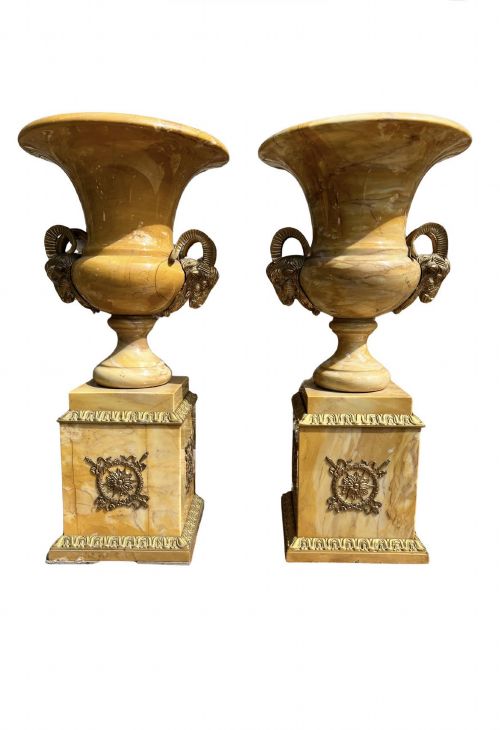
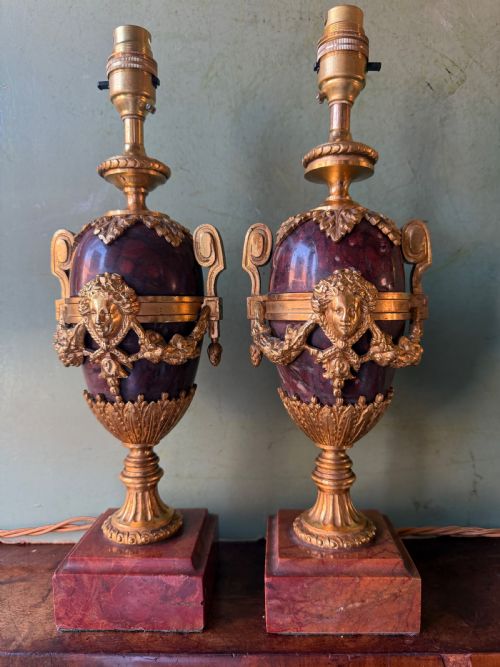
Makers utilised brass, gilt metal, and ormolu alongside natural stones like Sienna marble, rouge marble, and onyx to build weight and visual contrast. Metal mounts, cast handles, and classical mask details were secured to stone plinths and bodies using traditional mechanical fasteners.
Surface finishes combined polished metalwork with fire-gilding or applied patination, while stone sections were turned on lathes and polished by hand to achieve smooth contours. Many electrical conversions integrate modern internal wiring while preserving the original nineteenth-century metal and stone housing.
Listings feature items spanning the 1870s through the 1930s, combining brass, Sienna marble, and gilt bronze within neoclassical and Louis XVI revival styles.
The markers of distinction
Superior examples display crisp chasing in the metalwork, where ram heads, acanthus leaves, and classical masks retain sharp relief and defined edges rather than softened details. The integration between stone bases and cast metal mounts reveals the maker's precision, with flush joints and balanced proportions.
Weight and material density signal grade, as genuine marble or heavy cast ormolu mounts provide structural stability absent in lighter alloy alternatives. The subtlety of the gilding and the harmony between the urn body and its footing separate standard production pieces from finer studio work.
Edwards and Roberts·Sacre
The Neoclassical Brass Urn Glossary
- Ormolu
- A technique of applying finely ground high-carat gold to a bronze or brass base using mercury, creating a durable metallic finish. This process was widely adopted by French makers during the eighteenth and nineteenth centuries.
- Cassolette
- A decorative vessel featuring a reversible lid that functions either as an urn or as a burner for scented powders. These pieces often incorporate marble bodies secured with gilt metal mounts.
- Campana urn
- A bell-shaped classical vessel derived from ancient garden pottery, featuring flared rims and mounted handles. They frequently appear in bronze or brass on square plinths.
- Garniture
- A set of three or more matching ornamental objects, typically comprising a central clock flanked by matching urns or candelabras. They were designed to sit symmetrically upon a mantelpiece.
Neoclassical Brass Urn: Frequently Asked Questions
How do I clean a brass urn?
Dust gently with a soft dry cloth to prevent the accumulation of grit within chased decorative recesses. Avoid aggressive chemical polishes that can strip thin gilt layers or damage adjoining marble surfaces.
Test any cleaning method on an unseen underside before treating visible areas. Preserving the natural aged patina maintains the character expected in nineteenth-century decorative metalwork.
Are these urns wired for electricity?
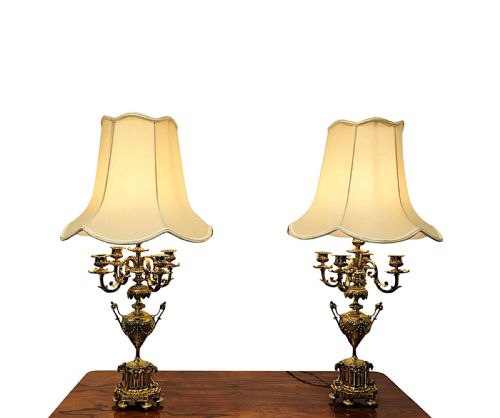
Many items appearing on this page originated as decorative vessels, mantel clocks, or oil lamps before being converted into modern table lamps. These adaptations preserve the antique metal and stone body while integrating standard electrical fittings.
Buyers should have older conversions inspected by a qualified electrician to ensure compliance with current safety standards. The original vessel form is typically maintained above the lamp holder.
How do I date an antique urn?
Dating relies upon stylistic markers, casting techniques, and the type of stone used in the base or body. Nineteenth-century pieces frequently reference Louis XVI revival styles, showing specific casting seams and mounting methods.
Comparing the proportion of the handles, the depth of the metal chasing, and the assembly screws provides further clues to the decade of manufacture. Hallmarks or maker stamps, when present, offer definitive production records.
Where should I display an urn?
These pieces suit mantelpieces, sideboards, or console tables where their vertical proportion and reflective metal surfaces catch ambient light. Placing them away from direct moisture protects exposed marble and prevents corrosion on the brass.
Pairing a central urn with matching garnitures or table lamps creates symmetrical balance within a room. Ensure the supporting surface is stable enough to bear the weight of combined stone and metal structures.