


Vintage Brass Footed Bowl
A vintage brass footed bowl brings warmth and sculptural weight to a room, holding everything from fruit to cut stems.
Vintage Brass Footed Bowl
When you search for a vintage brass footed bowl, you encounter a varied selection of raised vessels designed for display and utility. The examples gathered here span several distinct periods, including the nineteenth century and the early twentieth century, alongside specific items bearing nineteenth-century dates.
The forms range from pierced jardinieres and decorative goblets to grand urns, comports, and tazzas. Stylistic influences cross borders, featuring Traditional, French Empire, Gothic Revival, Grand Regency, Grand Tour, Neoclassical Revival, and Qing Dynasty aesthetics.
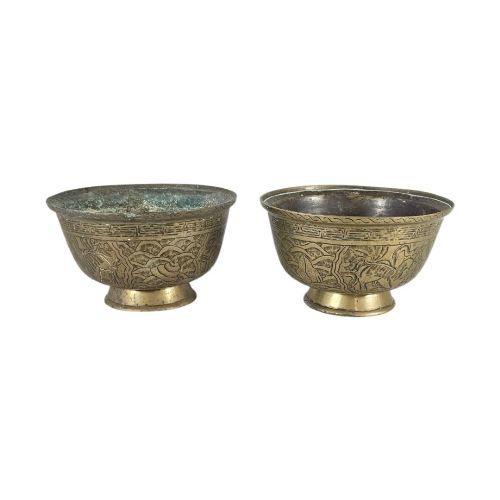
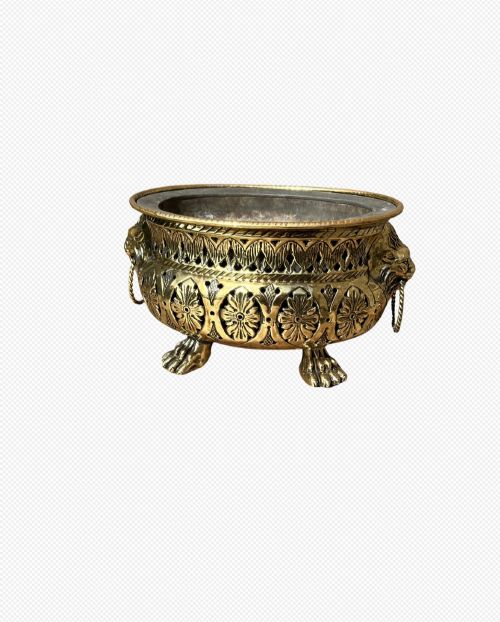
You are most likely to meet nineteenth-century brass jardinieres and decorative bowls mounted on pedestals or feet. These pieces often incorporate animal masks, repoussé work, or contrasting stones like alabaster and hardstone.
How they were made
The construction of these vessels relies on cast and beaten metalwork, utilising brass, bronze, and occasionally other metals. Artisans shaped the bowls through hammering and repoussé techniques to create raised surface decoration and animal head motifs.
Many examples incorporate mixed media, mounting brass frames upon carved alabaster bases or setting hardstone panels into the metalwork. Piercing and openwork casting appear on jardiniere bodies, requiring precise hand-working of the metal.
Listings feature periods spanning the eighteenth century through to nineteen-twenty, incorporating brass, bronze, alabaster, and hardstone.
What varies in quality
Quality in these vessels rests upon the crispness of the casting and the depth of the hand-applied repoussé work. Finer examples display sharply defined details in animal masks, botanical motifs, and architectural elements rather than soft or blurred edges.
The integration of secondary materials dictates the standard of the piece, particularly where brass meets carved alabaster or inset hardstone. Superior items show secure mounting, balanced proportions, and careful finishing to the interior and exterior surfaces.
The Vintage Brass Footed Bowl Glossary
- Repoussé
- A metalworking technique where the artisan hammers the metal from the reverse side to form a raised design on the front. This method creates tactile, three-dimensional patterns across the bowl or planter body.
- Jardiniere
- A large ornamental pot or stand designed to hold growing plants or cut flowers. In metalwork, these vessels frequently feature footed bases and decorative handles.
- Comport
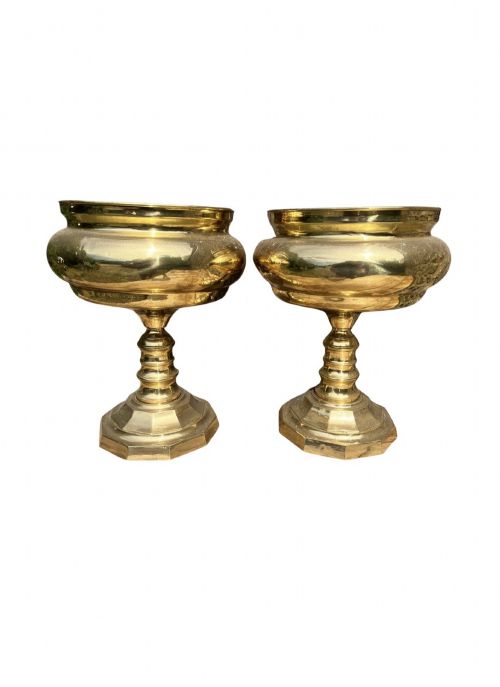
- A decorative dish raised on a stem and foot, traditionally used for serving fruit or sweetmeats at table. Nineteenth-century versions often serve purely display purposes.
- Pietra dura
- An artistic technique of inlaying cut and fitted polished coloured stones to create pictures or geometric designs. In these listings, it appears mounted onto brass and alabaster.
- Gothic Revival
- An architectural and decorative style drawing inspiration from medieval forms, featuring pointed arches and heraldic motifs. Brass pieces in this taste often display fierce mask handles.
Vintage Brass Footed Bowl: Frequently Asked Questions
How were footed brass bowls used historically?
These elevated vessels served primarily as decorative centerpieces on dining tables, sideboards, and pedestals in grand interiors. They held fruit, flowers, or potpourri, adding both scent and visual weight to a room.
Larger versions like jardinieres stood directly on furniture or floors to display potted palms and ferns. Their raised feet protected fine wooden surfaces from moisture and heat.
How do I style a vintage brass bowl at home?
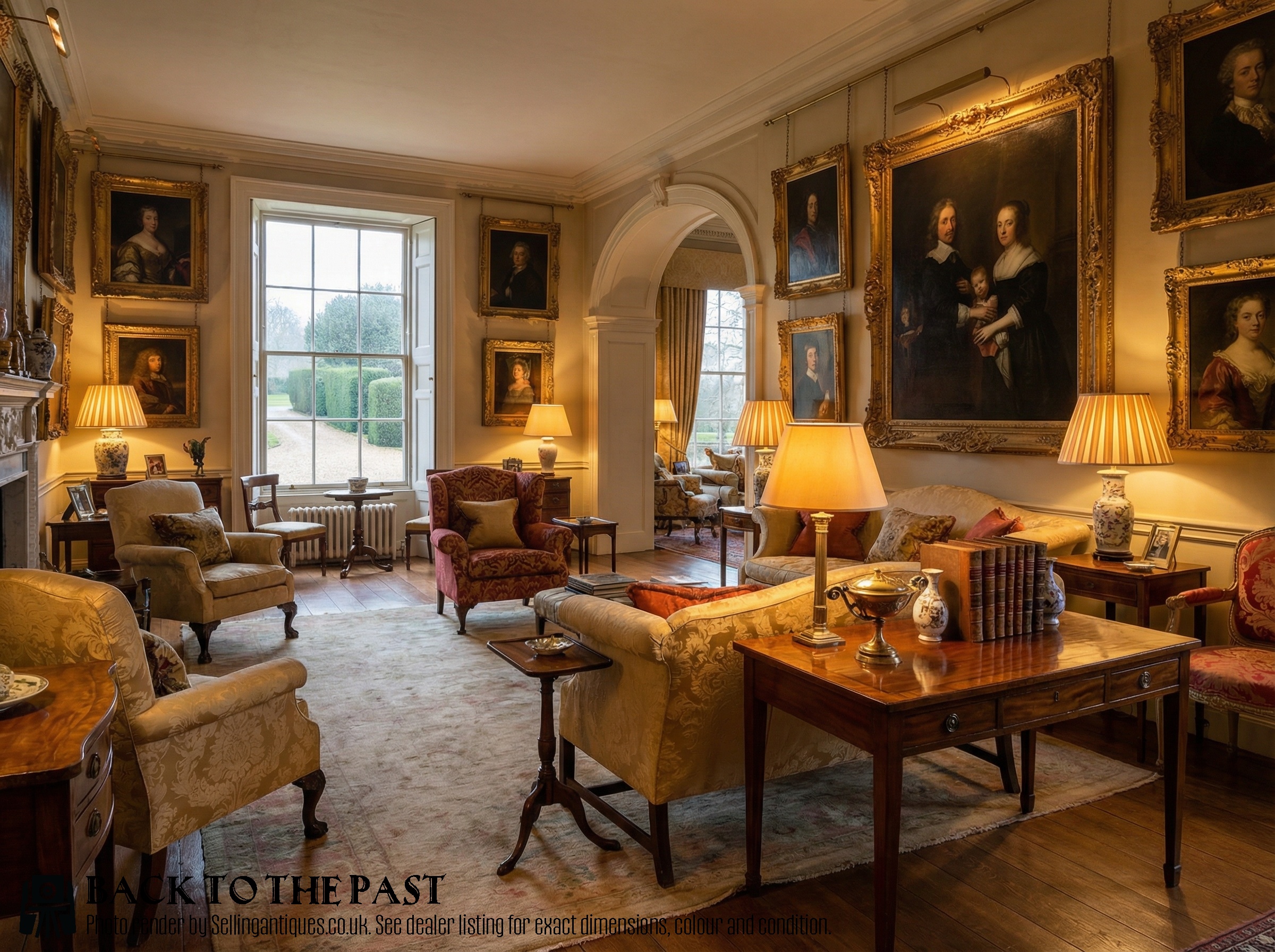
Place a footed bowl where natural light can catch the warm metallic surface, such as on a wooden coffee table or an entrance hall console. Leave it empty to appreciate the form and repoussé detail, or fill it simply with seasonal fruit or smooth stones.
Pairing brass with natural textures like timber, marble, or woven fabrics helps ground the piece in a modern interior. Mixing nineteenth-century vessels with simpler contemporary objects creates a balanced display.
How can I tell the period of a brass bowl?
Dating relies on stylistic clues, manufacturing marks, and the combination of materials used in the construction. Nineteenth-century pieces frequently show Gothic Revival, French Empire, or Neoclassical Revival details alongside hand-beaten repoussé textures.
Examining the underside and interior reveals tool marks and casting methods consistent with older workshops. Stylistic cross-currents, such as nineteenth-century interpretations of Qing Dynasty bronzes, provide further chronological context.