

Neoclassical Brass Lighting
Neoclassical brass lighting brings disciplined proportion and classical ornament to interiors through cast metal, crystal, and fabric.
Neoclassical Brass Lighting
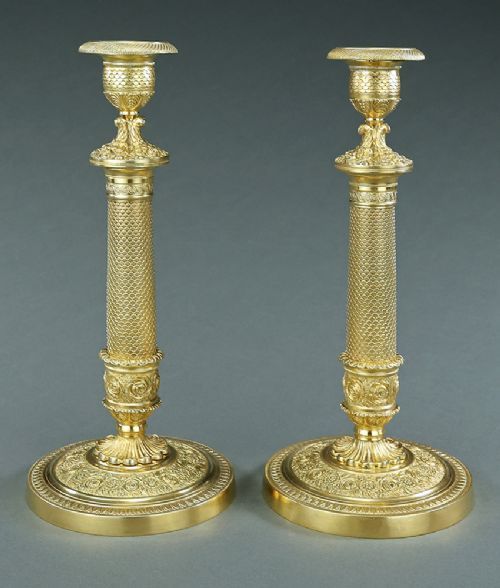
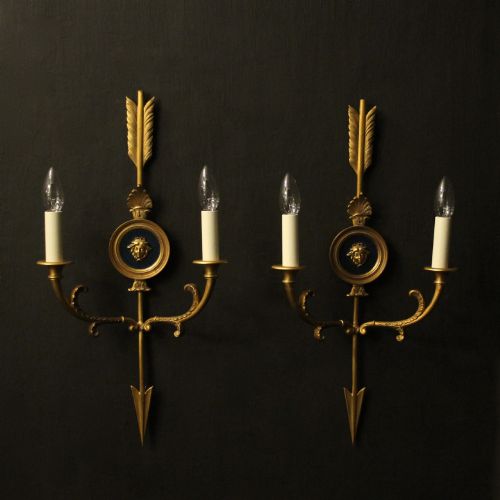
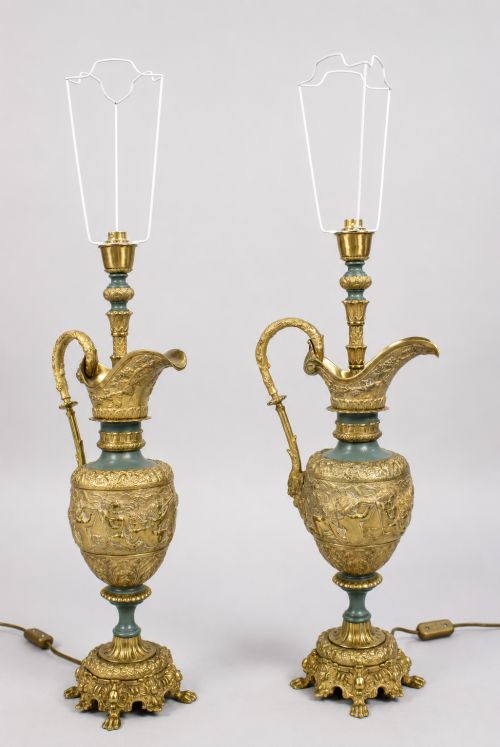
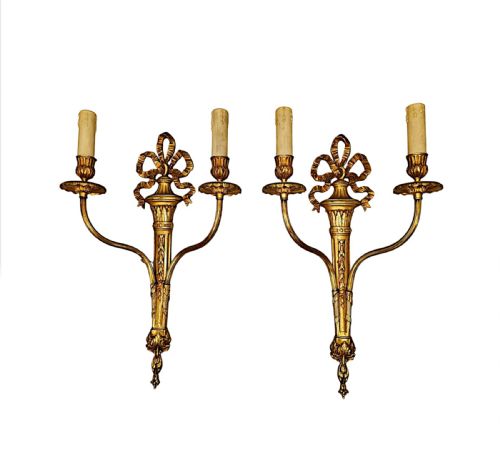
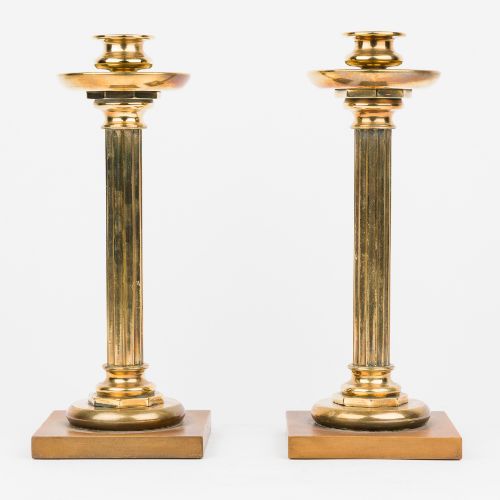
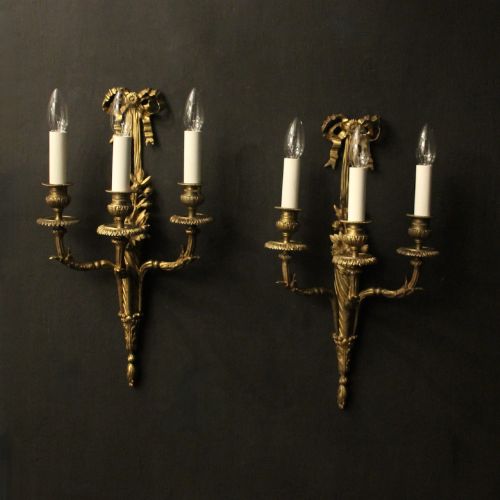
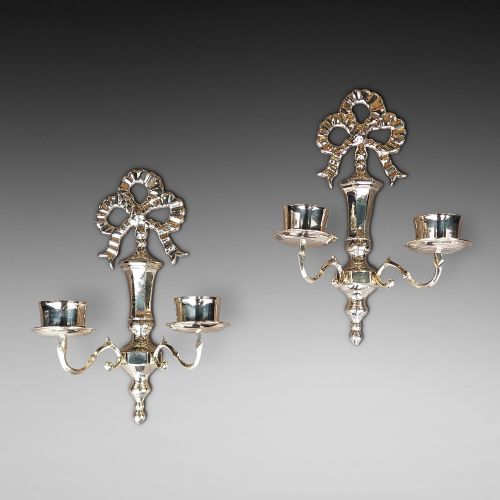
Neoclassical brass lighting encompasses table lamps, wall sconces, chandeliers, candlesticks, and floor lamps spanning the eighteenth, nineteenth, and early twentieth centuries. These objects reflect revivalist movements and classical design canons, drawing on French and English domestic traditions.
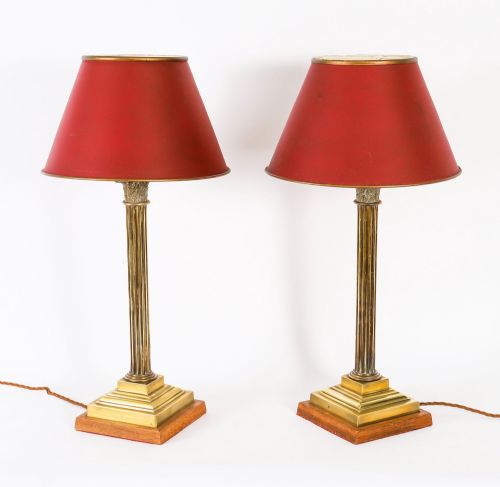
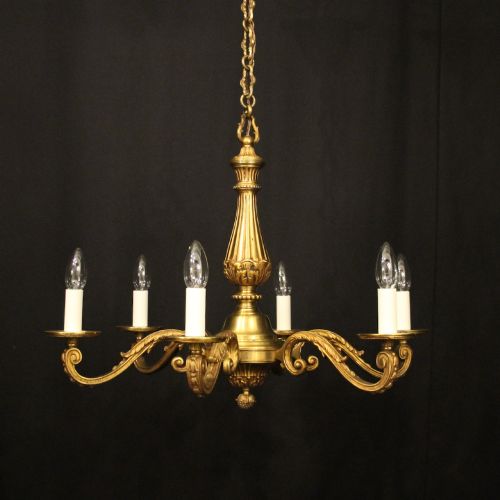
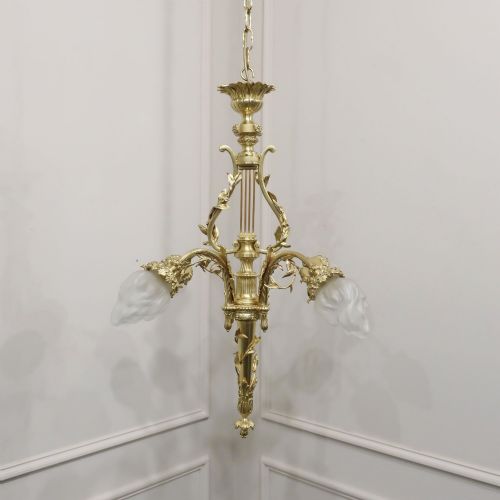
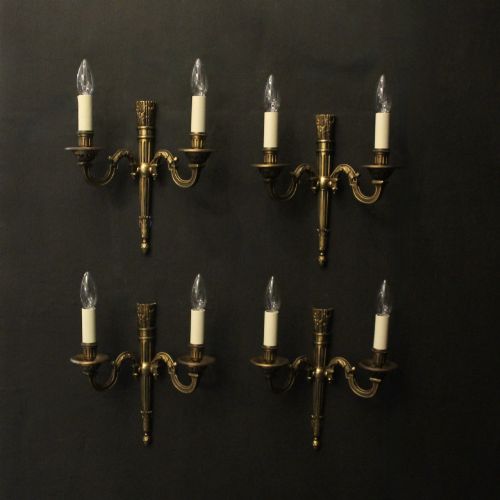
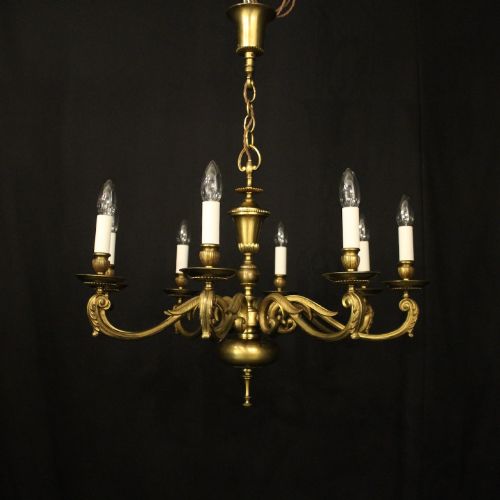
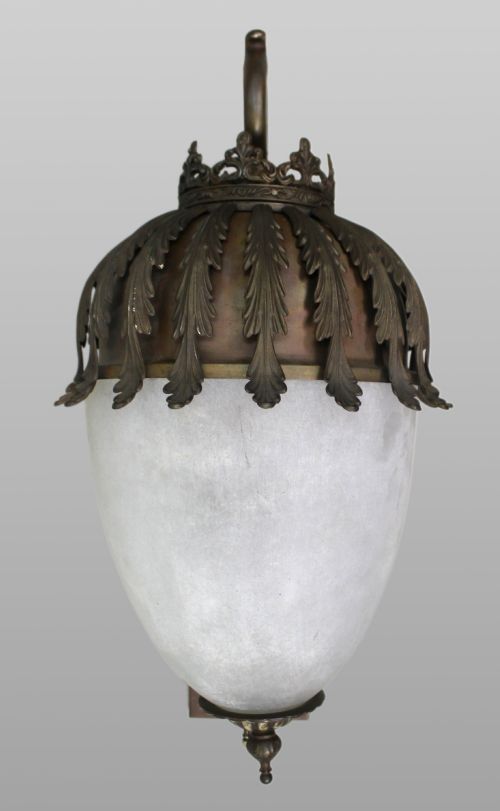
Buyers frequently encounter Corinthian column table lamps, multi-armed wall lights, and ornate gilded brass chandeliers. Examples emerge from Georgian, Victorian, Edwardian, and mid-century periods, often adopting Louis XVI and Empire vocabularies.
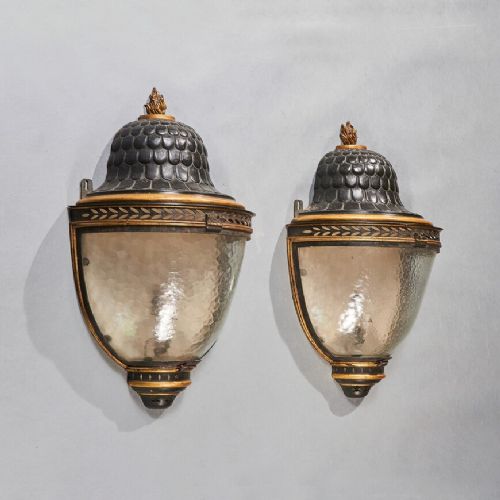
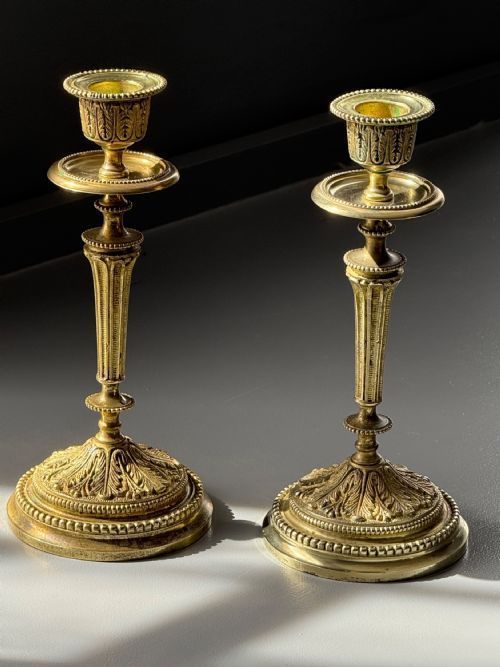
Work spans matched pairs and individual fixtures designed for interior illumination. Forms range from heavy standard lamps to wall lanterns and candelabra converted for electrical use.
Materials and technique
Construction relies primarily on cast brass, ormolu, and gilt bronze, occasionally combined with marble bases and fabric shades. Artisans employed metal-casting and chasing techniques to render crisp acanthus leaves, fluted columns, and classical motifs.
Gilding methods include mercury gilding on bronze and applied brass lacquers, producing distinct surface sheens. Secondary materials such as glass prisms and tole peinte complement the primary metal structures.
Several heavy standard lamps include adjustable height mechanisms designed to ensure adequate illumination for late-night Victorian reading sessions.
Execution and finish
Quality rests upon the crispness of the metal chasing and the depth of the gilding. Superior examples exhibit finely detailed casting where classical foliage and architectural elements remain sharp and well-defined.
Weight and structural integrity distinguish finer pieces, particularly in larger floor lamps and multi-light chandeliers. The purity of the brass or bronze alloy and the preservation of original fire gilding or ormolu dictate the tier of execution.
Maison Jansen·Andre Arbus·Dugourc
The Neoclassical Brass Lighting Glossary
- Ormolu
- Gilded bronze produced by applying a mercury and gold amalgam to a bronze base and heating the object until the mercury vaporised. This technique creates a distinctive, deep golden lustre characteristic of fine French and English metalwork.
- Corinthian column
- An architectural column order featuring an ornate capital decorated with acanthus leaves. Lamps utilising this form adapt classical temple architecture for domestic illumination.
- Candelabra
- A branched candlestick designed to hold multiple tapers. Many antique examples are subsequently converted to electricity while retaining their original arms and drip pans.
- Tole peinte
- Painted sheet metal used in lighting fixtures and lanterns. The painted decoration introduces colour and contrast to metalwork.
- Louis XVI style
- A classical revival style characterised by straight lines, symmetry, and restrained ornamentation derived from ancient Roman and Greek art.
Neoclassical Brass Lighting: Frequently Asked Questions
How do I date neoclassical brass lighting?
Dating relies on stylistic markers, casting techniques, and assembly methods. Georgian and early nineteenth-century pieces often display hand-filed components and mercury gilding, whereas later revival pieces utilise machine-threaded screws and standard electrical conversions.
Period evidence points toward specific design revivals, such as Louis XVI or Empire forms executed during the Victorian era or the early twentieth century. Examining the wear patterns on the metal base provides additional clues to age.
Were these lights originally electric?
Most antique lighting fixtures from the eighteenth and nineteenth centuries were originally designed for candles or oil. They were subsequently adapted for electricity during later domestic modernisations.
Conversions often occurred in the twentieth century, retaining the original brass or gilt bronze body while updating internal wiring to meet modern safety standards.
What is the difference between brass and ormolu?
Brass is an alloy of copper and zinc, commonly used for cast components and structural shafts in lighting fixtures. Ormolu refers specifically to high-quality gilded bronze, where a layer of gold is bonded to a bronze casting.
Ormolu displays a richer, warmer surface finish and sharper cast detail than standard polished or cast brass.
How should I clean antique brass and gilt bronze?
Dusting with a dry, soft microfiber cloth is recommended to prevent the accumulation of grime. Aggressive metal polishes must be avoided, as they strip away historical patina and delicate gilt layers.
Preserving the original surface finish maintains the character and visual depth of the metal over time.