

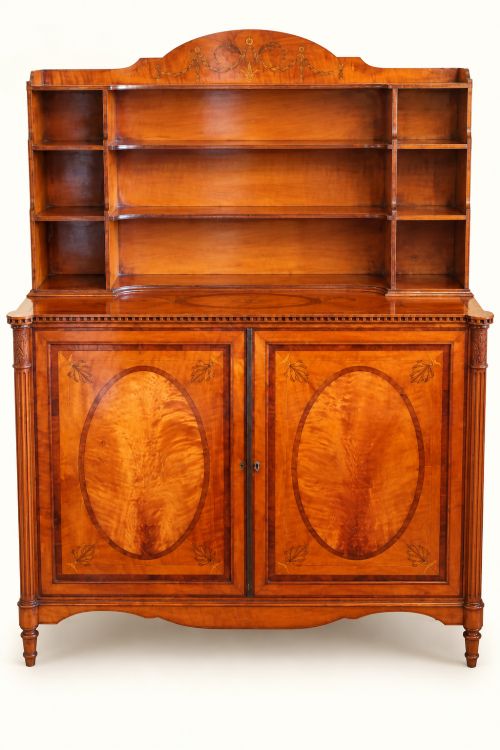
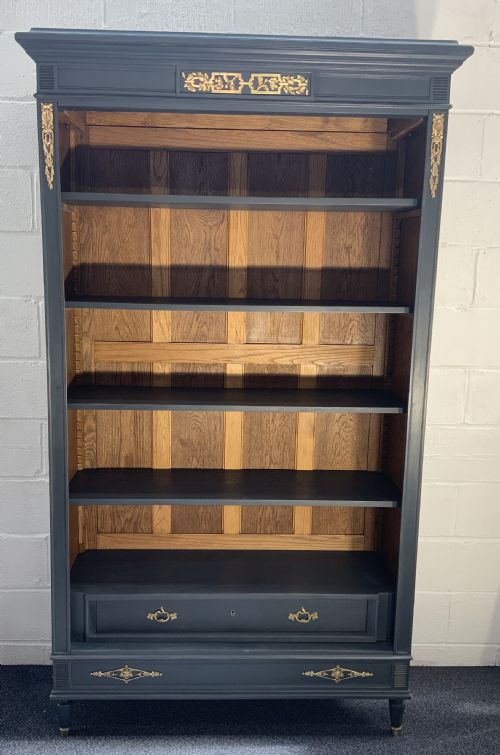


Neoclassical Bookcase
A neoclassical bookcase brings architectural balance and refined mahogany or satinwood storage to a room.
Neoclassical Bookcase
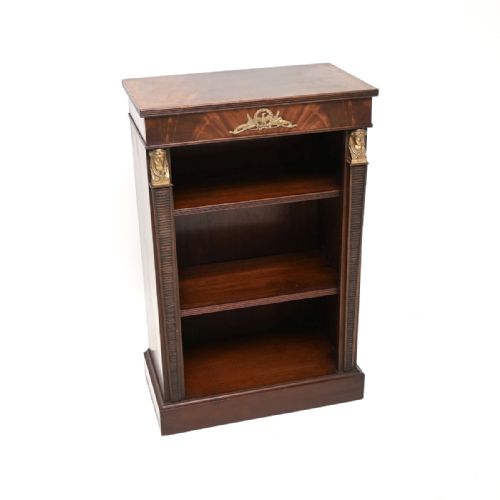
A neoclassical bookcase combines architectural symmetry with classical decorative motifs to create a formal storage piece for a library or drawing room. The pieces on this page span from George III and Georgian origins through nineteenth century revivals and into the early twentieth century.
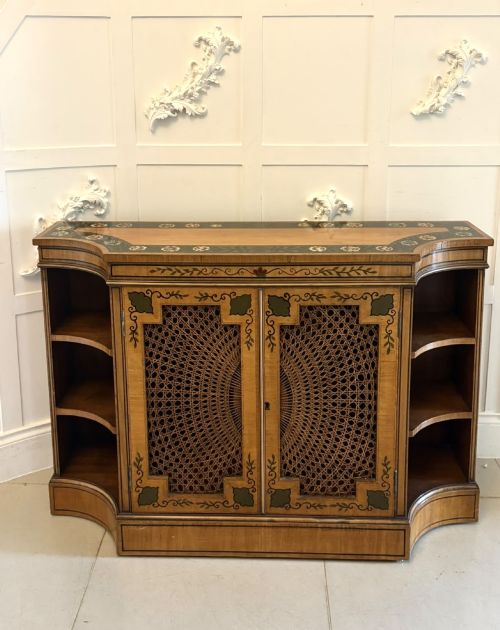
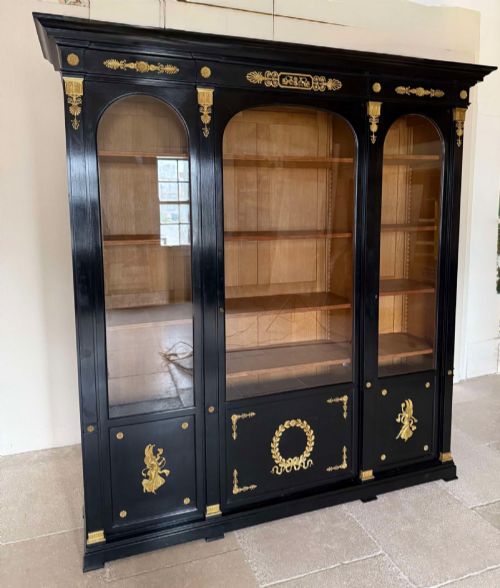
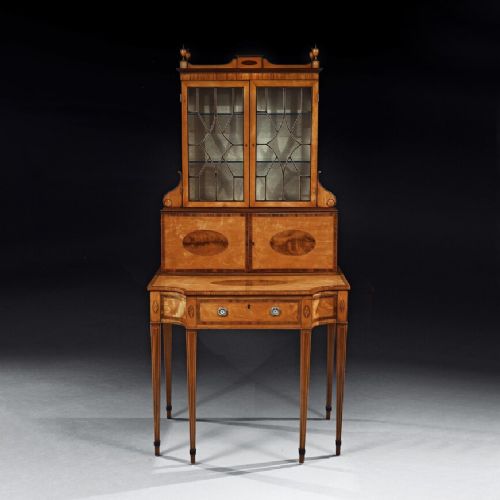
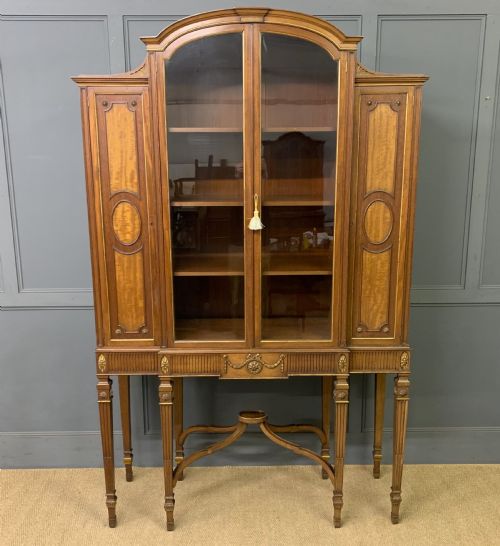
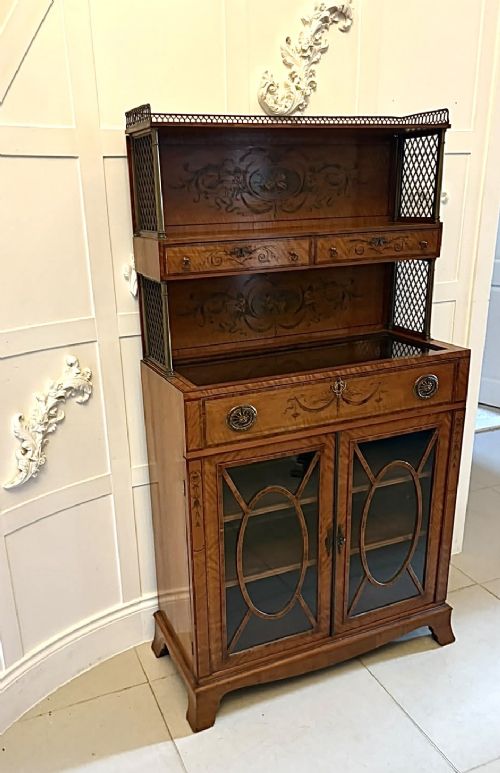
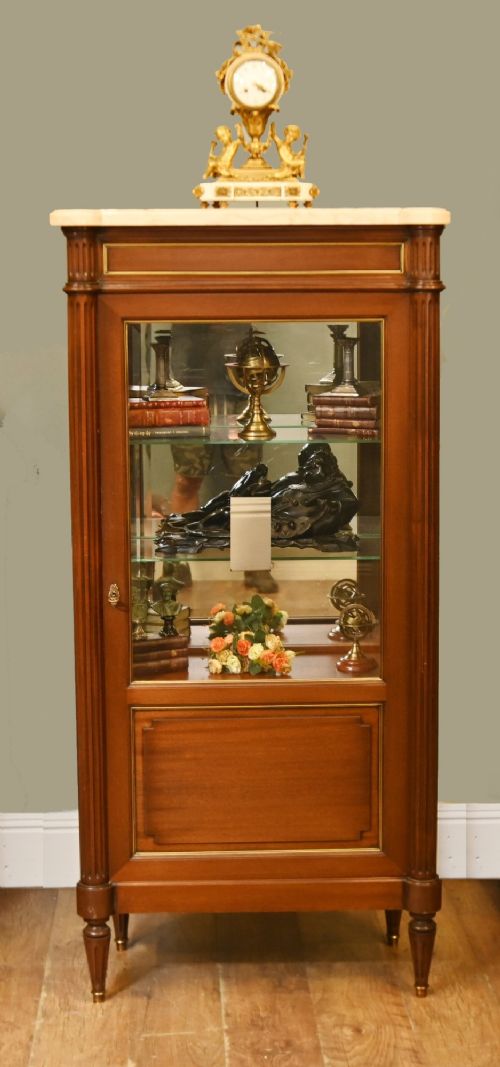
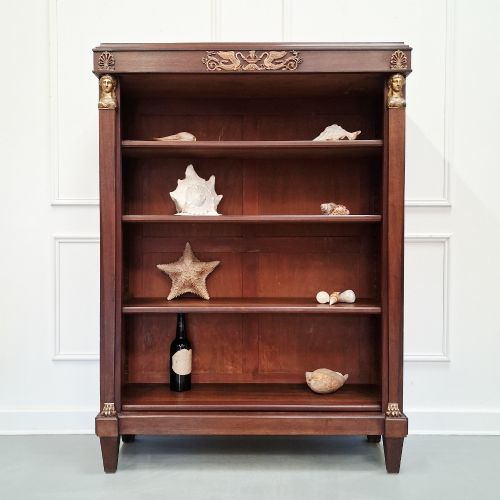
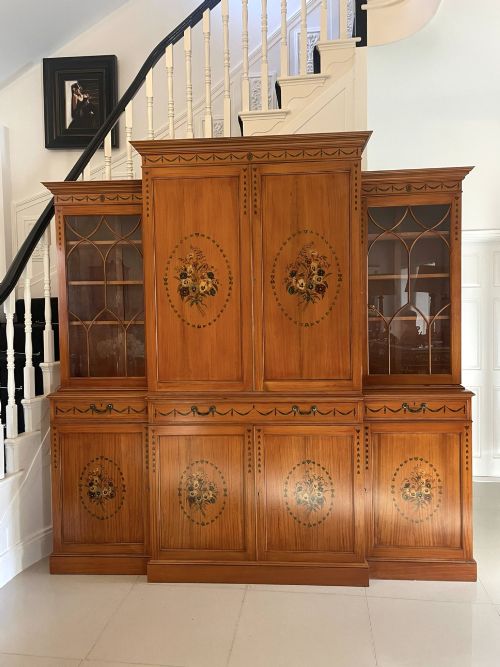
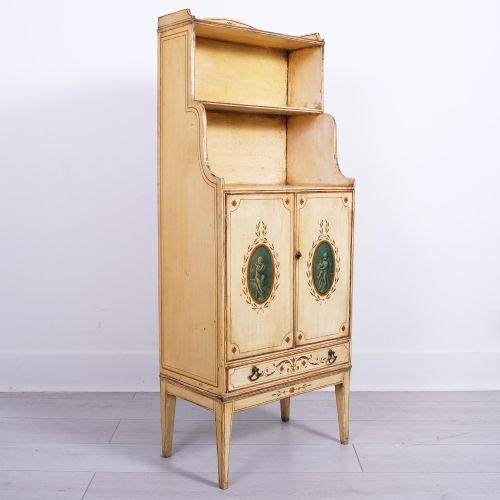
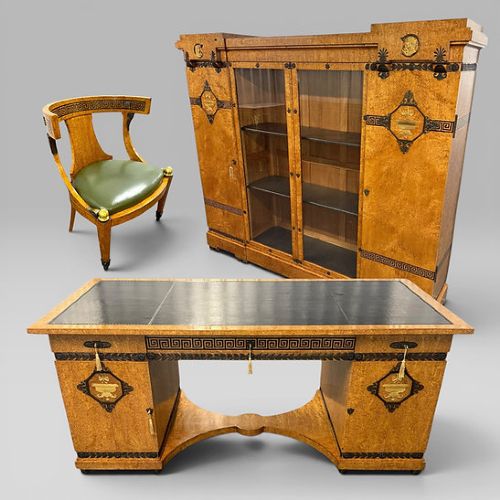
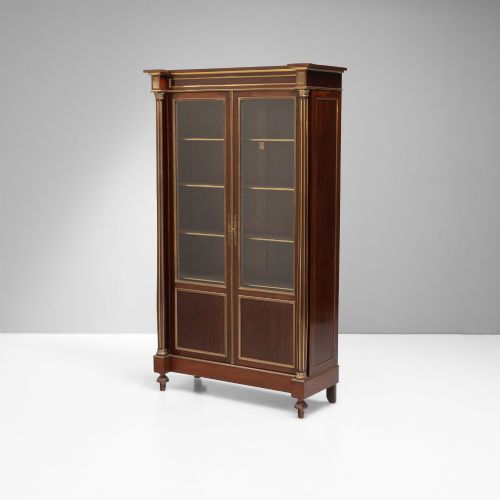
Buyers will encounter various forms here, including open bookcases, breakfront designs, glazed vitrines, display cabinets, and secretaire cabinets. French Empire, Directoire, Sheraton Revival, and Adams styles predominate among these listings.
Mahogany and satinwood form the foundation of most pieces, frequently enhanced by brass mounts, ormolu, painted decoration, and marquetry inlay. Cabinets on stands and corner placements also appear across the selection.
How they were made
Cabinetmakers used solid and veneered mahogany and satinwood over robust timber carcases, often incorporating ebonised details or birch. Surface decoration relied on meticulous marquetry inlay, delicate painted ornamentation, and hand-applied finishes.
Metalwork played a defining structural and decorative role, with cast brass embellishments, ormolu mounts, and glazed door panels fitted into the timber frames. Glass panels, leather writing surfaces, and fabric linings completed the finer pieces.
Neoclassical Bookcase Retail Price Guide 2026
Typical asking prices for neoclassical bookcase among the pieces listed under this phrase on Sellingantiques today, from the lower quarter to the upper quarter. They describe what is for sale here now, not the wider market.
Listings feature mahogany and satinwood timbers alongside brass, ormolu, and painted decoration across nineteenth and twentieth century periods.
What varies in quality
The standard of a neoclassical bookcase rests on the choice of timbers, the crispness of the carving, and the precision of the marquetry or painted decoration. Maker attribution to respected firms such as Edwards & Roberts or Waring & Gillow elevates the standing of a piece.
The refinement of the ormolu or brass mounts and the integration of original painted details distinguish masterwork examples from standard revival pieces. Proportional harmony and untouched original surfaces remain critical indicators of superior execution.
Mercier Frères·Jewell of Holborn·Waring & Gillow·Edwards & Roberts·Sandberg & Co·C Hindley & Sons
The Neoclassical Bookcase Glossary
- Ormolu
- Gilded bronze mounts applied to furniture. This technique added rich metallic highlights to mahogany and satinwood surfaces.
- Marquetry
- Fitted patterns of wood veneer forming decorative pictures or geometric designs. Craftsmen used contrasting timbers to achieve pictorial depth.
- Breakfront
- A cabinet design where the central section projects forward from the flanking wings. This architectural arrangement created visual depth in larger rooms.
- Vitrine
- A glass-fronted display cabinet intended for porcelain and precious objects. These pieces often feature glazed side panels to maximise light.
- Secretaire
- A cabinet incorporating a pull-down writing drawer with fitted interior compartments. It combined desk functionality with enclosed bookshelf storage.
Neoclassical Bookcase: Frequently Asked Questions
What defines a neoclassical bookcase?
A neoclassical bookcase draws on classical Greek and Roman architecture, featuring straight lines, symmetry, and restrained ornamentation such as columns or urns.
Maker details, proportions, and materials like satinwood or mahogany help distinguish authentic period examples from later revivals.
How do I identify a revival piece?
Revival pieces from the late nineteenth and early twentieth centuries often reproduce George III or French Empire styles using period timber selection.
Examination of construction techniques, hardware, and secondary woods helps determine whether a cabinet dates to the eighteenth century or a later revival.
Where were these cabinets placed?
These cabinets stood in formal libraries, drawing rooms, and studies to house bound volumes and display decorative porcelain.
Breakfront and open configurations suited larger reception rooms, while corner cabinets and side cabinets utilised more compact spaces.