


Needlework Upholstered Footstool
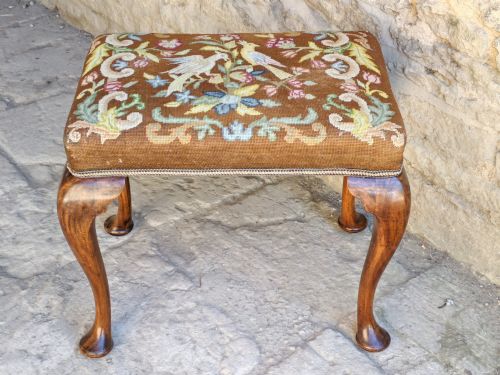
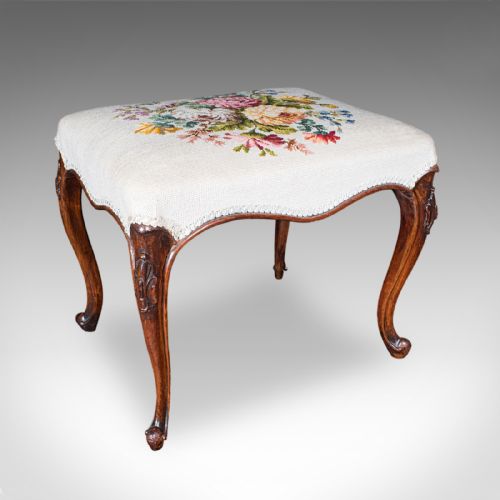
These needlework upholstered footstool examples combine period timber frames with wool tapestry or beadwork seats, offering functional comfort and historical textile charm.
Needlework Upholstered Footstool
A needlework upholstered footstool brings together traditional timber frames and stitched textile tops designed for resting feet or low seating. The selections found here span various historical eras from the early nineteenth century through to the nineteen-twenties.
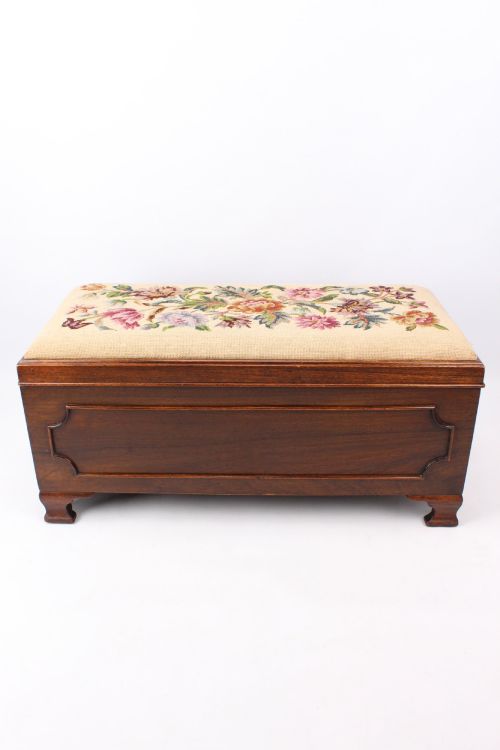
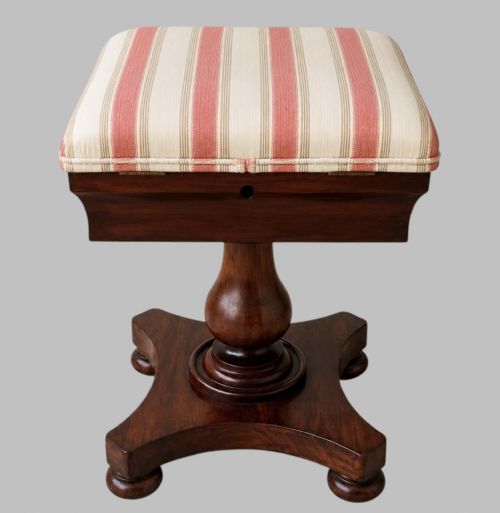
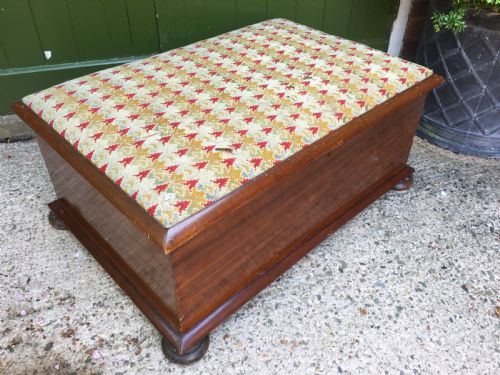
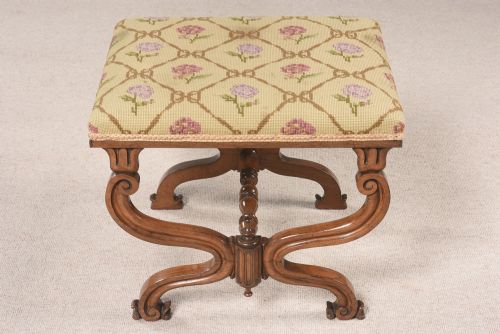
Buyers will encounter distinct structural forms, including X-frame stools, sewing box combinations, and oval or rectangular ottomans. Walnut and mahogany predominate as the primary woods used for the supporting frames across these periods.
The top surfaces showcase diverse textile artistry, featuring wool tapestry, needlepoint, gros-point, and glass beads. These pieces reflect stylistic revivals ranging from Queen Anne and Chippendale to Louis XV and Italian neoclassical tastes.
How they were made
Makers utilised solid hardwoods like mahogany, walnut, and rosewood to construct the structural frames, often shaping them into distinct stylistic legs and supports. Painted finishes also appear on specific continental examples.
The characteristic top panels rely on needlework techniques, incorporating wool threads, tapestry stitching, and occasionally intricate glass beads to form floral and geometric motifs. These covers were then secured over padded foundations set within the timber surrounds.
Listings feature walnut, mahogany, and rosewood frames paired with wool tapestry, needlepoint, and glass bead textiles.
What varies in quality
The refinement of the timber carving and the complexity of the frame construction set superior examples apart from simpler utility pieces. High quality is evident in substantial hardwoods and well-executed stylistic details such as X-frame geometries or turned supports.
The intricacy and preservation of the needlework upholstery significantly influence the character of each piece. Finely worked gros-point or beadwork retained in vibrant condition demonstrates a higher level of original craftsmanship than plain fabric.
The Needlework Upholstered Footstool Glossary
- Needlepoint
- A type of canvas work embroidery executed with yarn using a tent stitch. It forms the durable decorative surface seen on many period stools.
- Gros-point
- A coarse-stitch needlepoint embroidery utilising heavier wool yarn. This technique produces a robust, textured floral or geometric pattern ideal for upholstery.
- X-frame
- A structural furniture base formed by intersecting curved or straight timber members shaped like the letter X. It provides both stability and decorative architectural interest.
- Rosewood
- A dense, dark timber featuring distinct grain markings frequently utilised in Regency furniture frames. It brings a rich natural tone to decorative seating.
Needlework Upholstered Footstool: Frequently Asked Questions
What periods do these footstools date from?
The available selection spans from the early nineteenth century through the Victorian era and into the nineteen-twenties. Pieces reflect historical design movements including Regency, William IV, and various revival styles.
Craftsmanship and materials shift across these decades, moving from heavy mahogany and rosewood frames to later walnut and painted finishes.
How were sewing box stools used?
Combination sewing box stools served a dual purpose in nineteenth-century parlours, offering a low seat or footrest alongside integrated storage for needlework supplies. The hinged top typically opened to reveal compartments for threads and tools.
These versatile items combined domestic utility with fine cabinetry and upholstery.
Are the beadwork seats original?
Many Victorian pieces feature period beadwork and wool tapestry seats applied directly to the wooden frame structure. Glass bead embroidery was popular for its durability and tactile texture.
Careful inspection of the stitching and the surrounding timber helps determine the period integration of the textile top.
How do I care for needlework upholstery?
Historic wool tapestry and beadwork seats require gentle maintenance away from direct sunlight to preserve the natural fibres and colours. Regular light brushing helps prevent dust accumulation in the stitched canvas.
Avoiding excessive moisture protects both the antique textile and the underlying wooden frame.