


Needlework Table Stand
A needlework table stand brings together practical craftsmanship and fine timber, offering a dedicated surface for sewing and display.
Needlework Table Stand
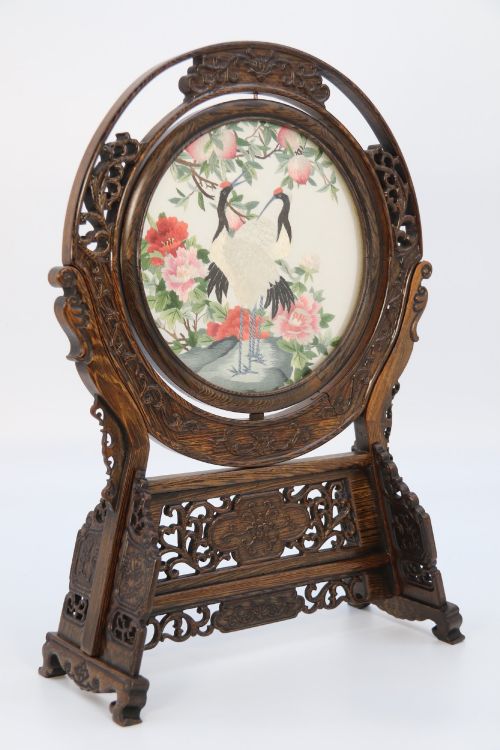
A needlework table stand combines a compact surface with fitted storage for sewing implements, often taking the form of a work table, sewing box on stand, or table screen.
The pieces appearing on this page span several distinct periods including the Georgian, Regency, William IV, Victorian, and Edwardian eras.
Mahogany and rosewood dominate the timber selection, alongside walnut, satin walnut, and oak, while silk, fabric, and needlepoint provide the decorative textile elements.
Materials and construction
Cabinetmakers utilised dense hardwoods such as mahogany, rosewood, and walnut to build stable frames capable of supporting folding leaves and fitted compartments.
Decorative surfaces often incorporate wood inlay, brass accents, and fine glass elements to elevate the appearance of the sewing box or table screen.
Interiors frequently feature specialist fabric linings, silk cotton containers, and beadwork or needlepoint tapestries executed on rotating or stationary mounts.
Materials recur across the selection in brass, rosewood, mahogany, walnut, silk, and fabric.
Assessing quality and execution
The standard of timber selection and the precision of any wood inlay set finer examples apart from simpler utility pieces.
Internal complexity dictates the standing of a piece, with fitted compartments, double-sided silk embroidery, and robust drop-leaf mechanisms marking superior output.
The Needlework Table Stand Glossary
- Work table
- A small occasional table fitted with drawers, compartments, or a fabric bag designed to hold sewing materials.
- Tripod table
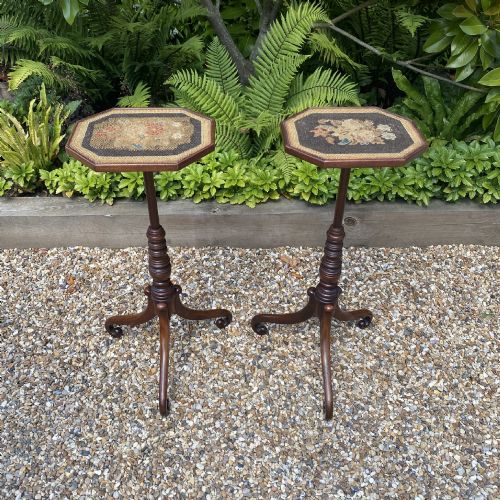
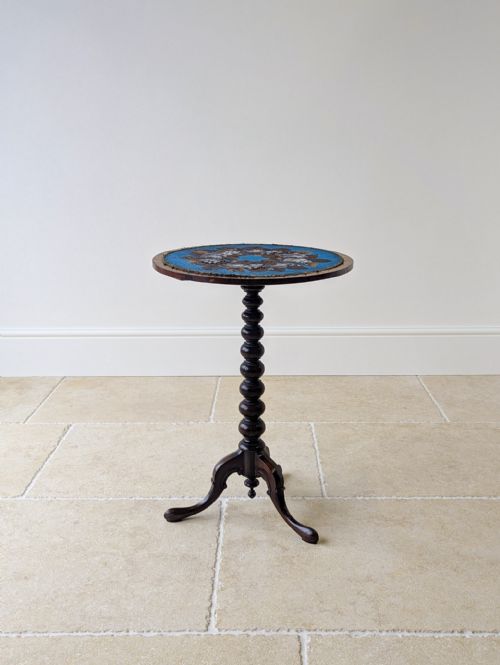
- A small freestanding table supported by a central pillar on three legs, commonly seen in wine tables and light stands.
- Drop-leaf
- A table top featuring hinged flaps that fold down to save space when not in use.
- Needlepoint
- Embroidery stitched onto a stiff open-weave canvas, frequently utilised for table screens and chair seats.
Needlework Table Stand: Frequently Asked Questions
What is a needlework table stand used for?
These pieces served as dedicated stations for domestic needlework, embroidery, and crafting pursuits in period homes.
They provided a stable surface alongside concealed storage for threads, needles, and unfinished projects.
How do I date a sewing table?
Dating relies on observing the primary timber, hardware, and structural style associated with periods like Regency or Victorian.
Specific design cues such as pillar supports, inlay techniques, and leg profiles help narrow the exact decade of manufacture.
Where were these stands placed?
Owners positioned them beside seating areas in parlours and drawing rooms for easy access during evening handwork.
Their compact proportions allowed them to function as side tables or occasional stands when sewing was finished.
What distinguishes a work box from a work table?
A work box is a portable chest designed to sit on top of another piece of furniture for storage.
A work table incorporates legs and a permanent stand, sometimes including a fabric bag suspended below for textiles.