



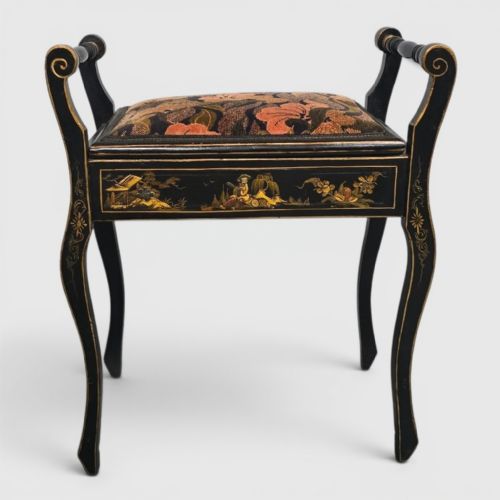


Needlepoint Upholstered Bench
A needlepoint upholstered bench brings enduring textile artistry and versatile seating into a room.
Needlepoint Upholstered Bench
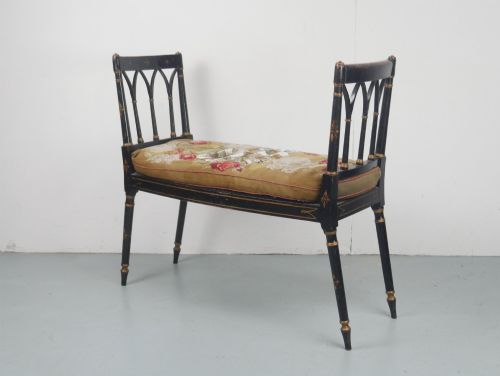
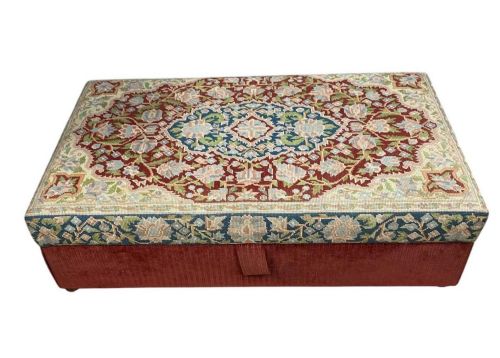
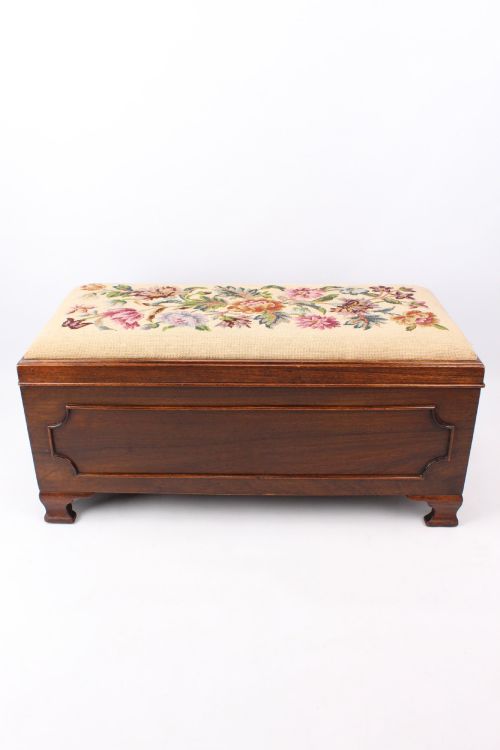
When searching for a needlepoint upholstered bench, you are looking at low seating forms that combine wooden frames with hand-worked textile covers. The options span footstools, dressing stools, piano stools, window seats, and larger centre stools or ottomans.
You are most likely to meet Victorian and Edwardian examples alongside pieces executed in revival idioms such as Queen Anne style, Chippendale style, and Georgian revival. Materials range from mahogany and walnut to rosewood and birch frames topped with tapestry, wool, or needlework.
Origins vary from English workshops to French salon pieces, Swedish birch pieces, and painted Italian variations. These low seating pieces function across domestic interiors as footrests, dressing table seats, or central accent furniture.
How they were made
Cabinetmakers constructed the supportive frames using traditional hardwoods such as mahogany, walnut, rosewood, and birch, sometimes applying paint or fine carvings. These frames provided robust structural integrity for domestic seating.
Needlepoint Upholstered Bench Retail Price Guide 2026
Typical asking prices for needlepoint upholstered bench among the pieces listed under this phrase on Sellingantiques today, from the lower quarter to the upper quarter. They describe what is for sale here now, not the wider market.
Object types span piano stools, dressing stools, window seats, and large centre ottomans upholstered in wool and tapestry.
What varies in quality
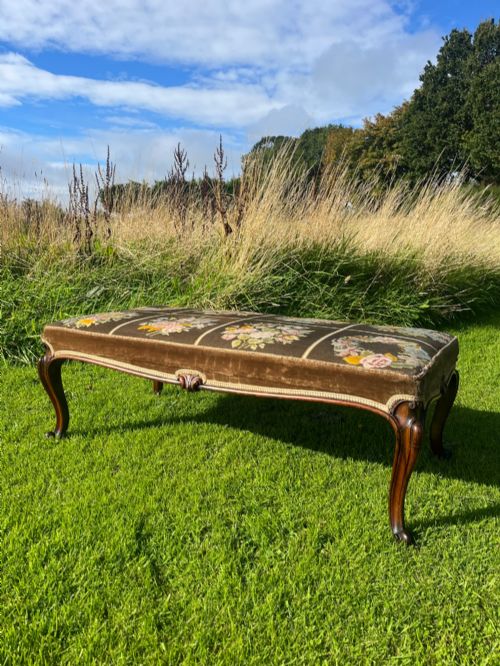
The distinction between tiers rests upon the execution of the woodwork and the intricacy of the textile cover. Finely carved cabriole legs, decorative framing, and unusually detailed needlepoint designs separate finer examples from simpler utility pieces.
Material selection also defines the tier, with dense hardwoods like walnut and mahogany paired with complex tapestry work representing the upper end of the range. The harmony between the frame period and the textile needlework governs the overall cohesion of the piece.
Whytock and Reid
The Needlepoint Upholstered Bench Glossary
- Needlepoint
- A type of counted thread embroidery stitched on a stiff canvas mesh. It forms the decorative top surface of the bench.
- Centre stool
- A large freestanding stool designed to sit in the middle of a room or function as a table alternative. These pieces provide substantial surface area.
- Cabriole leg
- A furniture leg that curves out and then in, resembling an animal's leg. This form is common on Queen Anne and Chippendale style frames.
- Window seat
- An elongated upholstered bench designed to fit into a bay window recess. These forms often feature armrests or supportive wooden frames.
Needlepoint Upholstered Bench: Frequently Asked Questions
How do I style a needlepoint upholstered bench?
Place a long footstool at the foot of a bed or position a dressing stool beneath a vanity table to introduce tactile textile pattern.
Centre stools can sit in open spaces as a flexible seat or hold a tray to function as an occasional table.
What is the difference between a stool and a window seat?
Stools are compact, portable seating pieces designed for dressing tables, pianos, or general foot support.
Window seats are traditionally longer forms built to sit beneath architectural windows, often incorporating more substantial wooden frames.
How can I tell the period of the wooden frame?
Examine the timber species, such as walnut, mahogany, or rosewood, alongside the structural carving style like cabriole legs or Georgian revival details.
Revival pieces often blend historical silhouettes with the manufacturing methods of their actual production date.
Are needlepoint covers original to the benches?
Needlepoint covers may be contemporary to the manufacture of the wooden frame or can be later Victorian and 20th-century replacements.
Both period-correct textiles and later hand-worked replacements contribute to the decorative character of the piece.