
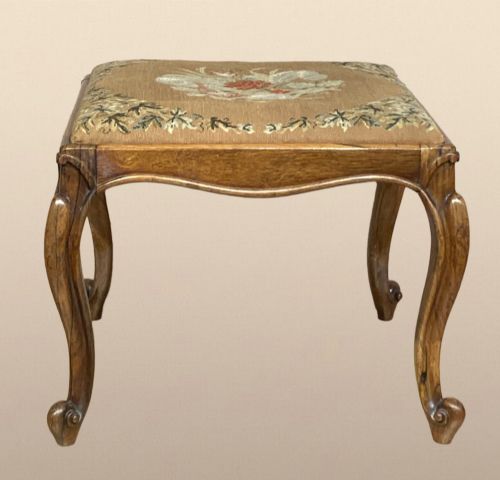


Needlepoint Stool Seat
A needlepoint stool seat combines sturdy timber frames with worked textile tops, offering both practical seating and decorative texture.
Needlepoint Stool Seat
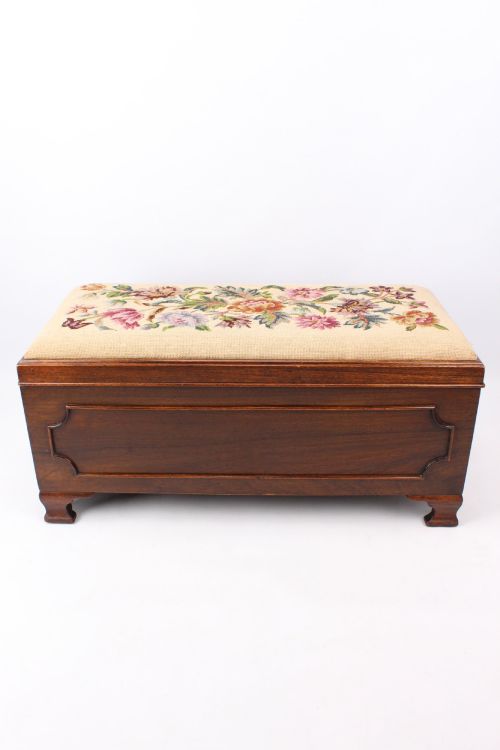
A needlepoint stool seat brings together functional wooden furniture and stitched textile work, appearing across various historical periods from the eighteenth century through to the Edwardian era. These pieces serve multiple roles within a room, functioning as piano stools, dressing table seats, footstools, ottomans, and window seats.
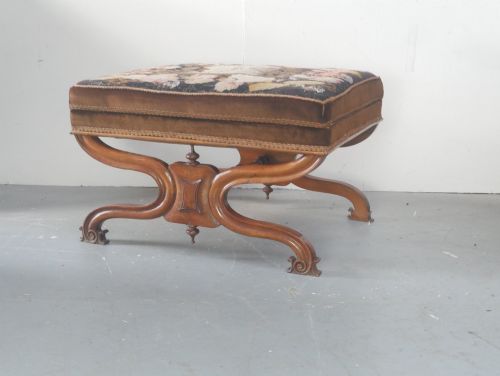
The versions most commonly encountered on this page feature walnut, mahogany, or rosewood frames paired with wool tapestry or needlepoint upholstery. Forms range from simple tripod piano stools to large Scottish Baronial designs and carved Victorian rococo revival pieces.
How they were made
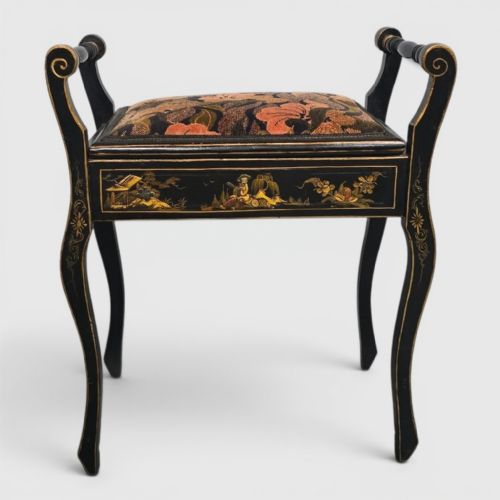
Makers constructed the timber supports using hardwoods like mahogany, walnut, rosewood, oak, and occasionally ebonised wood or gilt finishes. Frames often incorporate detailed carving, cabriole legs, cross stretchers, and revolving or adjustable mechanisms for piano and dressing stools.
The upholstery combines textile elements such as wool, tapestry, fabric, and velvet worked in needlepoint or needlework. These textile panels were stretched tightly over padded seats fixed directly to the timber framework.
Listings feature woods including mahogany, walnut, rosewood, and oak, alongside textile elements like wool, tapestry, velvet, and fabric.
What varies in quality
The calibre of a needlepoint stool seat rests upon the crispness of the timber carving and the complexity of the wood frame, whether executed in simple mahogany or richly figured rosewood and walnut. Higher quality examples display refined proportions, integrated structural elements like cross stretchers, and sophisticated joinery.
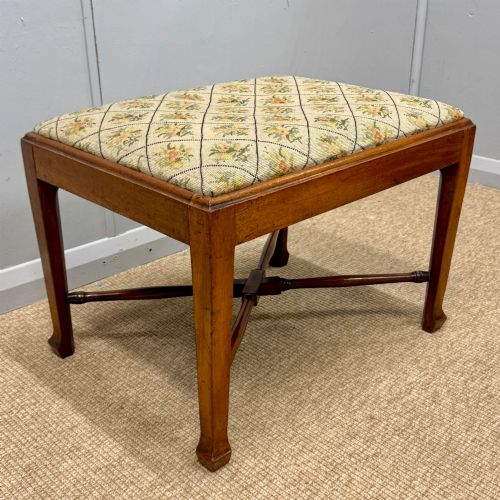
The needlework itself dictates much of the visual merit, with denser stitching, finer wools, and more intricate floral or trellis designs separating standard pieces from exceptional ones. Original fabric and period-appropriate mechanical components further distinguish the finer specimens.
Jas Shoolbred
The Needlepoint Stool Seat Glossary
- Needlepoint
- A type of counted thread embroidery stitched onto an open weave canvas foundation. It forms the durable decorative top seen on many period stools and piano seats.
- Cabriole leg
- A furniture leg that curves out and then tapers inward, mimicking an animal's limb. This style appears frequently on walnut and mahogany stools from the eighteenth century onward.
- Cross stretcher
- Wooden rails connecting the lower legs of a stool to provide structural rigidity. They often feature central bosses or decorative turnings.
- Tapestry
- A thick woven or worked textile used for upholstery. In these listings, it frequently describes the floral or patterned seat covers.
- Ottoman
- A low upholstered seat or footstool without a back or arms. Larger examples provide substantial seating surface alongside decorative needlework.
Needlepoint Stool Seat: Frequently Asked Questions
What is a needlepoint stool seat?
A needlepoint stool seat is a piece of antique furniture featuring a stitched wool textile top stretched over a timber frame. These items include piano stools, dressing table seats, and footstools.
They combine structural woodwork in materials like mahogany or rosewood with decorative needlework panels executed in wool and tapestry.
How do I date a stool?
Dating relies on observing the timber species, leg shapes, and overall stylistic markers such as Victorian carving or Regency rosewood frames. Periods range from the eighteenth century through to Edwardian designs.
Construction methods and upholstery materials also provide clues to age, matching historical eras like the William IV period or Queen Anne revivals.
Where were piano stools used?
Piano stools were placed beside keyboard instruments in parlours and music rooms. Many incorporate revolving or adjustable mechanisms to suit different players.
Their sturdy timber frames and comfortable needlepoint tops made them practical for extended periods of seated practice.
How do I care for antique needlepoint?
Care for the textile top involves protecting the wool from direct sunlight and gentle cleaning to preserve the fibres. Keeping the fabric dry prevents damage to the underlying padding.
The wooden frame benefits from occasional dusting and appropriate furniture wax to maintain the finish of walnut, mahogany, or rosewood.