
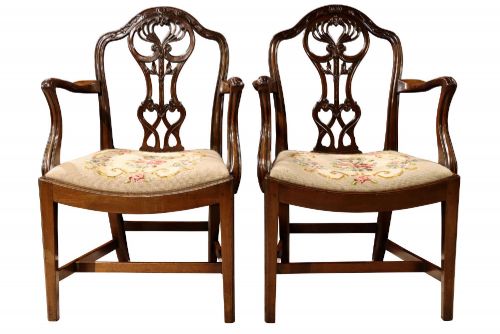


Needlepoint Seat Armchairs
Needlepoint seat armchairs combine sturdy timber framing with hand-stitched wool upholstery, offering a practical seating option for period interiors.
Needlepoint Seat Armchairs
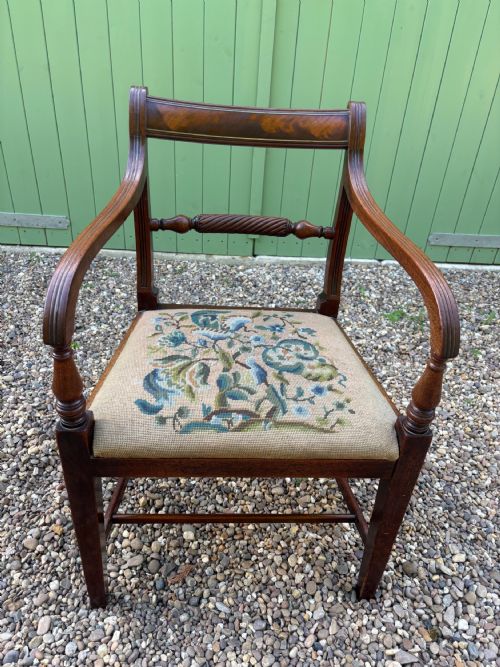
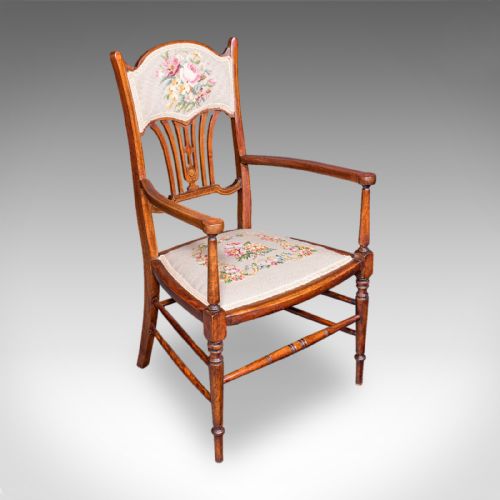
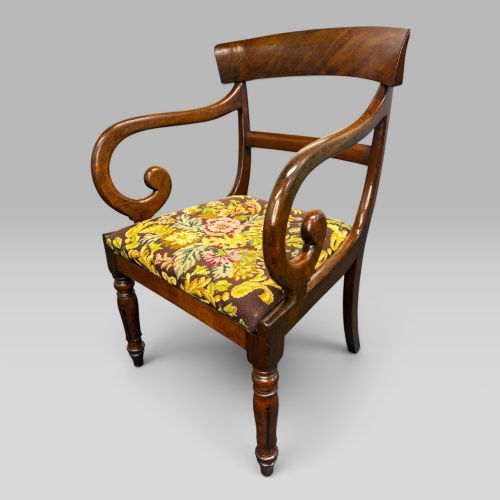
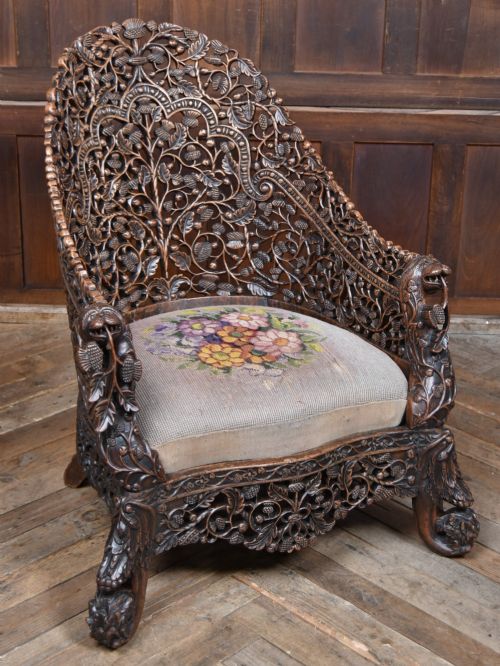
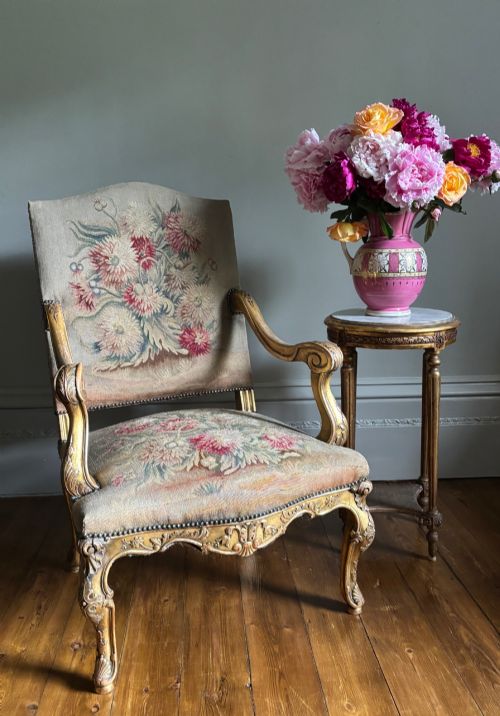
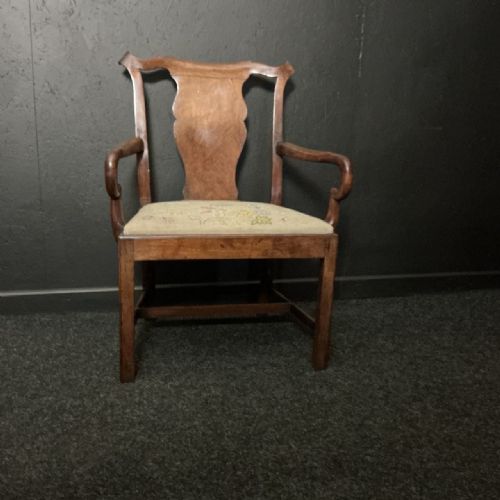
Needlepoint seat armchairs include elbow chairs, salon seating, and nursing chairs featuring upholstered panels of wool tapestry or textile. The selection spans the 18th century, Georgian, Regency, Victorian, and Edwardian periods.
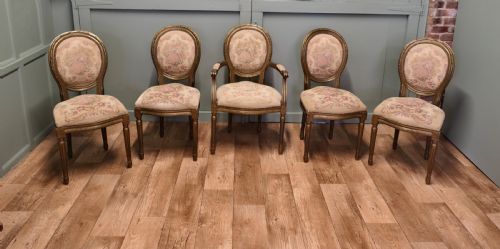
Buyers encounter mahogany, walnut, and beech frames shaped in styles ranging from plain Georgian forms to ornate French revival designs. These pieces function as reading seats, desk chairs, and occasional seating in traditional rooms.
Materials and construction
Frames are constructed from dense hardwoods like mahogany, walnut, beech, and elm, providing structural stability for the seat and arms. Joinery relies on traditional techniques suited to the period of origin.
Upholstery consists of wool tapestry and needlepoint panels worked by hand, secured over drop-in frames or nailed directly to the wooden rail. Brass tacks frequently finish the edge where textile meets timber.
Listings feature mahogany, walnut, and beech frames paired with wool tapestry, textile, and brass elements across eight distinct periods.
Assessing quality in needlepoint seat armchairs
Quality depends on the crispness of the timber carving and the density of the hand-stitched needlepoint. Tightly worked wool panels with detailed botanical or figurative motifs indicate superior workshop output.
Proportion and wood selection distinguish standard production from finer cabinet work. Original frames displaying clean lines and minimal structural timber replacement command greater attention.
Warings·Robert Strahan Dublin·Gillows·Holland & Sons
The Needlepoint Seat Armchairs Glossary
- Needlepoint
- A type of counted thread embroidery stitched over canvas mesh. It forms the durable pictorial or geometric panels seen on antique seat covers.
- Elbow chair
- An armchair designed with low arms intended to support the elbows. These frequently served as desk chairs or parlor seating.
- Drop-in seat
- A removable wooden frame holding the upholstered pad that rests within the chair rails. This design allowed easy recovering of the textile.
- Giltwood
- Timber coated with a thin layer of gold leaf. It appears on ornate French revival salon chairs.
- Carver
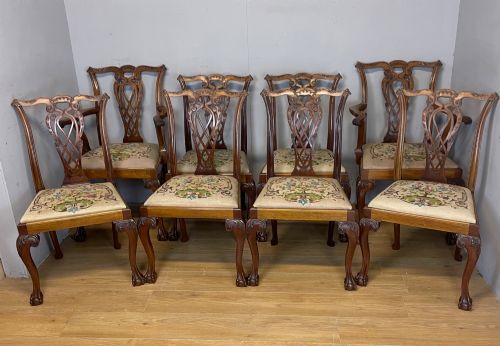
- An alternative term for an armchair, often used in sets alongside matching dining chairs.
Needlepoint Seat Armchairs: Frequently Asked Questions
How do I date a needlepoint seat armchair?
Dating relies on timber species, turning styles, and structural joinery techniques characteristic of specific eras like the Georgian or Victorian periods.
Needlework styles also provide clues, though upholstery is frequently renewed to match later tastes.
Where should I place these armchairs at home?
These armchairs suit studies, drawing rooms, and bedrooms as reading chairs or desk seats. Their proportions allow them to sit comfortably alongside modern or traditional furniture.
Keep them away from direct sunlight to protect the wool tapestry from fading.
Are needlepoint seats durable for daily use?
Wool needlepoint is remarkably hard-wearing due to the density of the stitched yarn. Many original panels survive centuries of gentle sitting.
Heavy daily use in busy households may require protective measures or professional conservation of fragile threads.
What is the difference between an elbow chair and a salon chair?
Elbow chairs feature supportive wooden armrests and sturdy frames built for practical tasks like writing at a desk or relaxing in a morning room.
Salon chairs are typically lighter, more decorative French-influenced seats designed for formal entertaining.