

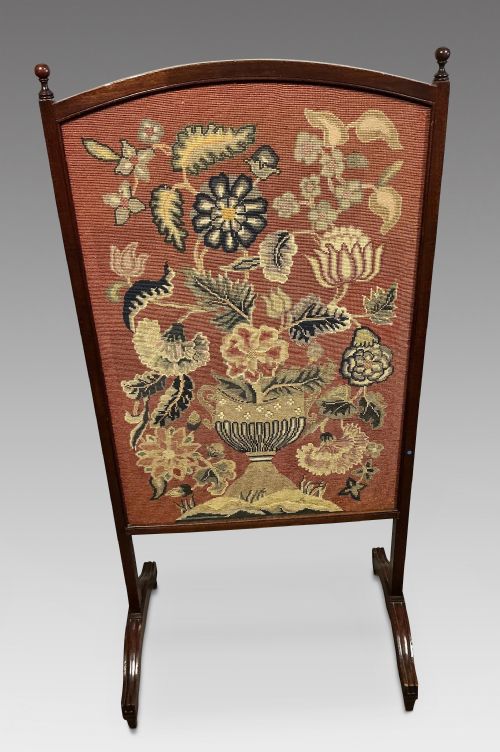


Needlepoint Fireplace Guard
These needlepoint fireplace guard pieces block hearth heat while displaying wool needlework.
Needlepoint Fireplace Guard
A needlepoint fireplace guard, also known as a fire screen, protects people sitting near a hearth from excessive fire heat while adding decoration to a room. Buyers searching for a needlepoint fireplace guard frequently encounter Victorian and 19th Century examples framed in timbers such as mahogany, rosewood, and walnut.
The selections on this page span several decades, featuring items from the Georgian, Regency, Early Victorian, and Edwardian eras. Forms range from standard standing screens and cheval designs to pole screens, occasional tables with metamorphic functions, and brass frames housing tapestry panels.
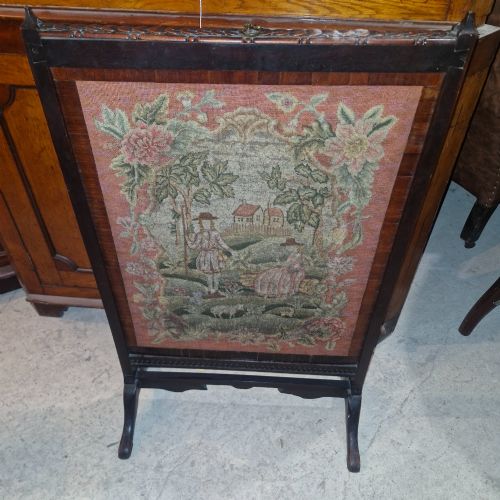
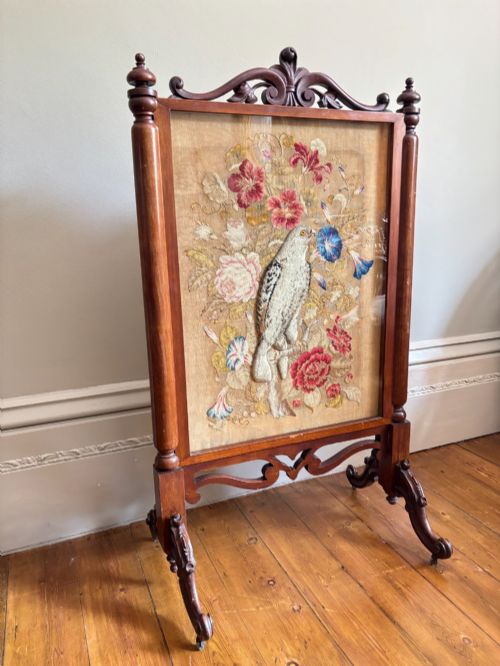
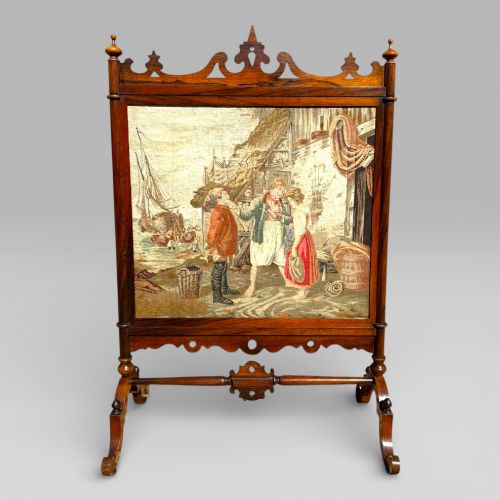
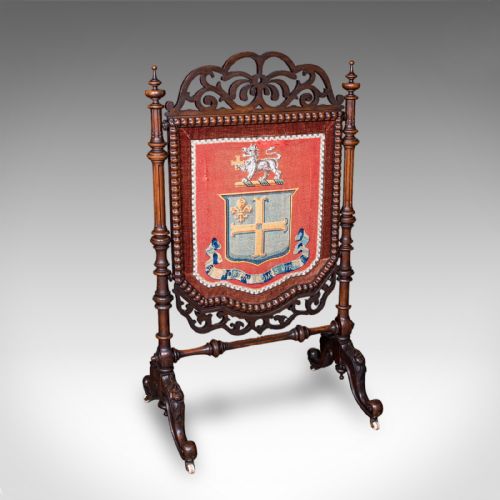
Makers utilised various woodworking styles, including carved mahogany, bobbin-turned frames, and giltwood. The embroidered panels depict pastoral scenes, armorial bearings like the Clan Maclellan coat of arms, and parrot motifs executed in Berlin work or hand-woven tapestry.
Materials and construction methods
The internal panels utilise canvas stretched within the wooden framework, carrying hand-woven needlework, wool embroidery, and Berlin work. Textile artistry forms the visual centrepiece of each guard, supported by stable timber or brass structures.
Needlepoint Fireplace Guard Retail Price Guide 2026
Typical asking prices for needlepoint fireplace guard among the pieces listed under this phrase on Sellingantiques today, from the lower quarter to the upper quarter. They describe what is for sale here now, not the wider market.
One clever Victorian incarnation doubles as an occasional table, proving that even fire screens occasionally fancied a second job.
Distinctions in construction and textile execution
Superior examples display tighter needlepoint stitch density and intricate pictorial detail within the wool and tapestry panels, such as complex pastoral compositions or detailed armorial crests. Lesser pieces feature simpler geometric patterns or worn embroidery.
Frame quality depends on timber selection, such as solid rosewood or finely carved mahogany, and the precision of joinery or turning. Multi-functional items like metamorphic occasional tables or adjustable pole screens require complex internal mechanisms that influence desirability.
The Needlepoint Fireplace Guard Glossary
- Berlin work
- A style of counted-thread embroidery popular during the 19th century, utilising brightly coloured wool yarns worked on canvas from printed pattern charts. This technique accounts for many vibrant floral and pictorial panels seen in firescreens.
- Cheval screen
- A fire screen supported by two upright pillars mounted on feet, allowing the central framed panel to swing on pivots. This design offers adjustable positioning to block radiant heat from the hearth.
- Pole screen
- A tall stand featuring a vertical wooden pole where an embroidered panel slides up and down on a bracket. It directs heat away from the face while seated near an open fire.
- Armorial panel
- An embroidered textile depicting a family crest, coat of arms, or heraldic symbols. These custom panels often denote specific lineages, such as Scottish clan associations.
- Palisander
- A dense, dark timber resembling rosewood, utilised in fine Regency furniture frames. Its rich grain adds visual weight to decorative hearth furnishings.
Needlepoint Fireplace Guard: Frequently Asked Questions
What is a needlepoint fireplace guard used for?
These pieces historically served to shield occupants from the intense radiant heat of an open coal or wood fire. They also protected expensive facial cosmetics from melting in the warmth.
Today, they function primarily as decorative room dividers and ornamental focal points in living spaces, concealing empty hearths during warmer months.
How do I date a Victorian fire screen?
Dating relies on timber choices, such as rosewood and walnut, combined with specific needlework styles like Berlin work. Characteristic decorative details include bobbin-turned mahogany framing and heavy carved pedestals.
Consulting the listed period categories helps place items accurately within the 19th century or Edwardian timelines.
What is the difference between a pole screen and a cheval screen?
A pole screen mounts its textile panel on a single vertical shaft with a movable bracket. This lets the user adjust the height of the embroidery to block heat at seated eye level.
A cheval screen mounts a larger rectangular panel between two stable side posts on pivots, tilting the entire frame rather than sliding it vertically.
Are these screens fragile?
The structural wooden frames remain robust, but the wool and canvas needlepoint panels require careful handling. Direct sunlight fades antique wool yarns over time, and moisture damages the textiles.
Keeping them away from damp environments and harsh light preserves the integrity of the vintage fabric.