



Standing Embroidered Screen
A standing embroidered screen brings hand-worked silk or wool into a room to shield one from the hearth or divide a space.
Standing Embroidered Screen
A standing embroidered screen is an upright decorative panel designed to be placed near a fireplace or upon a table, serving both a functional purpose and a display for needlework. When you search for a standing embroidered screen, you encounter various formats including pole screens with adjustable panels, tripod bases, and table screens.
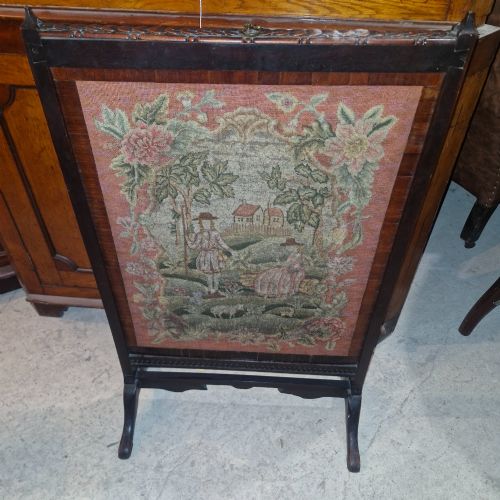
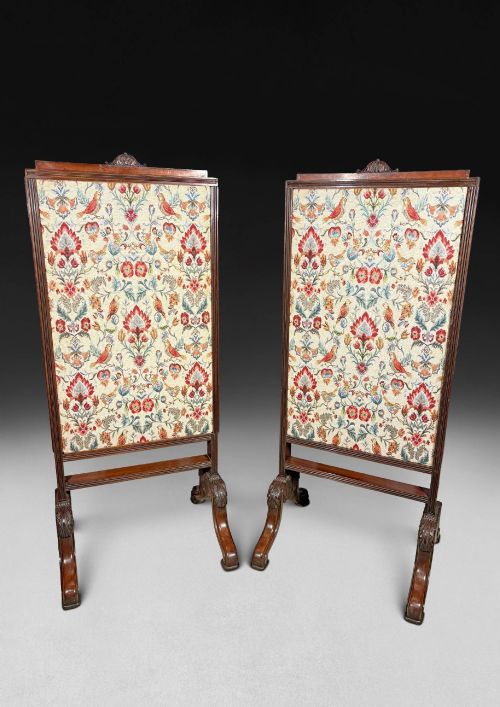
The pieces appearing on this page span several eras from the Georgian and Regency periods through the Victorian age and into the 20th century. Most examples utilise traditional wooden frames to hold panels worked in wool, silk, or needlepoint.
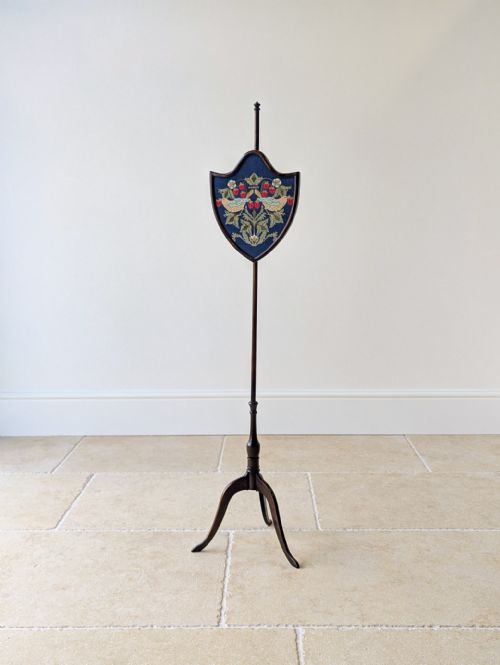
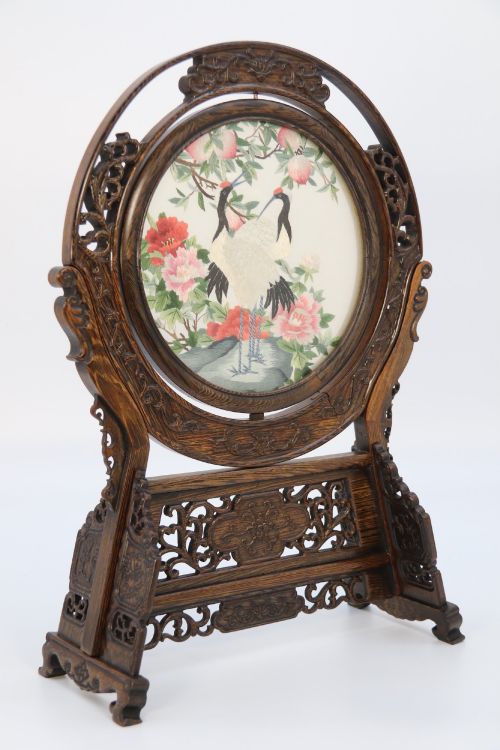
Forms range from floor-standing pole screens with shields or pendants to smaller table screens and double-sided Chinese silk displays on rotating stands. Mahogany and rosewood frequently form the structural supports, accompanied by brass fittings and carved details.
How they were made
Makers constructed the frames of standing embroidered screens using dense timbers such as mahogany, rosewood, walnut, and hardwoods, often shaping them with tripod bases, pole uprights, or intricately carved table stands. Brass mechanisms frequently allowed the panels to slide vertically along poles or rotate upon axes.
The central panels feature textiles worked by hand, utilising wool, silk, and needlepoint to create pictorial or geometric designs. These textiles were stretched tightly within wooden frames, sometimes protected behind glass or supported by secondary panels.
Craftsmen applied traditional joinery and carving techniques to the woodwork, ranging from the restrained lines associated with Chippendale and Regency styles to the ornate flourishes of Victorian Rococo Revival and Chinese Republic Period carving.
Standing Embroidered Screen Retail Price Guide 2026
Typical asking prices for standing embroidered screen among the pieces listed under this phrase on Sellingantiques today, from the lower quarter to the upper quarter. They describe what is for sale here now, not the wider market.
Some Victorian screens doubled as polite social armour, allowing ladies to shield their freshly applied face powders from melting in the blaze.
What varies in quality
Quality in a standing embroidered screen rests upon the crispness of the timber carving and the fineness of the needlework panel. Superior examples display deeply carved bases, well-proportioned tripod legs, and intricate, densely stitched silk or wool embroidery rather than plain or coarse needlepoint.
The sophistication of the mechanical adjustment mechanism also distinguishes better pieces, with finely turned poles, secure brass thumb-screws, and smooth pivoting actions marking superior workshop production. Maker stamps, such as those by Gillows, indicate higher provenance and workshop standard.
The condition and integrity of the textile panel relative to the frame determine distinction. Pieces where the original antique embroidery remains tightly stretched, vibrant, and sympathetic in style to the period of the wooden mount command greater appreciation.
Gillows
The Standing Embroidered Screen Glossary
- Pole screen
- A standing firescreen featuring a vertical wooden pole mounted on a tripod or heavy base, holding an adjustable panel that slides up and down. This design allowed the shield to be positioned to block heat from the fireplace.
- Needlepoint
- A type of canvas work embroidery stitched with yarn using a tent stitch. It forms the decorative panels seen on many Georgian and Victorian screens.
- Tripod base
- A three-legged support structure commonly found beneath the upright poles of firescreens. It provides stability on uneven floorboards.
- Table screen
- A smaller version of an embroidered screen designed to sit upon a desk, chest, or tabletop rather than the floor. They often feature carved wooden stands and double-sided silk panels.
- Pendant
- A hanging panel or shield suspended from the top of a pole screen rather than mounted on a central sliding bracket. This configuration is typical of certain Regency designs.
Standing Embroidered Screen: Frequently Asked Questions
What is a pole screen?
A pole screen is a type of standing firescreen consisting of a tall vertical wooden shaft mounted on a base, which holds a sliding embroidered panel. The adjustable panel could be raised or lowered to protect a person's face from the intense heat of an open fireplace.
These pieces were moved around a drawing room as needed throughout the day. They combined practical utility with a display surface for fine needlework.
How do I use a table screen?
Table screens are smaller decorative panels supported by carved stands intended for placement on furniture rather than the floor. They function as ornamental accents or miniature room dividers on desks and sideboards.
Many examples feature intricate double-sided silk embroidery that looks finished from both the front and the back. They add texture and colour to surfaces without occupying floor space.
How do I distinguish Regency from Victorian screens?
Regency screens generally exhibit cleaner architectural lines, classical proportions, and restrained brass or mahogany detailing dating from the early nineteenth century. They often feature shield or pendant panels suspended on slender turned poles.
Victorian screens tend to be heavier and more ornate, embracing revival styles with elaborate carvings and richer upholstery. The woodwork frequently displays darker finishes and more exuberant decorative flourishes.
Are the needlework panels original?
Many standing embroidered screens retain their original needlepoint or silk panels worked during the Georgian or Victorian eras. Over time, some pieces received replacement needlework panels fitted into older antique frames.
Examining the tension, wear patterns, and method of attachment to the wooden rebate helps determine whether the textile matches the age of the stand. Both period-matched restorations and untouched originals appear across these listings.