




Needlepoint Accent Armchairs
Needlepoint accent armchairs bring texture and period character into a room through hand-worked textile panels set in wooden frames.
Needlepoint Accent Armchairs
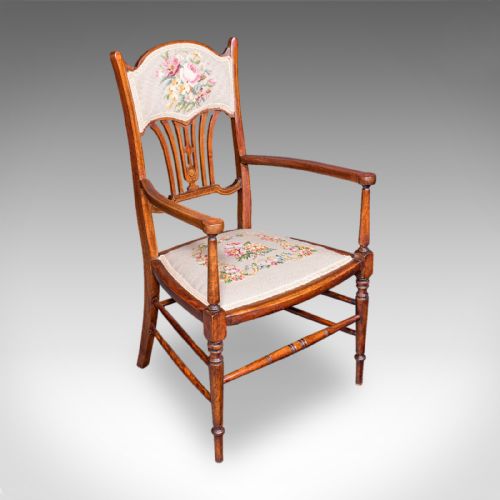
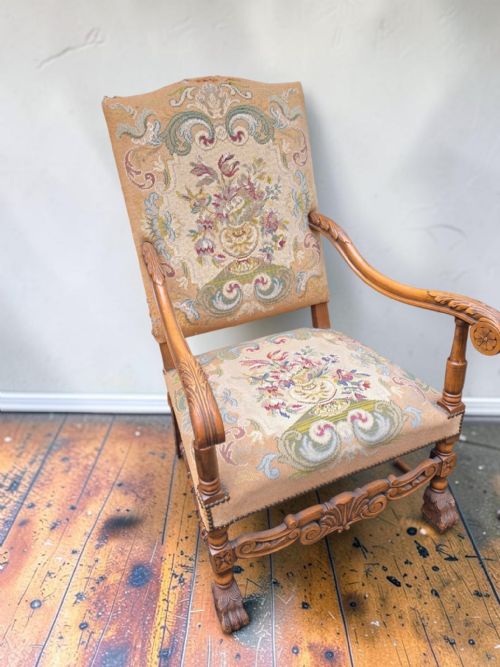
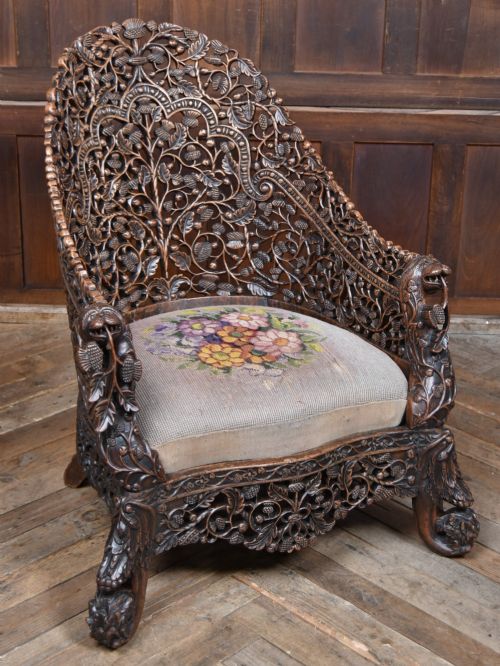
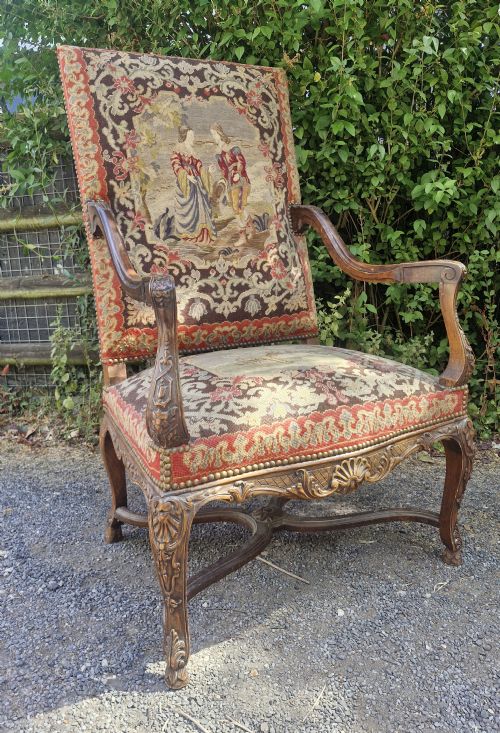
Needlepoint accent armchairs combine seating with decorative stitched panels worked in wool or tapestry. These chairs serve as striking focal points in a drawing room, bedroom or morning room.
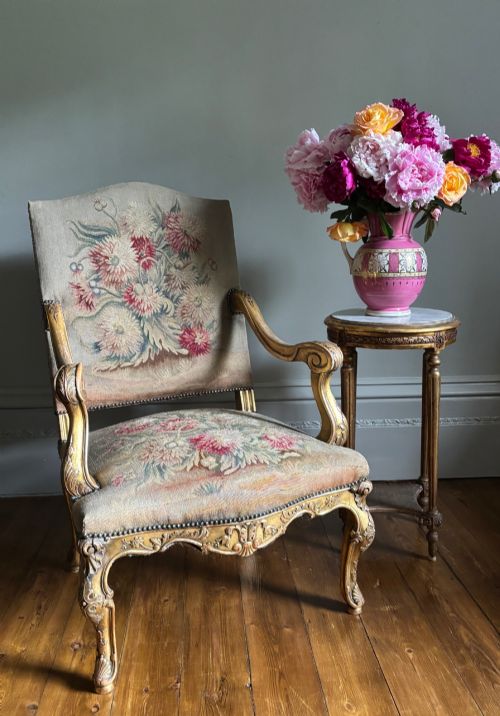
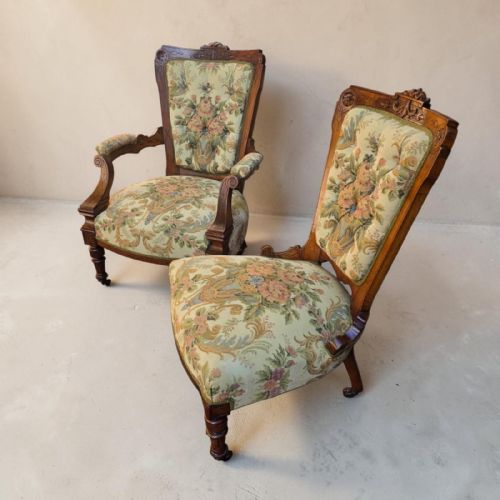
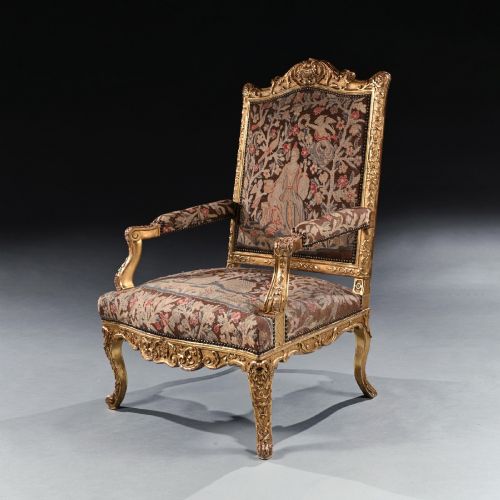
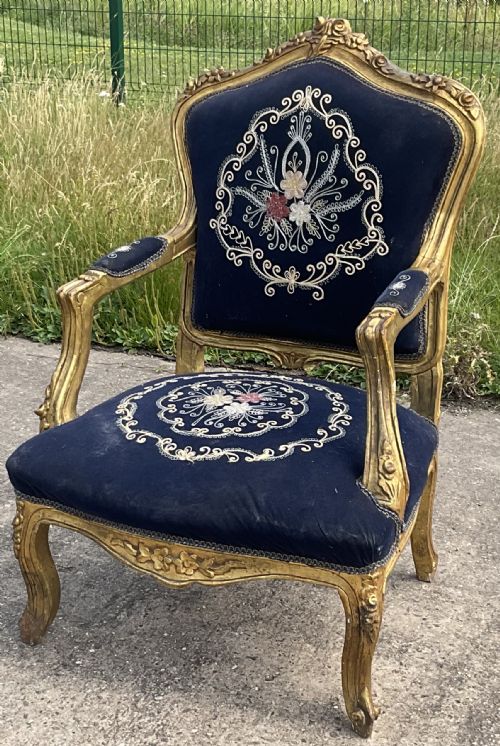
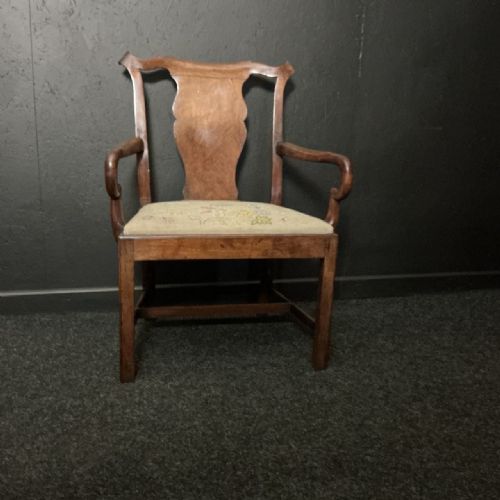
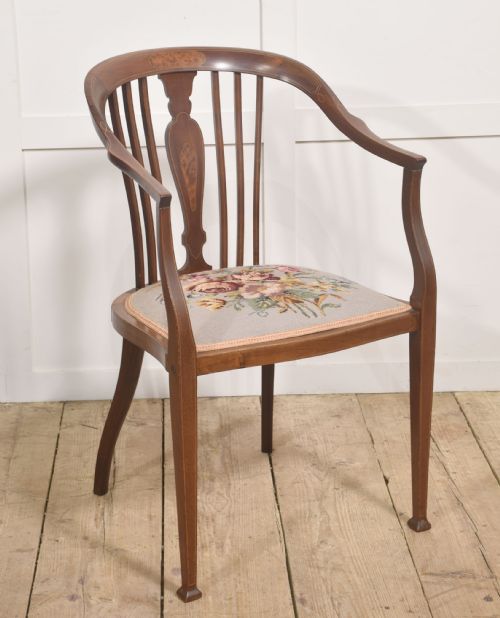
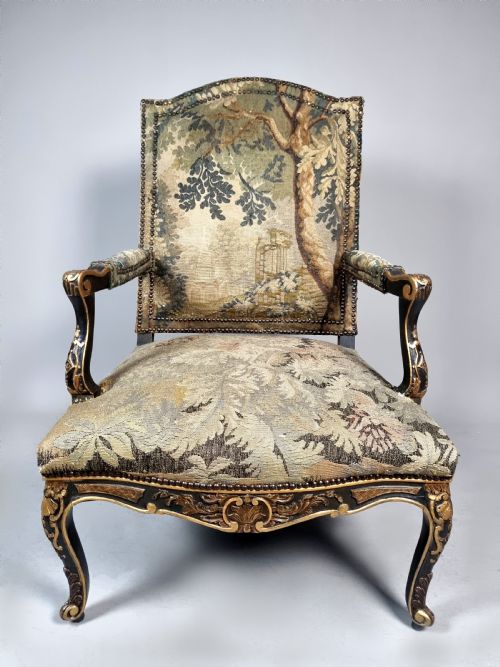
The pieces available span several eras, with Victorian and nineteenth-century examples appearing frequently alongside eighteenth-century forms and Edwardian updates. Frames range from compact nursing chairs to large open armchairs and giltwood fauteuils.
Makers and workshops across England and France produced these seating options in styles such as Regency, Louis XV revival and Victorian rococo. Buyers select them for both practical seating and historical visual presence.
Materials and Construction
Makers constructed the structural frames of these armchairs using dense hardwoods such as walnut, mahogany, beech, oak and rosewood. Some frames received carved giltwood or painted finishes, while others incorporated brass details or marquetry and satinwood inlay.
The upholstery centres on hand-stitched needlework, tapestry and wool panels, sometimes designated as petit point. These textiles were stretched over padded seats, backs and arm pads supported by traditional webbing and stuffing.
Needlepoint Accent Armchairs Retail Price Guide 2026
Typical asking prices for needlepoint accent armchairs among the pieces listed under this phrase on Sellingantiques today, from the lower quarter to the upper quarter. They describe what is for sale here now, not the wider market.
Listings feature walnut, mahogany and giltwood frames paired with wool tapestry and needlepoint textiles across nineteenth-century and earlier periods.
Assessing Quality
Quality rests primarily on the crispness of the timber carving and the complexity of the frame construction, whether fluid French rococo curves or sturdy English proportions. Finer examples display master joinery and sophisticated decorative elements like giltwood or inlaid marquetry.
The standard of the needlepoint upholstery itself defines the upper tier of the range. Densely worked petit point panels with subtle shading and intact wool yarns elevate the piece above simpler machine-woven or coarsely stitched alternatives.
Holland and Sons·Gillows
The Needlepoint Accent Armchairs Glossary
- Fauteuil
- An open-framed armchair originating in France, typically featuring exposed carved wood and upholstered arm pads. These seats became prominent during the seventeenth and eighteenth centuries.
- Petit point
- A fine stitch needlework technique executed on canvas, allowing for intricate pictorial detail and subtle colour gradation. It frequently covers the seat backs and pads of formal period chairs.
- Giltwood
- Timber treated with a thin layer of gold leaf or metallic gilt over a prepared gesso base. This finish appears often on decorative French revival and nineteenth-century salon chairs.
- Nursing chair
- A low-seated Victorian chair designed without arms or with low arms to accommodate the voluminous skirts of the period. They often feature upholstered needlework panels and turned wooden legs.
- Tapestry
- A heavy hand-woven or needle-worked textile depicting figures, foliage or geometric patterns. On these chairs, tapestry panels form the main upholstered decorative surfaces.
Needlepoint Accent Armchairs: Frequently Asked Questions
How do I clean needlepoint upholstery?
Surface dust can be removed gently using a soft brush attachment on a low-suction vacuum. Avoid liquid cleaners or scrubbing, which can damage the wool threads.
For stubborn marks, professional textile conservation provides the safest intervention. Keeping the chair out of direct sunlight protects the wool colours from fading over time.
Are these chairs comfortable for daily use?
Many of these chairs offer supportive seating, though their comfort depends on the original padding style and internal webbing. Victorian and Edwardian examples often feature deep cushioning suited for relaxation.
Earlier eighteenth-century chairs prioritise upright posture and formal seating arrangements. Testing the seat height and back angle helps determine daily usability for your space.
How do I date a needlepoint armchair?
Dating relies on combining the timber species, joinery techniques and frame style with the characteristics of the needlepoint panel. Victorian pieces often use walnut or mahogany with distinct revival carving.
Earlier eighteenth-century forms display hand-cut joinery and specific regional proportions. Examining the underside and the construction joints reveals clues about the manufacturing period.
Where should I place an accent armchair?
These chairs work well in corners, beside fireplaces or as paired seating in a drawing room. Their decorative needlework panels draw the eye, making them effective focal points.
In bedrooms, smaller nursing chairs fit comfortably beside dressing tables or empty walls. Ensure the room's humidity remains stable to protect both the wooden frame and the textile panel.