
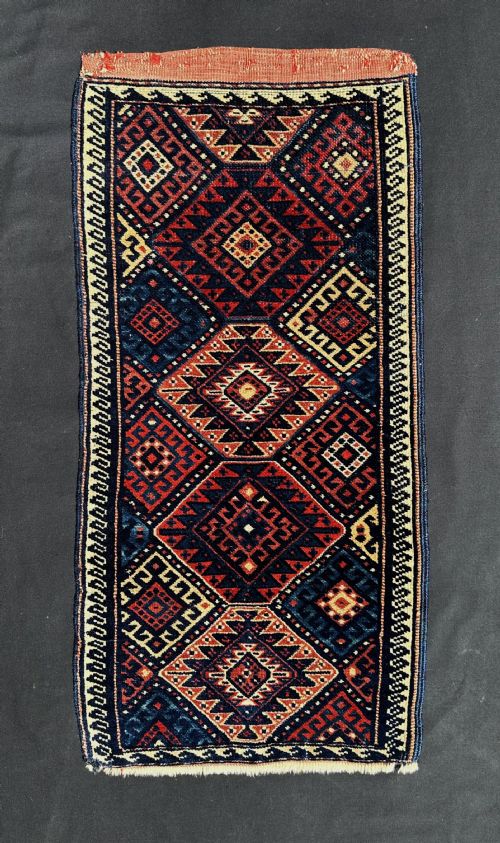
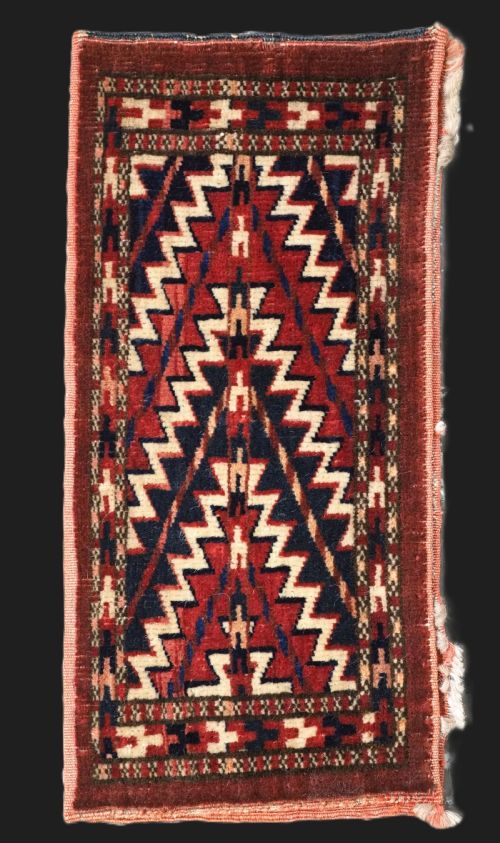


Navy Wool Tribal Bag
A navy wool tribal bag brings nomadic craftsmanship directly into a modern interior through deeply saturated indigo tones and durable pile.
Navy Wool Tribal Bag
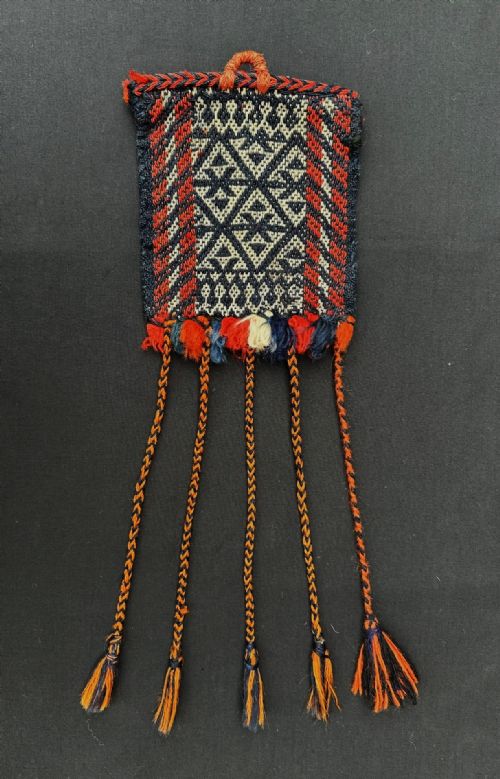
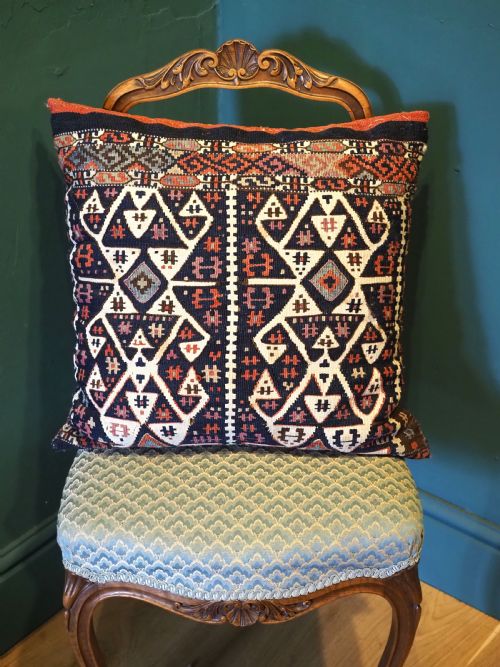
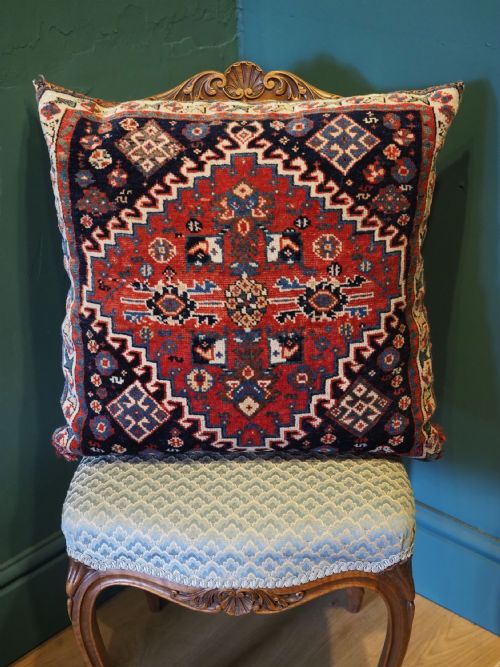
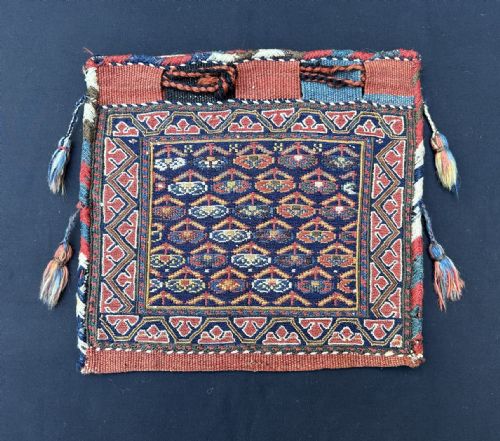
A navy wool tribal bag represents utilitarian nomadic weaving originating from nineteenth-century Persian, Turkish, and Central Asian regions, functioning historically as horse or camel transport luggage. Buyers searching for a navy wool tribal bag encounter various formats, most commonly surviving bag faces, cushions, and complete khorjin pairs woven by groups such as the Qashqai, Baluch, Afshar, and Yomut Turkmen.
These textiles manifest primarily as compact rectangular fragments or repurposed cushions spanning the mid-nineteenth century to the early twentieth century. The forms range from single half-faces to double-sided compartments complete with original plain weave wool backs.
Materials and construction methods
Weavers constructed these pieces utilising hand-spun wool for the foundational warps, wefts, and dense pile, often combined with cotton details. Natural vegetable and plant-based sources provided the deep navy and indigo dye baths that characterise the field colours.
Techniques varied from standard symmetric and asymmetric knotting to flatwoven soumak and kilim structures. Artisans secured structural integrity by finishing edges with sturdy overcast selvedges designed to withstand daily nomadic movement.
The listings span from eighteen-fifty to nineteen-twenty, demonstrating wool, cotton, and natural vegetable dyes across Persian and Central Asian nomadic styles.
Distinctions in quality and execution
Quality rests upon the handle and lustre of the wool, where high lanolin content produces a tactile oily sheen and depth of tone. Superior examples display tightly packed knots and precise geometric drawing executed by experienced weavers.
The complexity and crispness of the tribal motifs - ranging from boteh patterns to bird and dragon designs - distinguish master workshops from routine utilitarian output. Preservation of original plain weave backs and complete structural boundaries further elevates the standing of an individual piece.
The Navy Wool Tribal Bag Glossary
- Khorjin
- A traditional double-sided saddlebag utilised by nomadic groups for transport. These items featured two pouches connected by a central web.
- Bag face
- The decorative pile-woven or flatwoven front panel of a utility bag, which often survives independently after the plain weave back deteriorates.
- Soumak
- A flatweaving technique involving wrap-sewing weft threads over vertical warps to create a durable, textured surface.
- Boteh
- An almond-shaped or paisley motif representing a floral or cypress sprout symbol, frequently placed across tribal fields.
- Okbash
- A specialised tent ornament or tapered tubular bag used in Central Asia to store tent poles.
Navy Wool Tribal Bag: Frequently Asked Questions
How were these bags used?
Nomadic tribes slung these containers across pack animals to carry personal possessions, provisions, and household goods during seasonal migrations.
Over decades, utilitarian transport bags transitioned into domestic storage items within tribal tents before surviving fragments were repurposed as decorative cushions and wall hangings.
How do I care for wool textiles?
Gentle surface vacuuming without a beater bar removes embedded dust and protects fragile historic wool fibres from unnecessary mechanical stress.
Keep these textiles away from direct, prolonged sunlight to prevent natural dye fading, and ensure they rest in well-ventilated dry environments.
How are tribal regions identified?
Weavers incorporated distinct structural signatures, specific knotting densities, and regional colour palettes unique to tribal confederations like the Qashqai or Afshar.
Motif repertoires, such as specific geometric borders and animal or plant stylisations, point directly back to particular geographic provinces in Persia and Central Asia.
What is a bag face?
A bag face is the decorative front panel separated from the utilitarian rear pouch of a nomadic transport container.
Because the rear sections endured heavy friction against pack animals, many surviving examples retain only the intricate face portion for display purposes.