


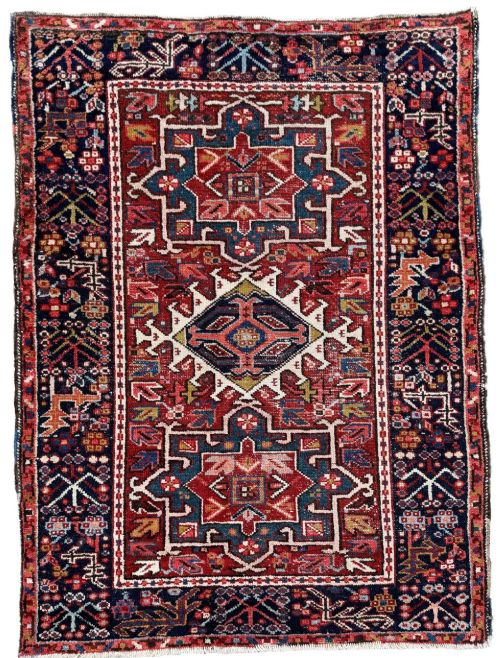
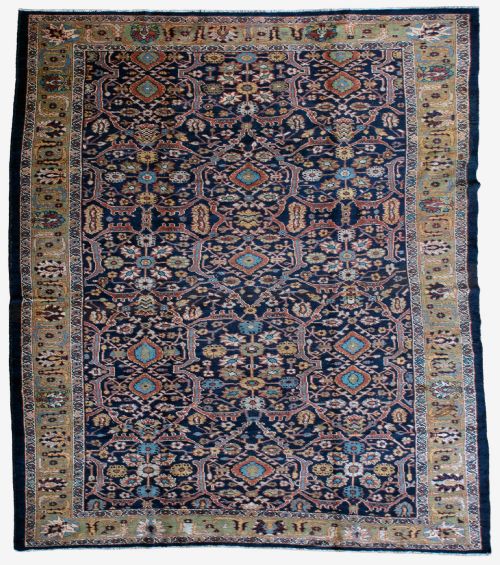
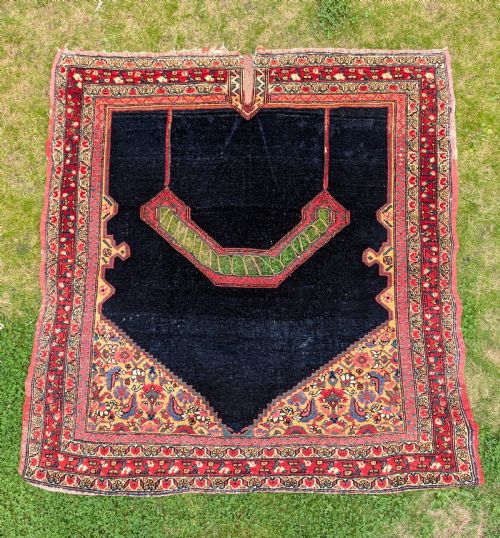
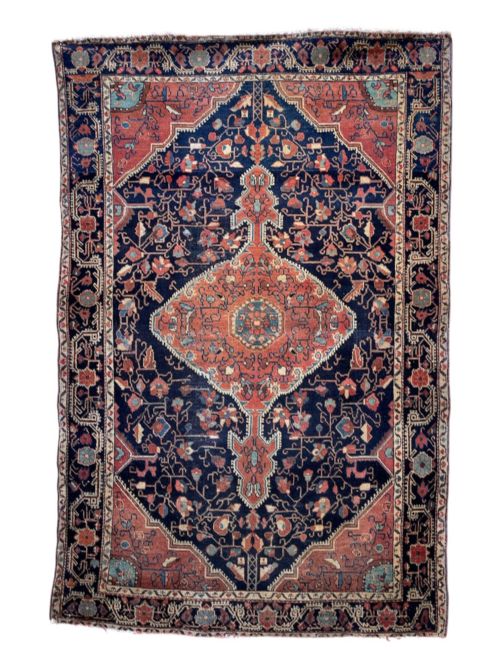
Navy Wool Persian Rug
A navy wool persian rug brings depth and grounded character to a room through dense hand-knotted pile and rich dark dyes.
Navy Wool Persian Rug
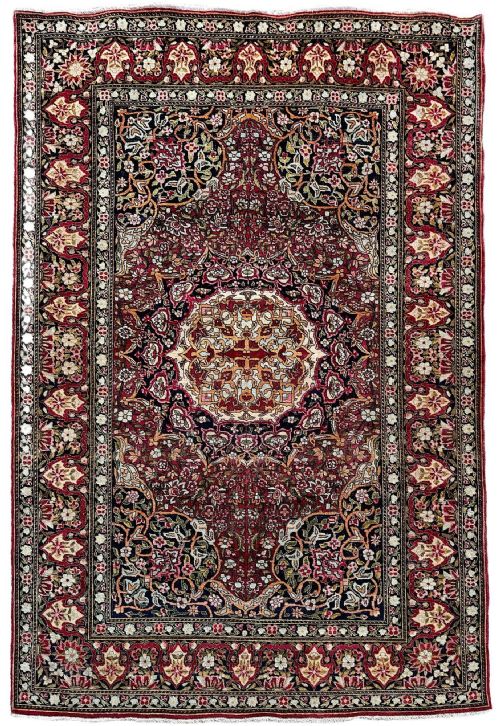
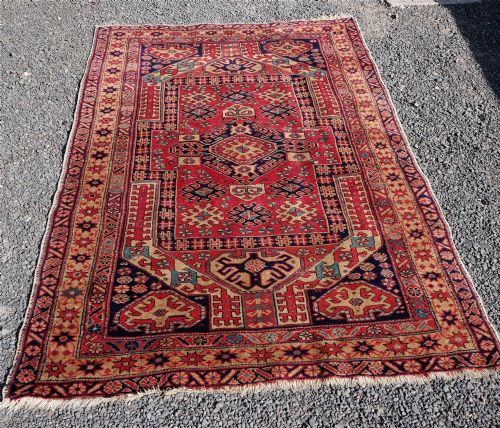
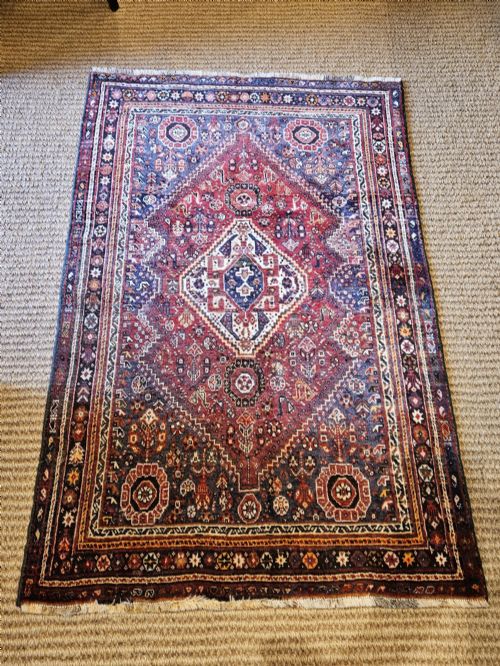
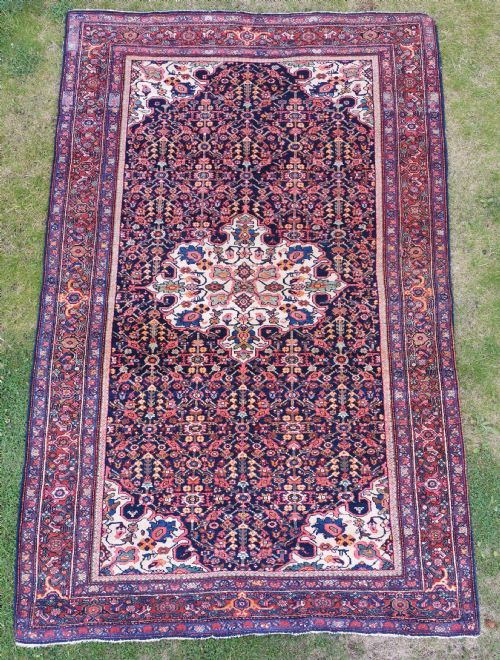
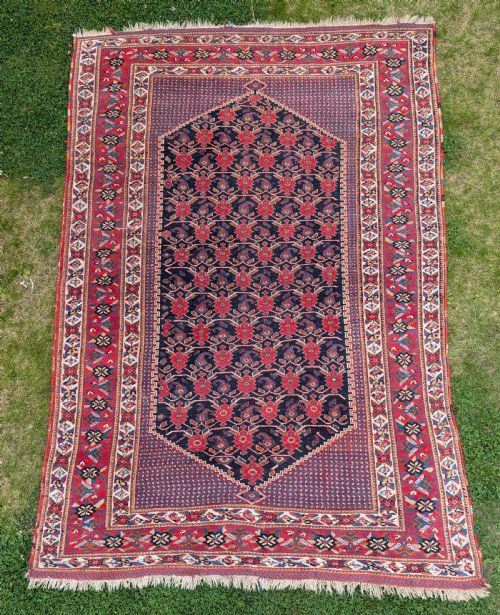
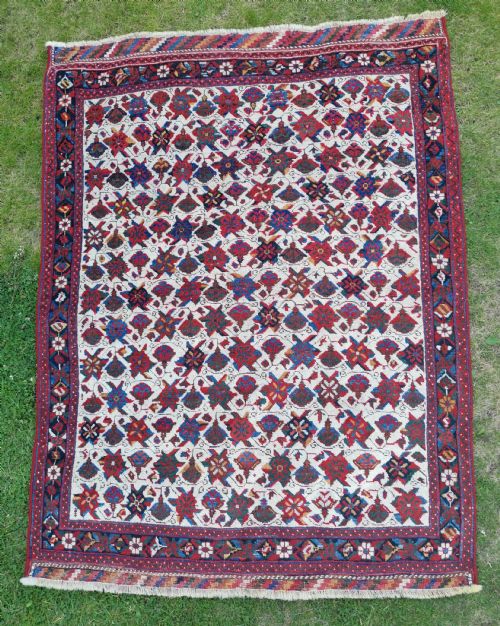
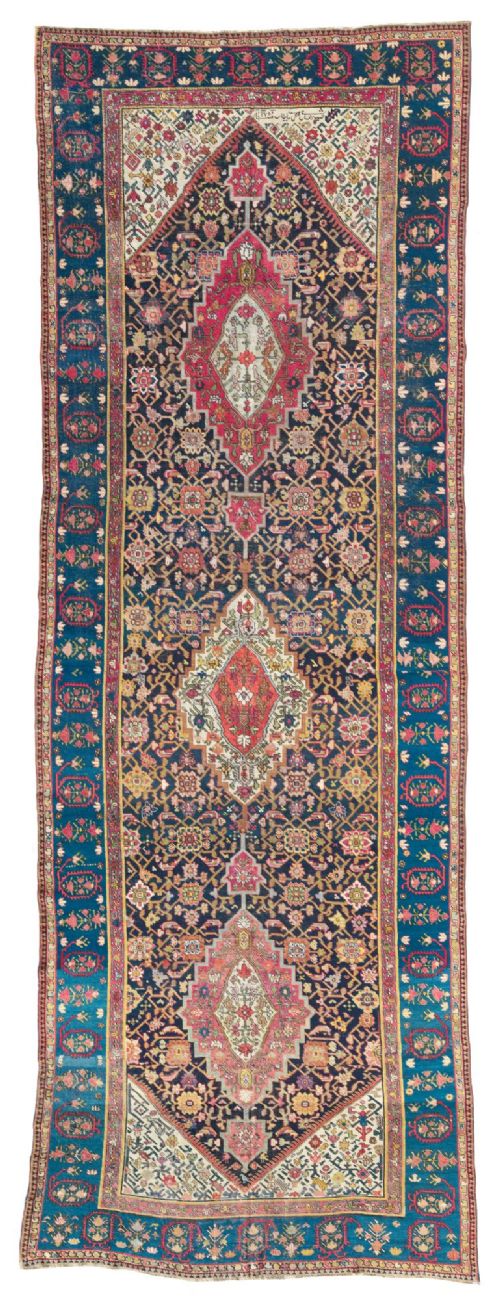
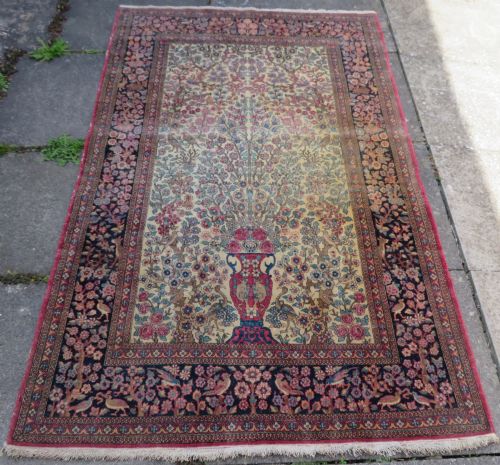
A navy wool persian rug encompasses hand-knotted carpets, area rugs, and runners originating from various weaving centres and tribal confederacies across nineteenth and early twentieth century Persia. These floor coverings range from compact village scatter rugs to large room-size carpets woven with geometric medallions, all-over lattice patterns, or central floral motifs.
Buyers encounter numerous regional variations on this page, including resilient Heriz and Serapi carpets, finely knotted Saroukh and Isfahan pieces, and robust tribal formats such as Afshar, Khamseh, and Bakhtiar rugs. Village weavers and nomadic groups created these textiles for domestic use or local trade, utilising wool foundations and pile that survive centuries of daily wear.
How they were made
Weavers constructed these textiles using wool or cotton warps and wefts, securing the pile with hand-knotted techniques that lock each tuft firmly into the foundation. Artisans sourced natural dyes from plants and minerals to colour the fleece, producing deep indigo blues alongside madder reds and ivory accents that mellow gracefully over time.
Nomadic and village workshops spun their wool by hand or utilised early mechanical spinning methods to prepare sturdy yarn capable of withstanding heavy foot traffic. Loom structures varied from horizontal ground layouts used by nomads to upright wooden frames operated by sedentary village weavers.
Navy Wool Persian Rug Retail Price Guide 2026
Typical asking prices for navy wool persian rug among the pieces listed under this phrase on Sellingantiques today, from the lower quarter to the upper quarter. They describe what is for sale here now, not the wider market.
Nomadic weavers occasionally embedded small protective amulets or stray animal hairs directly into the wool pile of their travelling looms.
What varies in quality
Quality in these floor coverings rests upon knot density, the precision of the design execution, and the integrity of the wool foundation. Finer knotting permits intricate curves and detailed botanical motifs, whereas coarser tribal weaves rely on bold, rectilinear geometry.
The stability of the original dyes and the retention of the outer edge bindings and original ends dictate the structural longevity of each piece. Surviving pile depth and even wear across the surface distinguish well-preserved examples from heavily degraded textiles.
The Navy Wool Persian Rug Glossary
- Medallion
- A central ornamental design element placed in the middle of the field. This motif anchors the symmetrical composition of many village and town carpets.
- Warp
- The vertical foundation threads stretched tightly on the loom before knotting begins. Weavers tie the pile yarn directly around these parallel strands.
- Weft
- The horizontal threads passed across the warp strands after each row of knots. This secures the pile in place and maintains the structural width of the textile.
- Pile
- The dense surface layer of knotted wool or silk yarn that forms the upper texture of the rug. Tighter knotting creates a firmer and more resilient pile.
- Kilim
- A flat-woven textile section usually found at the ends of a pile rug. These protective bands prevent the knotted carpet area from unravelling.
Navy Wool Persian Rug: Frequently Asked Questions
How do I clean an old wool rug?
Gentle surface brushing and regular low-suction vacuuming without a rotating beater bar remove embedded grit safely. Professional textile conservators should handle deep wet cleaning to protect natural dyes.
Harsh chemical detergents and excessive water saturation damage wool fibres and cause bleeding in antique vegetable dyes. Keep the textile dry and address spills promptly with blotting rather than rubbing.
Where were these carpets woven?
Weavers produced these textiles across urban workshops, rural villages, and nomadic tribal camps in regions such as Heriz, Saroukh, Isfahan, and Fars province. Each area developed distinct colour palettes and structural traits.
Nomadic groups like the Afshar and Khamseh wove smaller formats on portable looms, while town ateliers in Isfahan and Tabriz created large formal carpets with complex floral cartoons.
Are these rugs suitable for high traffic areas?
Thick hand-spun wool pile and sturdy cotton foundations provide exceptional durability for hallways, living rooms, and dining spaces. These materials resist crushing and rebound well under sustained movement.
Pairing the textile with a quality underlay prevents slipping and cushions the foundation against hard flooring surfaces, extending the lifespan of the pile.
How can I tell the age of a piece?
Inspect the dyes, wool quality, and structural asymmetry to determine the approximate period of manufacture. Variations in colour saturation and hand-spun irregularities point to nineteenth-century or early twentieth-century production.
Chemical dye tests and specific regional design structures help narrow down the decade, distinguishing traditional village pieces from later commercial reproductions.