

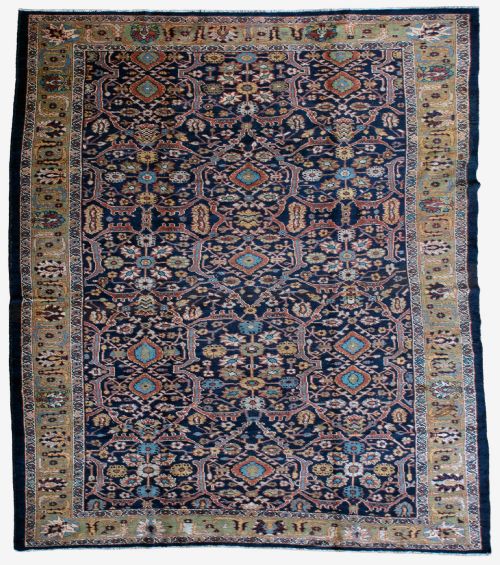
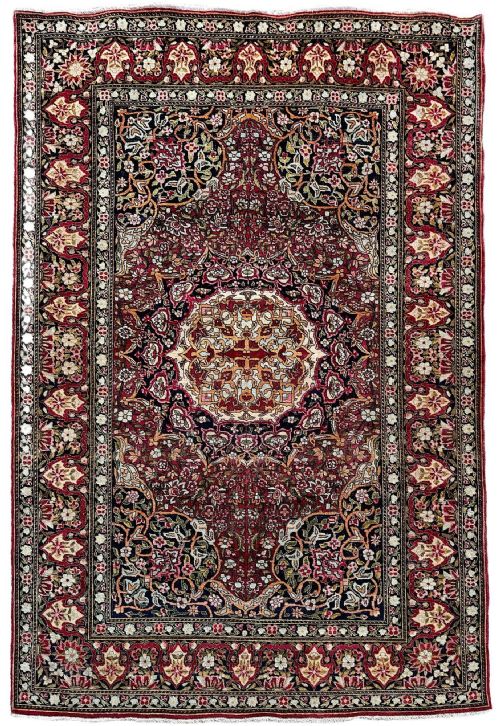
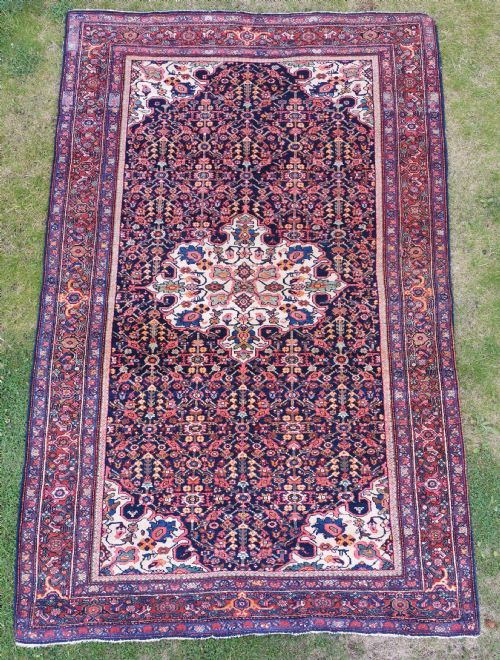
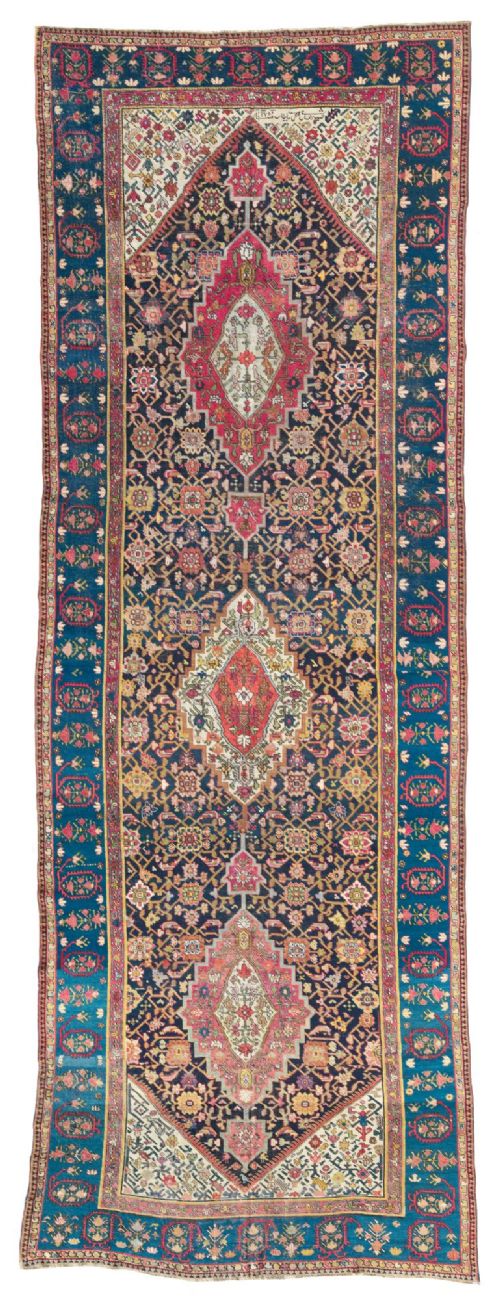

Navy Floral Rug
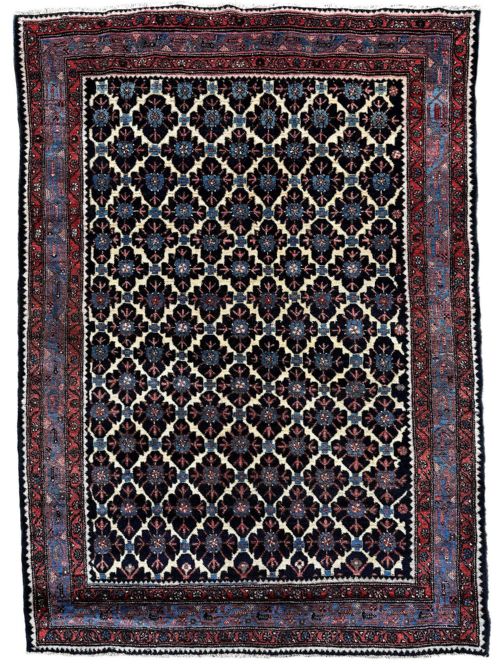
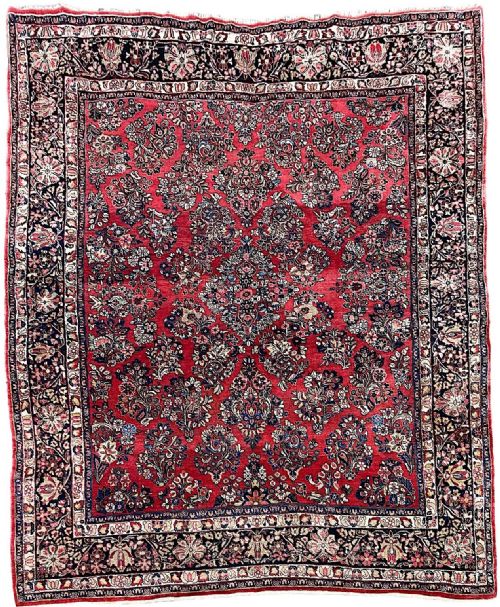
A navy floral rug brings deep indigo dye and intricate botanical motifs together, grounding a room with centuries of Persian and Caucasian tradition.
Navy Floral Rug
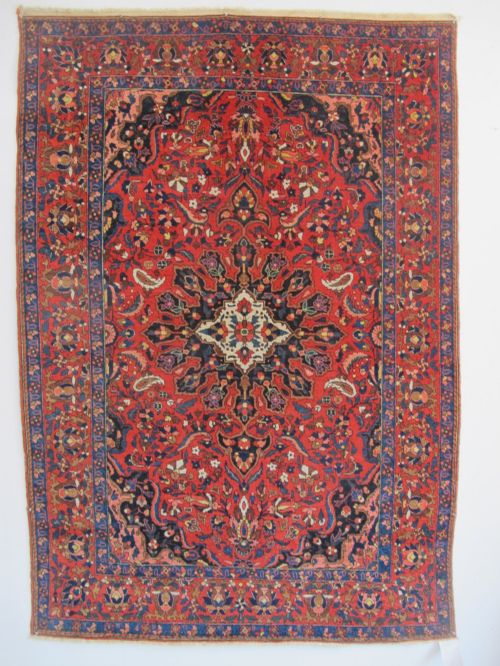
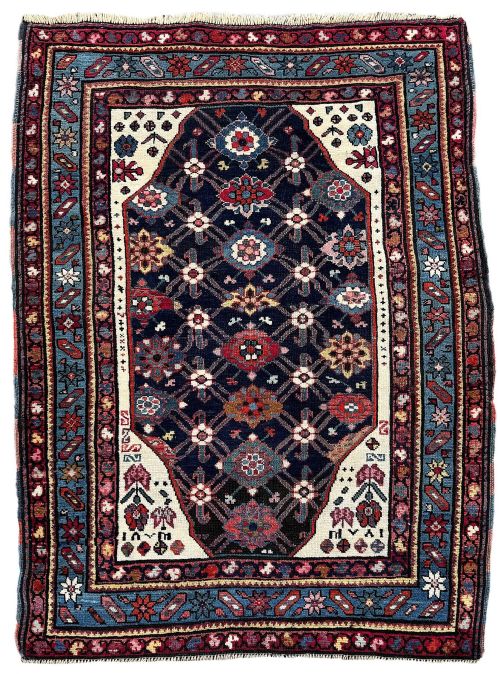
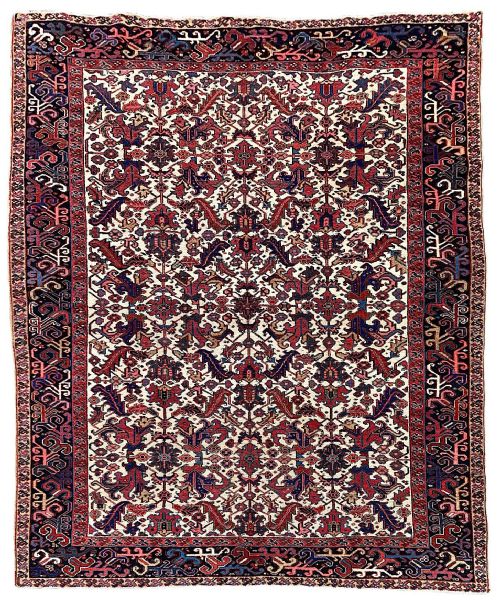
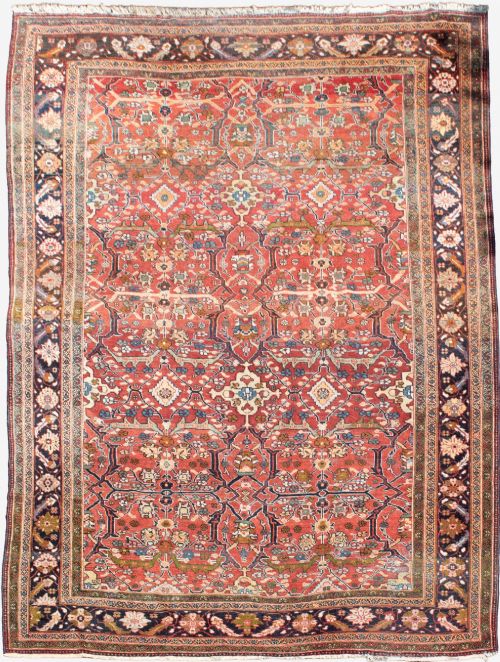
A navy floral rug encompasses hand-knotted floor coverings hailing predominantly from Persian and Caucasian weaving traditions dating from the mid-nineteenth century through the early twentieth century. Buyers seeking this style will encounter room-size carpets, smaller area pieces, and elongated runner formats bearing botanical elements.
The selections span distinct regional workshops and village provenances such as Mahal, Kashan, Bakhtiar, and Heriz. Examples range from compact formats measuring around one metre to expansive carpets exceeding four metres in length.
Production dates observed across the pieces stretch from the eighteen-fifties to the nineteen-thirties, reflecting diverse village and city aesthetics. These floor coverings bridge utilitarian domestic use and intricate textile art.
How they were made
Makers utilised resilient wool piles knotted onto supportive cotton or wool foundations to build dense, hard-wearing surfaces. Silk also appears in specific woven examples to highlight fine structural details.
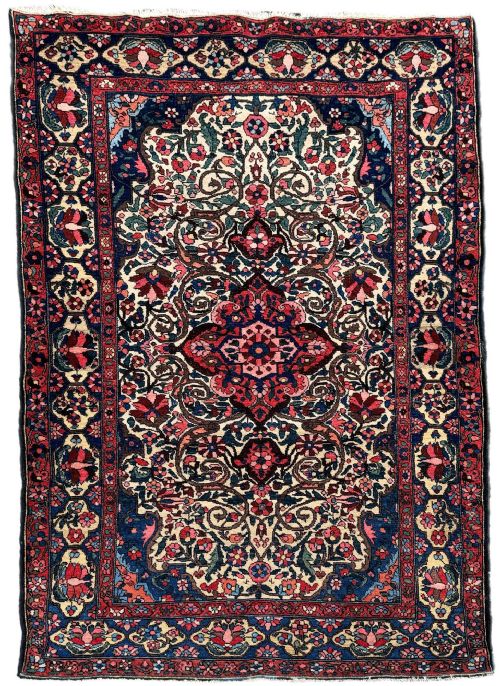
Weavers employed traditional upright looms, tying individual hand knots to build up intricate floral medallions, trellis patterns, and tree of life motifs. Vegetable and natural dyes produced the characteristic deep navy grounds and contrasting accent colours.
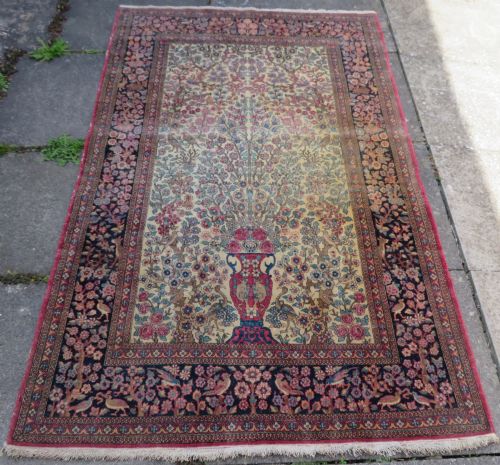
Several carpets feature stylized trees of life populated by diminutive birds and botanical tendrils.
What varies in quality
Quality rests upon knot density, the precision of the botanical drawing, and the depth achieved in the indigo and navy dye work. Tighter knots allow complex curvilinear designs to remain crisp and legible across the expanse.
The integrity of the foundation foundation materials and the evenly retained pile height determine durability. Finer city workshops achieved superior refinement in their floral arrangements compared to coarser village productions.
The Navy Floral Rug Glossary
- Medallion
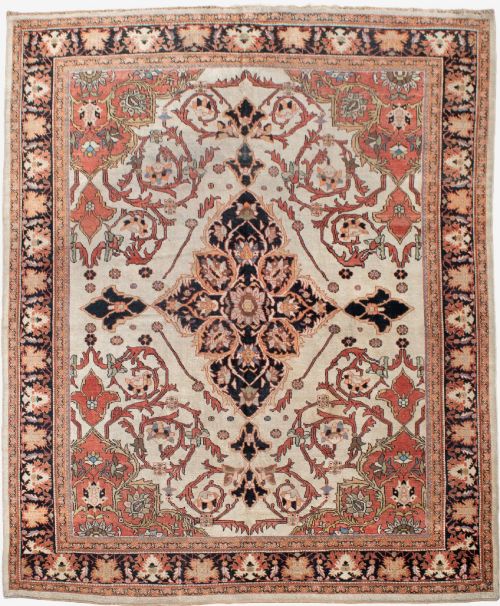
- A central ornamental motif set into the middle of the rug field. It often mirrors corner spandrels in its floral composition.
- Kelleh
- A long, narrow carpet format traditionally suited for specific hallway or salon dimensions. These pieces display extended field designs.
- Kilim
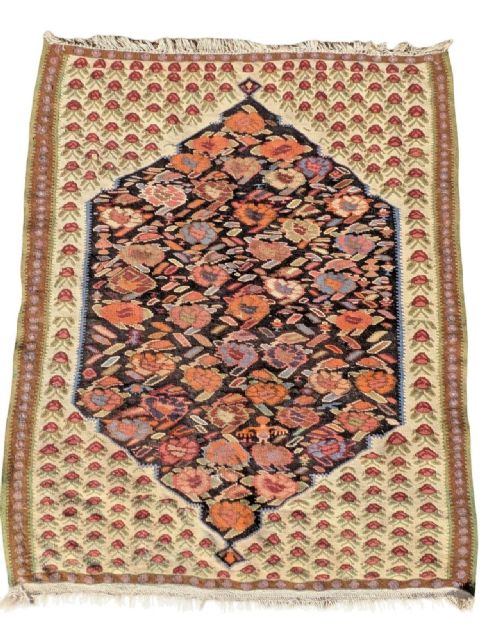
- A flat-woven carpet or rug produced without a raised pile. This technique creates a lighter, reversible textile.
- Spandrel
- The triangular corner area of a rug border system. These sections frequently contain secondary floral sprays.
- Knot
- The individual loop of yarn tied around warp threads to form the pile. Higher counts indicate greater labour and detail.
Navy Floral Rug: Frequently Asked Questions
How do I clean an old wool rug?
Gentle surface brushing and professional specialist washing preserve the natural wool pile and botanical dyes without causing structural damage.
Avoid harsh chemical detergents and excessive moisture which can compromise the cotton or wool foundation threads over time.
Where should I place a large carpet?
Large room-size formats suit principal living spaces and dining areas where furniture weight can anchor the textile properly.
Ensure the floor beneath is level and consider a suitable underlay to prevent slipping and reduce friction on the foundation.
How do I identify a village weave?
Village productions display geometric interpretations of floral motifs and bolder, less rigid lines than fine city workshop carpets.
Inspect the back of the rug to observe the regularity of the knots and the structure of the foundation yarns.
What does a prayer design look like?
Prayer rugs feature a distinct architectural mihrab or arch shape at one end of the field. The design directs the eye toward floral vases and symbolic botanical elements.
These formats were traditionally woven for devotional use but function effectively as decorative wall hangings or accent floor pieces.