

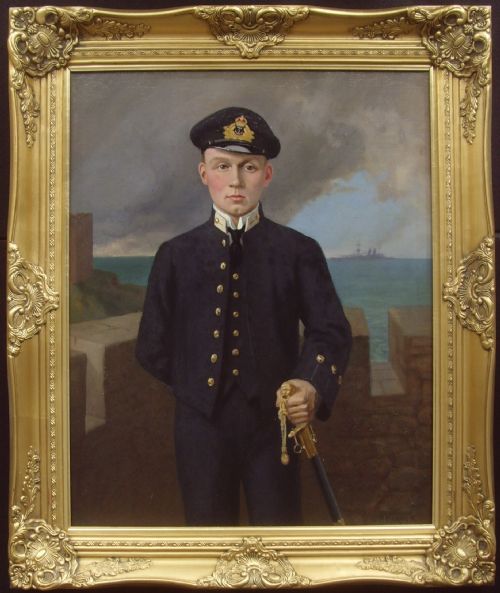
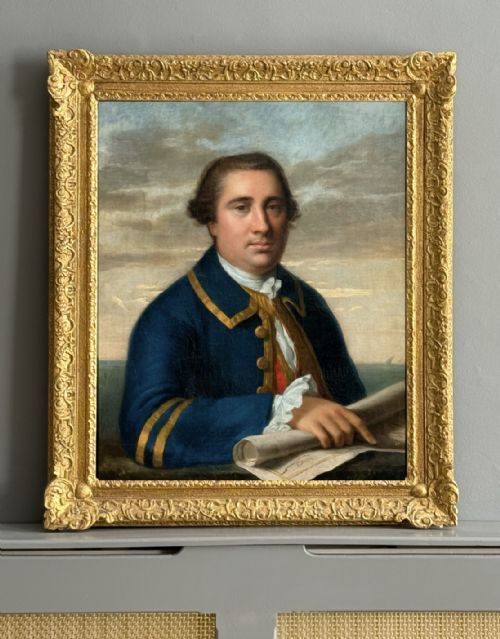


Navy Blue Portrait Painting
These navy blue portrait painting works capture commanding figures in uniform, offering a glimpse into maritime history through oil and watercolour.
Navy Blue Portrait Painting
A navy blue portrait painting depicts officers and monarchs connected to maritime service, often dressed in formal naval uniforms that set the dark palette of the composition. These works appear across several periods, stretching from the eighteenth century through the Edwardian era and into the mid-twentieth century.
The subjects on this page include midshipmen, captains, admirals, and royalty rendered in oil on canvas, paper, or portrait miniature formats. Buyers encounter Georgian and Victorian maritime portrayals alongside early twentieth-century realism and mid-century pieces.
Framed paintings and fine art panels dominate the selection, highlighting the uniform colours and service backgrounds of figures such as King George VI and Prince Philip. Each piece connects portraiture directly with naval history.
How these pieces were made
Artists relied primarily on oil on canvas and watercolour applied to paper, building up the rich dark tones characteristic of naval uniforms. Giltwood frames frequently enclose the canvases, complementing the painted surfaces.
Navy Blue Portrait Painting Retail Price Guide 2026
Typical asking prices for navy blue portrait painting among the pieces listed under this phrase on Sellingantiques today, from the lower quarter to the upper quarter. They describe what is for sale here now, not the wider market.
Listings span from the eighteenth century to nineteen-fifty, featuring oil on canvas, watercolour, glass, and giltwood.
What varies in quality
The skill of the brushwork and the precision in capturing the likeness and uniform details distinguish the finer examples from simpler student or workshop outputs. Superior pieces display a confident handling of light upon fabric and facial expression.
The preservation of the canvas, paper, and original frame influences the overall standing of an artwork. Works attributed to known painters command attention through established provenance and compositional balance.
Samuel Harry Hancock·Lemuel Francis Abbott·Vincenzo D’Esposito·WF Mitchell·Henry L Gates·Samuel Lane·John Laviers Wheatley·Maurice Codner·Richard Hall
The Navy Blue Portrait Painting Glossary
- Portrait miniature
- A small, highly detailed painting executed on materials such as card, vellum, or ivory, often housed in a protective case.
- Oil on canvas
- A painting medium where pigments are suspended in drying oils and applied to a stretched woven fabric surface.
- Giltwood
- Wood that has been carved and coated with a thin layer of gold leaf or gold paint, commonly used for traditional picture frames.
- Watercolour
- A painting method where water-soluble pigments are applied to paper to create translucent colour washes.
Navy Blue Portrait Painting: Frequently Asked Questions
What subjects appear in these portraits?
The artworks depict naval officers, captains, admirals, and members of the royal family. Many subjects wear formal uniform attire reflecting their service.
Commanders and historical figures form the primary focus of these maritime compositions.
Which periods do these paintings span?
The selection covers works from the eighteenth century, the Victorian era, and the Edwardian period. Later pieces extend into the mid-twentieth century.
Dates range from the seventeen-hundreds through to nineteen-fifty.
What materials were used by the artists?
Painters worked primarily with oil on canvas and watercolour on paper. Some smaller works include portrait miniatures.
Giltwood frames frequently accompany the canvases and paper works.
How should I display a framed painting?
Hang the artwork away from direct sunlight and excessive moisture to protect the canvas or paper. Stable indoor conditions help preserve the paint and frame.
Ensure wall fixings safely support the weight of the giltwood frame.