

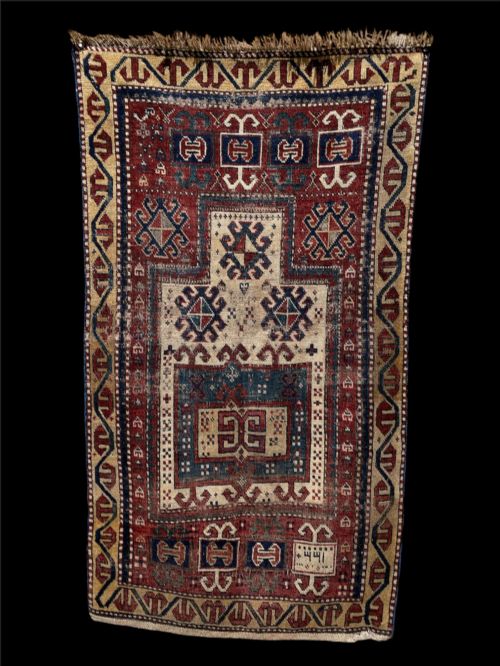
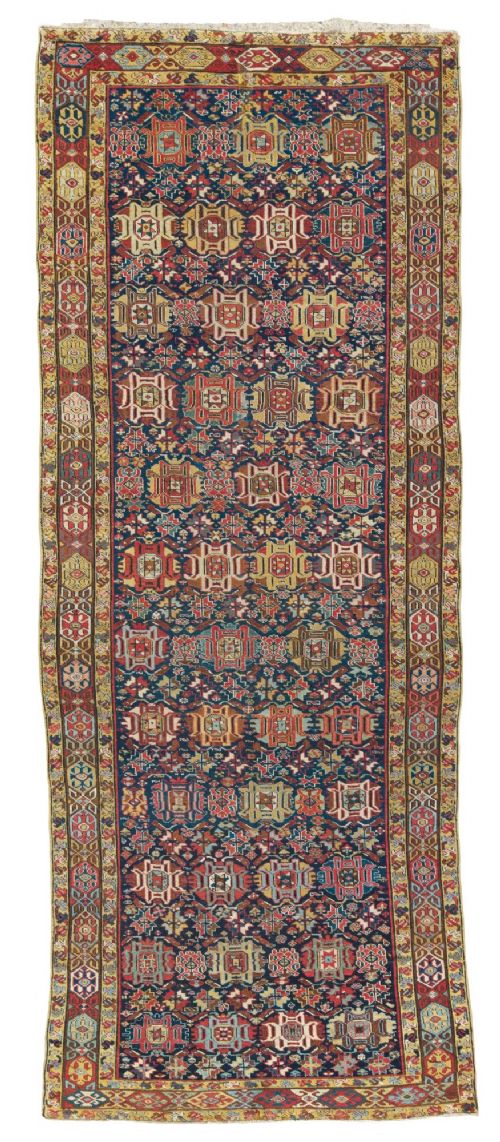
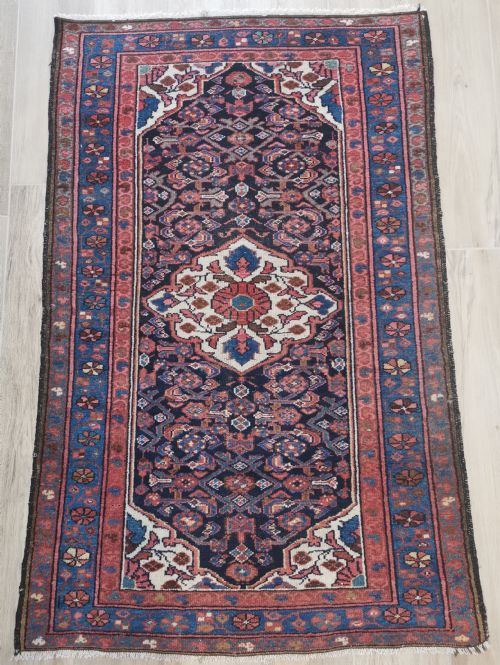
Navy Blue Carpet Runner
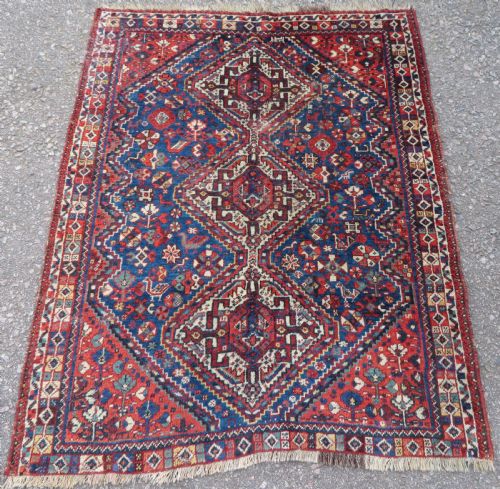
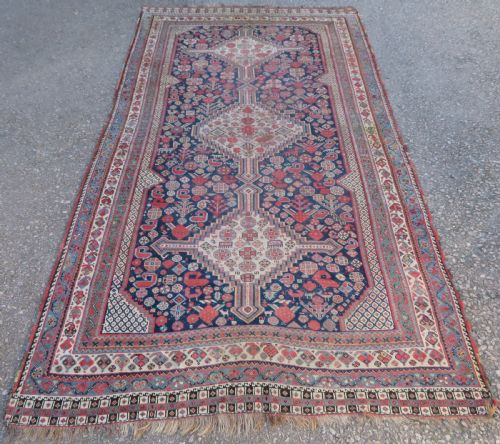
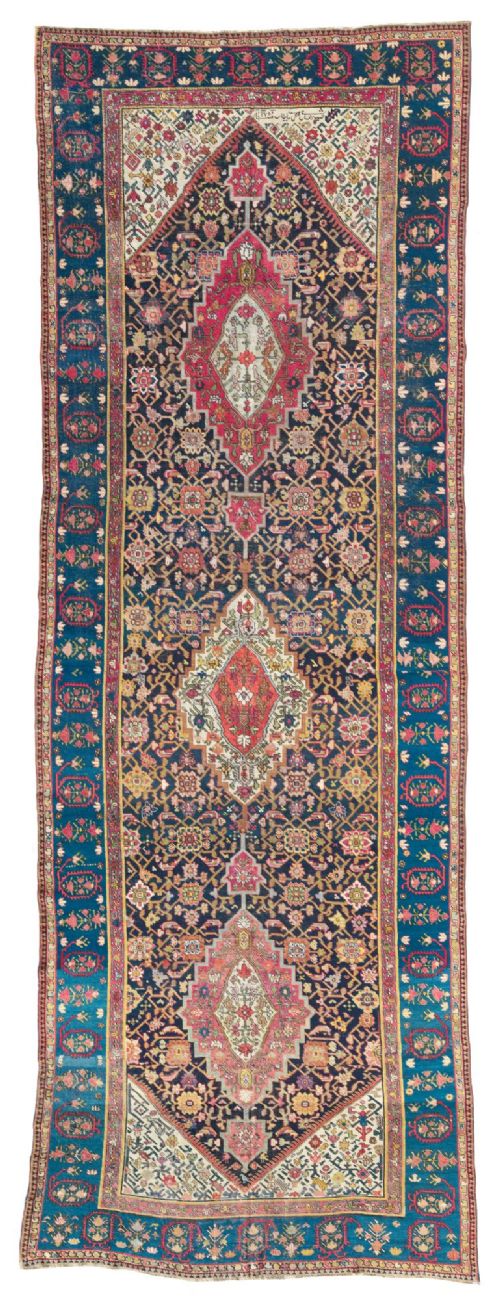
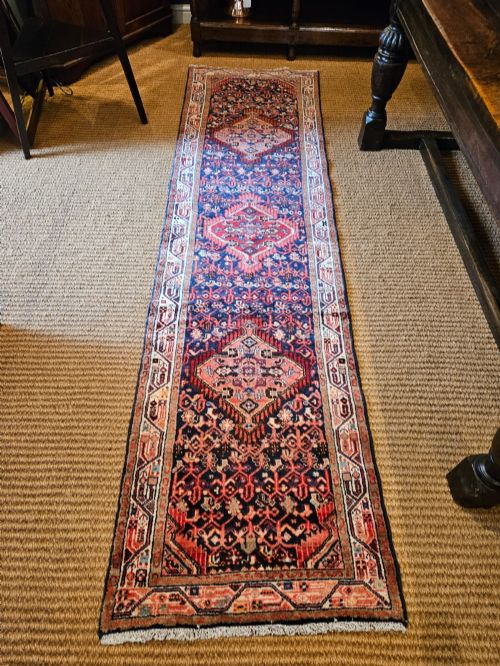
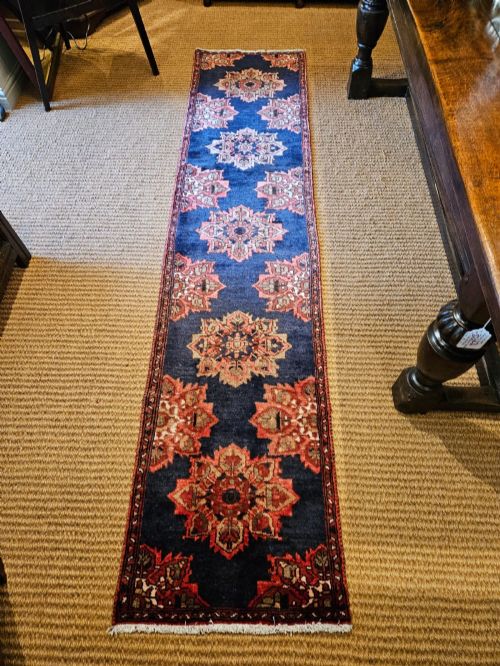
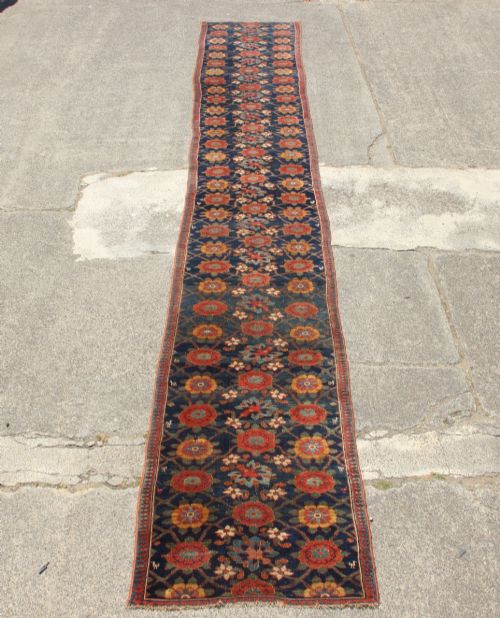
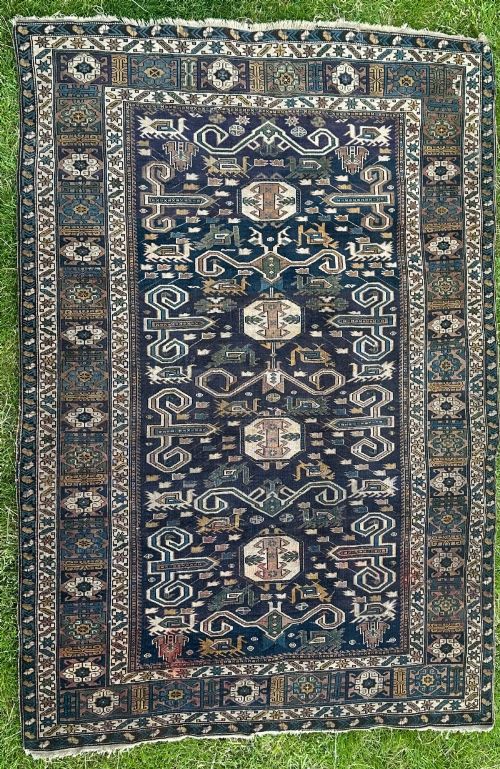
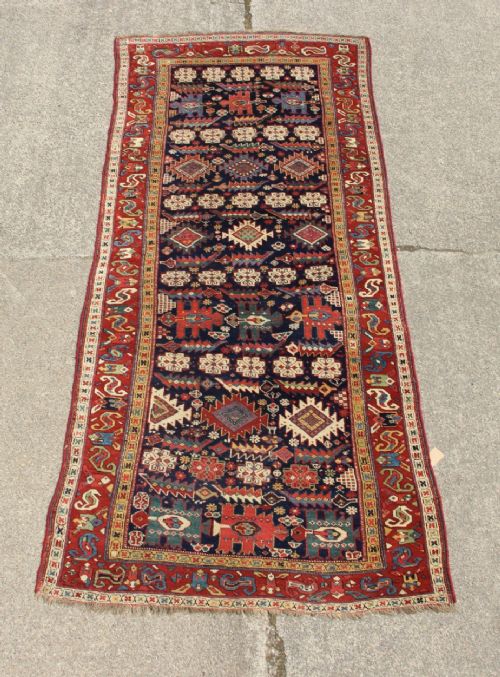
A navy blue carpet runner anchors a long hallway with deep indigo tones and historical character woven directly into the wool.
Navy Blue Carpet Runner
A navy blue carpet runner provides a practical floor covering designed specifically for hallways, corridors and narrow interior spaces.
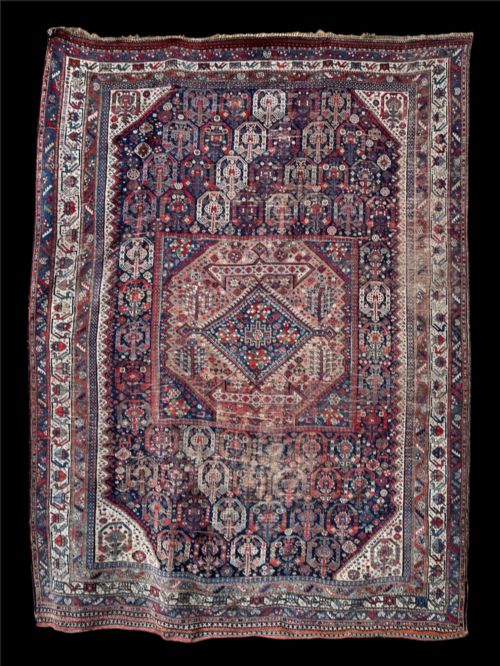
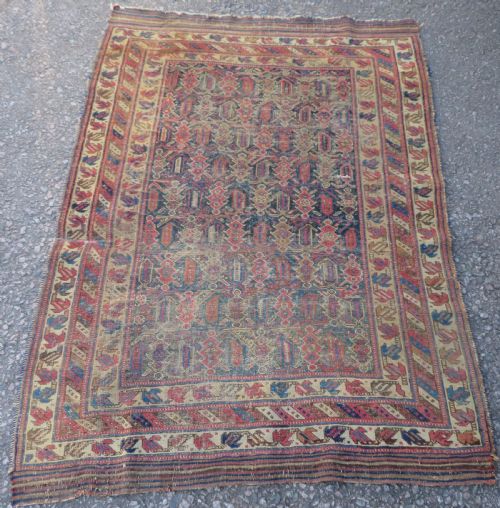
The selections encountered here span from the nineteenth century into the early decades of the twentieth century, originating primarily from Persian and Caucasian weaving traditions.
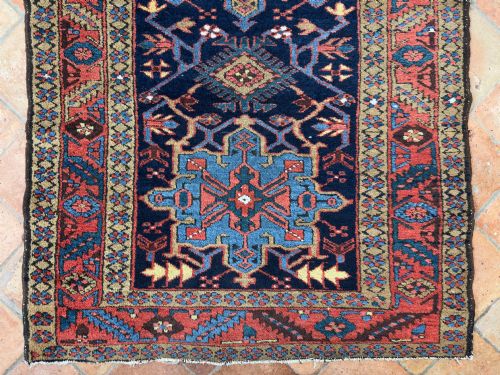
These elongated formats often draw upon tribal and village designs, including Kurdish, Khamseh, Hamadan and Heriz styles, translated into rich blue ground colours.
How they were made
These floor coverings utilise wool and hand-spun wool for the pile and foundation, providing a dense and durable surface suited to heavy foot traffic.
Natural dyeing techniques give the wool its deep indigo and navy shades, which develop a varied patina across the decades.
The selection spans pieces dated from the mid-nineteenth century through the 1930s, utilising wool and cotton materials in Persian and Caucasian tribal styles.
What varies in quality
The fineness of the knotting and the density of the wool foundation determine the structural integrity and longevity of each piece.
Artistic execution in the tribal geometric or floral motifs distinguishes standard village production from finer workshop examples.
The Navy Blue Carpet Runner Glossary
- Runner
- A long, narrow carpet format traditionally utilised in hallways, corridors and on staircases. This shape accommodates confined architectural spaces while displaying continuous border and field patterns.
- Kelleh
- A large rectangular carpet format, typically longer than it is wide, bridging the proportion between a standard scatter rug and a full room-size main carpet.
- Gul
- A medallion or repeating octagonal motif frequently found in tribal weaving traditions, particularly among Turkmen and Caucasian makers.
- Mina Khani
- An overall pattern composed of interconnected rosettes and flowers linked by delicate curving vines, commonly seen in Persian carpets.
Navy Blue Carpet Runner: Frequently Asked Questions
Where should I place a runner?
These long carpets suit hallways, corridors and narrow entryways where foot traffic is frequent. Their elongated proportions guide movement through domestic spaces.
Position them on bare timber floors or over neutral floor coverings to let the indigo tones anchor the room.
How do I care for antique wool runners?
Regular gentle vacuuming without a rotating brush roll keeps dust from settling deep into the wool pile. Professional cleaning suited to antique textiles preserves the natural lanolin.
Rotate the piece periodically to ensure even wear across the length of the hallway.
What materials make up these carpets?
Traditional examples rely upon wool and hand-spun wool for both the pile and the foundation structure. Cotton also appears in the foundational warps and wefts of later nineteenth and early twentieth century pieces.
Natural dye methods produce the deep navy and indigo ground colours seen across these examples.
How are different regional styles told apart?
Regional identification depends on the geometry of the motifs, the structure of the borders and the palette employed. Kurdish and Caucasian pieces often favour geometric tribal symbols, while Persian workshops display intricate floral vines.
Examining the knotting density and the materials on the reverse side further clarifies the origin.