


Naval Officer Portrait Painting
A naval officer portrait painting captures figures from maritime history in oil, watercolour and enamel.
Naval Officer Portrait Painting
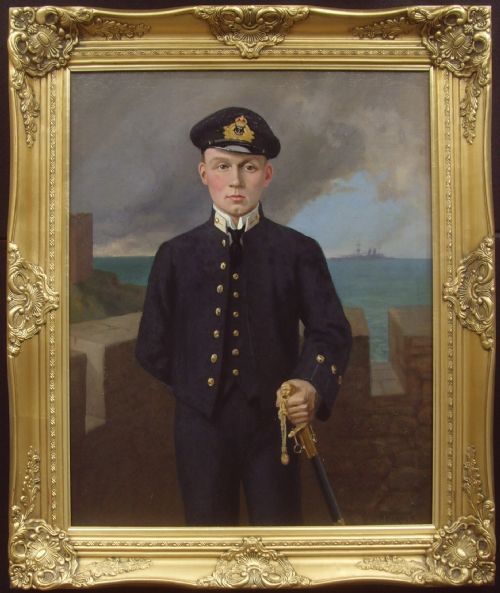
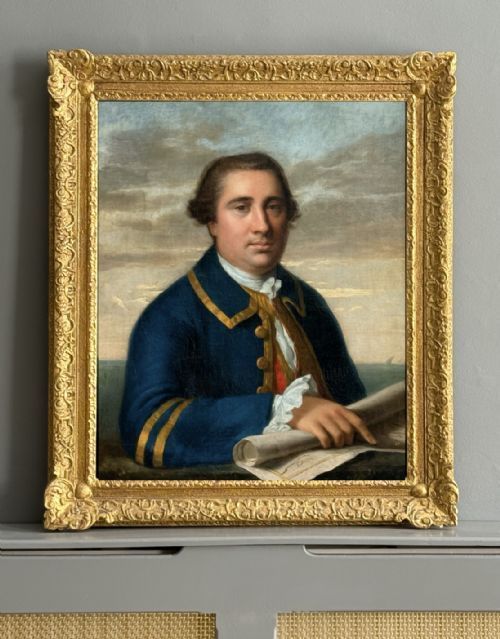
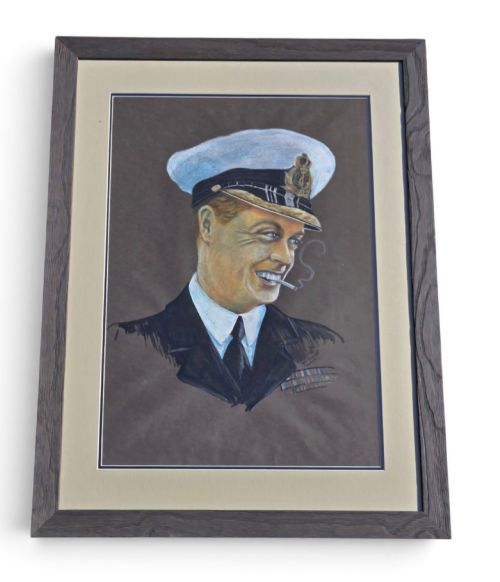
A naval officer portrait painting depicts sea commanders, captains and admirals in uniform, ranging from large oils on canvas to intimate portrait miniatures. These works span the seventeenth century through to the mid-twentieth century, recording commanding figures in formal attire.
The pieces on this page appear in various formats including framed oils, watercolours on paper and enamel miniatures set in gold. Subjects include notable admirals, captains and monarchs in naval uniform, created by both named artists and the British School.
Collectors encounter works reflecting periods such as the Georgian, Regency, Victorian and Elizabethan eras, alongside later twentieth-century representations. The scale shifts from substantial gallery canvases down to small agate panels and portrait miniatures.
Materials and technique
Artists painted these works primarily with oil paint on canvas or wood panels, while others utilised watercolour on paper or enamel on agate. Frames of giltwood frequently house these paintings, sometimes incorporating gold settings for miniatures.
Several naval commanders gaze out while wearing foreign honours, including the Order of St Louis.
Quality and execution
The distinction between works rests on the artist's ability to render the sitter's likeness and the precise details of naval uniform, medals and orders. Skilled portraitists capture individual character and psychological depth rather than relying on standard formulas for military attire.
Condition and originality dictate the standing of a piece, particularly the preservation of the paint surface and the historical integrity of the original frame. Works by recorded artists or those depicting documented historical commanders hold a different standing from anonymous works of the British School.
Lemuel Francis Abbott·Henry Bone·John Simmons·Sir Thomas Lawrence·George Frederick Clarke·Henry L Gates·Samuel Lane·John Laviers Wheatley·Maurice Codner·Robert Ker Porter·Ambrosini Jerome·Richard Hall
The Naval Officer Portrait Painting Glossary
- Oil on canvas
- Pigment bound in oil medium applied to a stretched woven fabric support. This method allowed artists to blend tones and achieve rich colour depth.
- Portrait miniature
- A small, highly detailed painting designed for intimate viewing or portable display. These works often utilised enamel, watercolour or ivory.
- Giltwood
- Wood carved and coated with a thin layer of gold leaf or gold paint. Frames made this way were built to complement formal portraiture.
- Agate panel
- A flat slice of cryptocrystalline quartz used as a stable base for miniature painting. The natural stone provided a smooth surface for fine brushwork.
- Enamel miniature
- A small painting created by fusing powdered glass pigments to a metal backing under high heat. This technique ensured permanent, vibrant colouration.
Naval Officer Portrait Painting: Frequently Asked Questions
How do I identify the rank of the officer?
Uniform details, lace on the cuffs and specific medals or orders provide clues to the sitter's rank and historical period. Painters recorded these insignia to reflect the exact naval hierarchy of the time.
Researching the sitter's documented career alongside the painting's estimated date helps confirm their rank and historical identity.
Where were these portraits displayed originally?
Large canvases hung in country houses, naval administrative offices and officers' messes to commemorate service and status. Smaller miniatures stayed close to the body, worn as lockets or kept in private domestic spaces.
Today, collectors place these works in studies, libraries and living rooms alongside other historical maritime items.
How do oil paintings differ from miniatures?
Oil paintings on canvas offer large-scale visual impact suitable for wall display in substantial rooms. Portrait miniatures on enamel or agate provide intimate detail intended for close inspection.
Both formats recorded naval leadership, but served different social functions in historical domestic settings.
What lighting suits these historical paintings?
Soft, indirect lighting protects oil paint and watercolours from fading while revealing the subtle tones of dark naval uniforms. Avoiding direct sunlight preserves the pigment and the integrity of the canvas or paper.
Picture lights positioned above the frame help highlight the detail without causing heat damage to the surface.
How are periods distinguished in these portraits?
Changes in military uniform design, wig styles and facial hair provide the clearest visual markers for dating a portrait. Georgian and Regency officers wore different coat cuts and neckwear compared to Victorian or Edwardian figures.
Matching the costume details with known naval uniform regulations narrows down the decade in which the piece was painted.