






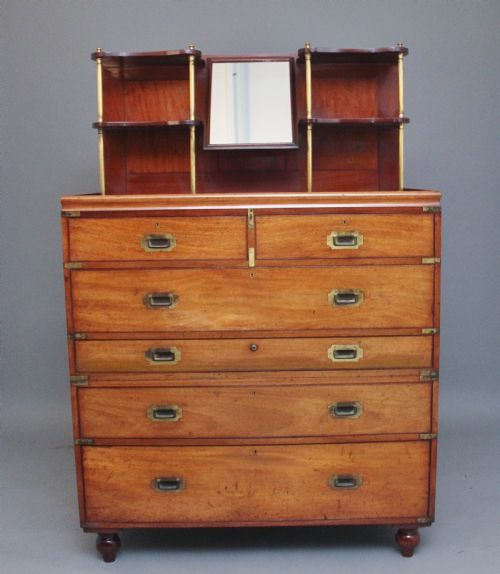
Naval Chest Drawers
Naval chest drawers are robust, two-part portable pieces designed for officers on the move, combining practical storage with handsome timbers.
Naval Chest Drawers
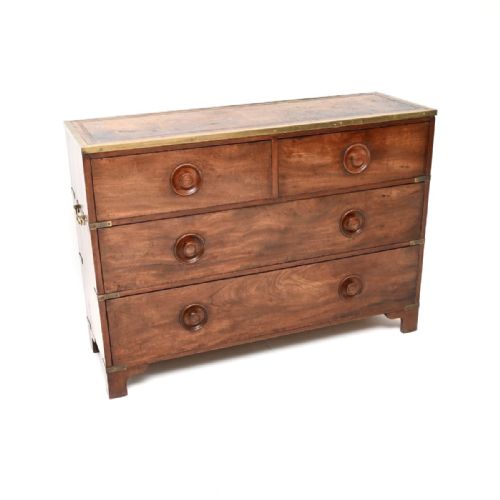
Naval chest drawers, also known as campaign chests, are functional storage pieces constructed to be easily dismantled and transported by sea or land. The examples seen on this page span the nineteenth century through the Edwardian period, with Victorian pieces appearing most frequently.
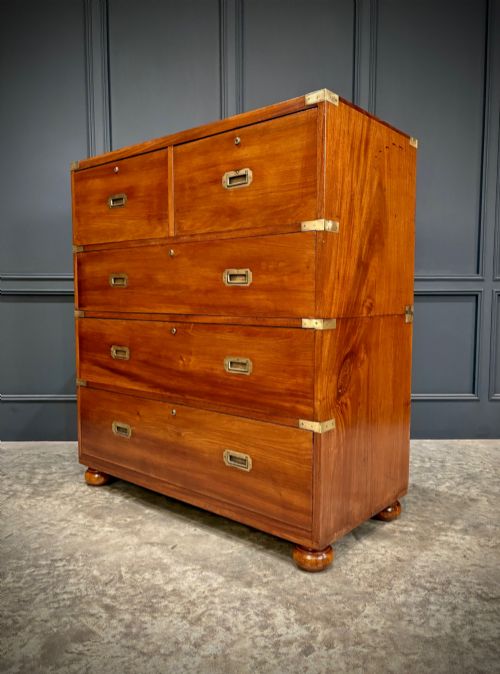
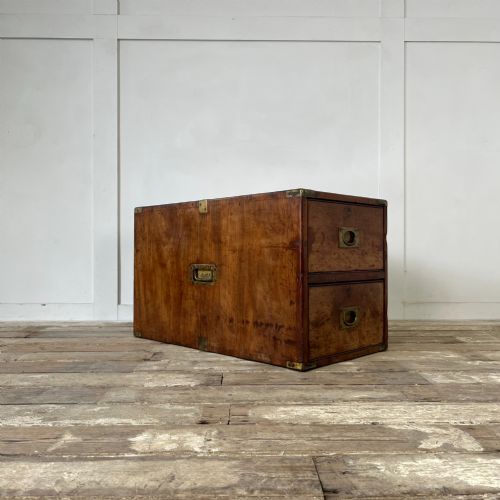
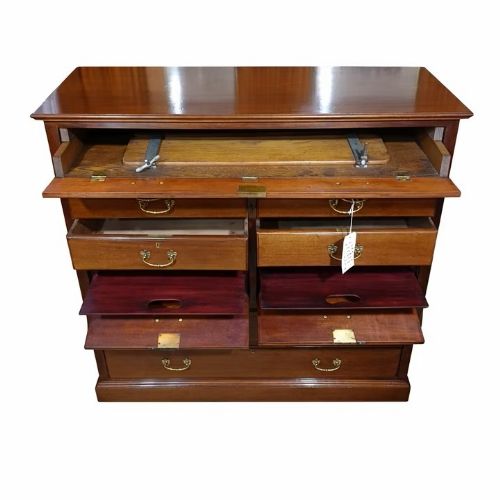
These chests typically divide into two separate sections to facilitate handling in tight quarters aboard ship. Formats include standard drawer configurations, compact desktop storage, low chests, and secretaire models fitted with writing drawers.
The aesthetic is defined by utilitarian strength rather than delicate carving, reflecting British colonial service and military deployment. Buyers will encounter woods such as camphor wood, teak, and mahogany, often accompanied by brass corners and inset drawer pulls.

How they were made
Cabinet makers utilised dense and durable timbers including teak, mahogany, and camphor wood to withstand tropical climates and the rigours of maritime travel. Camphor wood was particularly favoured for its insect-repellent properties, protecting uniforms and documents.
Construction relies heavily on brass reinforcement, with brass corners, strapwork, and flush-fitting recessed pull handles protecting the edges from impact. These metal elements allowed the chest sections to be strapped down securely in a ship's cabin.
Camphor wood chests brought an aromatic pine scent to damp officers' quarters, keeping both uniforms and marine cabins smelling distinctly fresh.
What varies in quality
The calibre of a campaign chest depends on the integrity of its timbers and the precision of its brass mounts. Superior pieces display tight joinery and well-fitted interior writing drawers that operate smoothly within their two-part divisions.
Provenance and original hardware dictate distinction in these pieces. Examples retaining their correct recessed brass handles, working locks, and original multi-section carcases represent the higher tier of surviving naval storage.
The Naval Chest Drawers Glossary
- Campaign chest
- A portable set of drawers built in two or more stackable sections for military or naval officers. These pieces feature recessed handles and protective brass corners to endure travel.
- Secretaire chest
- A chest of drawers featuring a fitted pull-out writing drawer with a drop-front desk surface and pigeonholes. It combines clerical workspace with general storage.
- Two-part chest
- A modular cabinet design constructed as an upper and lower box that separate for ease of transport. The sections lock together securely when stacked.
- Camphor wood
- A fragrant tropical hardwood valued for its insect-repellent qualities and rich grain. It was widely utilised for campaign furniture destined for colonial service.
- Flush handle
- A metal pull inset into the face of a drawer so it does not project beyond the surface. This prevents snagging and allows chests to sit flush against one another.
Naval Chest Drawers: Frequently Asked Questions
What is a naval chest?
A naval chest is a portable set of drawers constructed in modular sections for officers at sea. They were designed to split apart for easy transport and storage in cramped ship cabins.
These chests prioritise durability and utility, featuring protective brass edges and flush hardware. Their compact nature made them practical furniture for a mobile life in the armed forces.
How do you tell a campaign chest from a regular chest?
Campaign chests are instantly identified by their two-part modular construction and protective brass corners. Standard domestic chests of the same period do not separate into stacked boxes and rarely use flush-fitting hardware.
The inclusion of recessed brass handles and carrying side handles further separates military pieces from household furniture. Their timbers are also chosen for resilience against damp and travel.
Why are camphor wood chests used?
Camphor wood was chosen for campaign furniture because its natural aroma repels moths and insects. This protected uniforms and documents from damage during long sea voyages in tropical climates.
The wood is also stable and resistant to moisture, making it ideal for use in colonial environments.
Can you use a naval chest in a modern home?
Naval chests function well as bedside tables, living room storage, or bedroom chests of drawers. Their modest proportions and flat tops suit contemporary interiors while offering practical compartment space.
The distinctive brass work and dark wood tones add architectural character to a room without dominating the floor space.