


Natural Pine Work Table
A natural pine work table brings honest utility and quiet grain to a room, offering the sturdy surface that generations of makers and cooks relied upon.
Natural Pine Work Table
A natural pine work table is a utilitarian surface designed for practical tasks, appearing across nineteenth-century and early twentieth-century domestic spaces. These pieces emerge in forms such as side tables, servers, kitchen tables, and dedicated work tables.
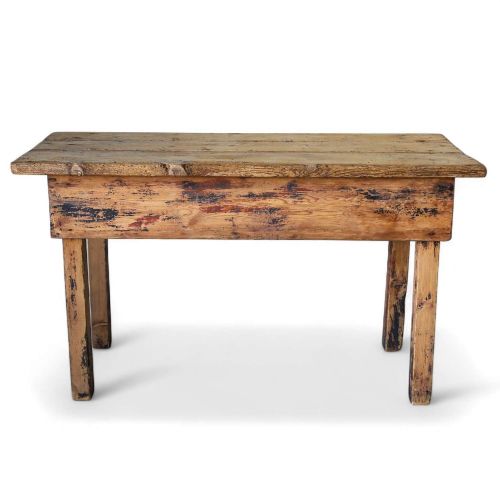
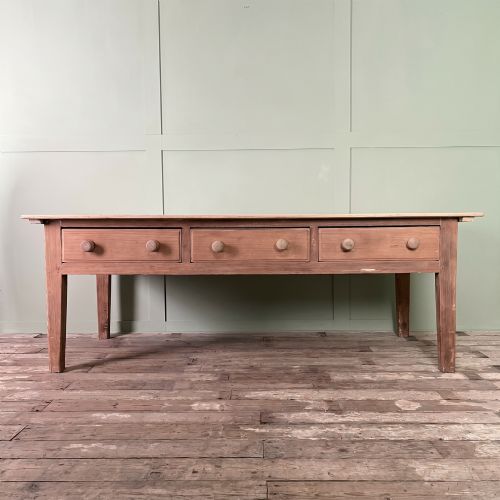
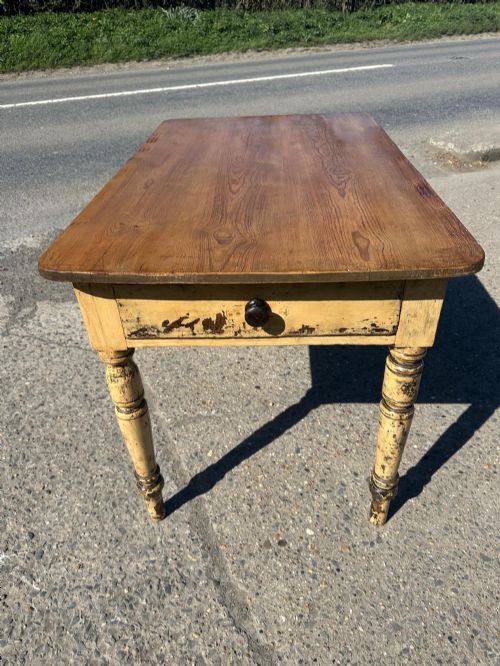
The variants on this page range from early nineteenth-century sycamore and pine dairy prep tables to Swedish X-frame kitchen tables and Victorian country pieces. Regional types from France and Scandinavia sit alongside British farmhouse examples, showing varied leg structures and top thicknesses.
Most examples favour straightforward rectangular tops supported by sturdy wooden frames, occasionally featuring original painted legs or trestle supports. They function equally well as console tables or working prep surfaces in modern interiors.
Materials and construction
Construction relies heavily on solid pine and sycamore, timber chosen for resilience and availability in domestic workshops. Joinery is direct and functional, designed to withstand daily labour without ornamental distraction.
Secondary materials include metal fixings and applied paint, particularly on legs and bases where original finishes survive on Victorian and Scandinavian pieces. Surfaces show the marks of historical use through unpretentious grain and plain timber construction.
Listings span the nineteenth century, the Victorian era, and the early twentieth century up to nineteen thirty, utilising pine, sycamore, oak, metal, and paint.
Judging quality in pine furniture
Quality rests in the integrity of the timber and the honesty of the construction, where solid tops meet stable frames without excessive restoration. The depth of patination on exposed pine surfaces tells the story of age and handling.
Regional variations, such as X-frames or original painted legs, elevate certain pieces beyond standard utilitarian furniture. The balance of proportions and the thickness of the original top distinguish a humble domestic board from a refined country work table.
The Natural Pine Work Table Glossary
- Patina
- The surface sheen and colour developed through years of handling, cleaning, and exposure to light. It is a key indicator of age and genuine use in antique wood.
- Prep table
- A low-work surface historically utilised in dairies, kitchens, or workshops for food preparation and craft. These tables prioritise sturdy tops and stable frames.
- X-frame
- A structural base design where supporting timbers cross in the shape of an X to provide lateral stability. This form appears frequently on continental kitchen tables.
- Trestle table
- A table consisting of horizontal beams supported by two vertical trestles or legs. This form allows maximum legroom along the length of the surface.
Natural Pine Work Table: Frequently Asked Questions
What rooms suit a natural pine work table?
These tables fit easily into kitchens, dining rooms, and hallways as functional surfaces or console tables. Their neutral timber tones complement both traditional and modern interior schemes.
Because they were built for daily labour, they tolerate everyday use while adding warmth and historical texture to a living space.
How do I care for antique pine?
Clean the surface with a soft, dry cloth and avoid harsh chemical sprays that strip the natural timber oils. Simple beeswax applied occasionally helps nourish the wood.
Keep the table away from direct heat sources and extreme humidity changes to prevent the solid pine boards from splitting.
Are these tables completely original?
Many retain their original painted legs, timber tops, and structural fixings from the nineteenth or early twentieth century. Minor repairs to joints or feet are common in pieces that served working roles.
Examining the underside and the grain pattern reveals the extent of historical maintenance and the authenticity of the materials.
How do I distinguish regional styles?
Swedish and French examples often feature distinct frame constructions, such as trestle supports or painted X-frames, compared to British farmhouse models. The choice of secondary woods, like sycamore paired with pine, also points to local workshop traditions.
Looking closely at the leg profiles and joinery methods helps identify the likely geographic origin of a piece.