

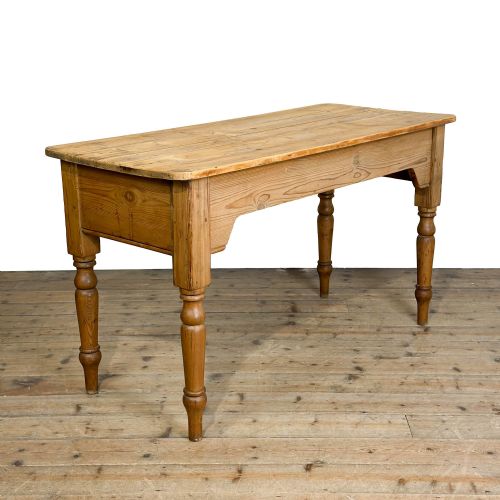

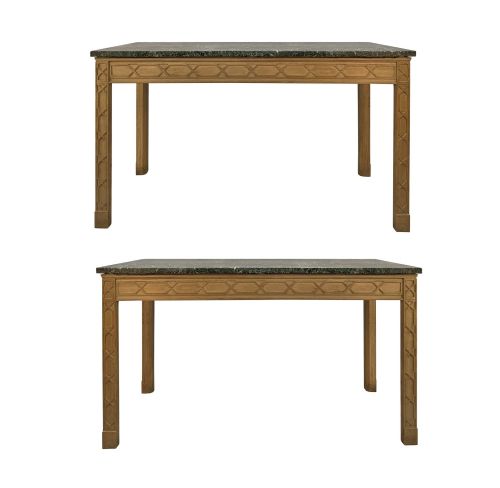
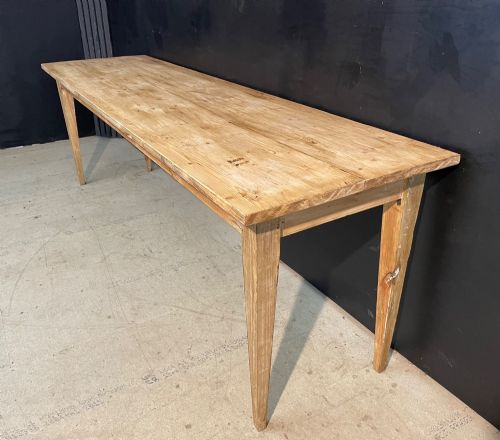
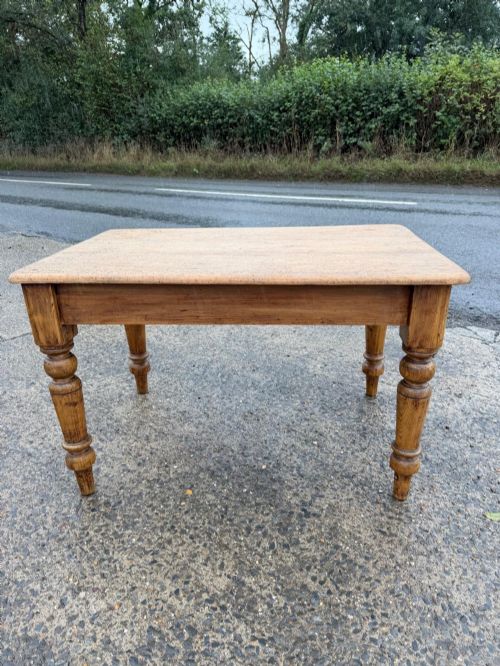
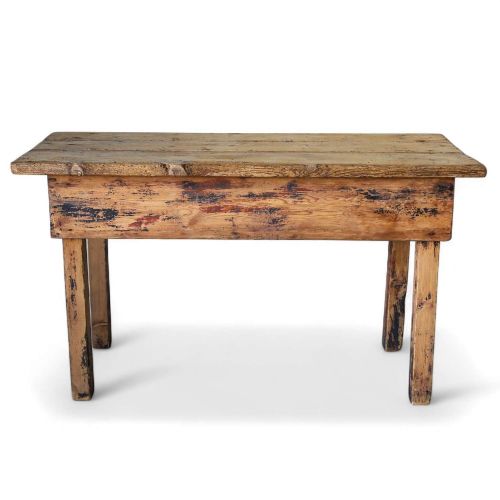
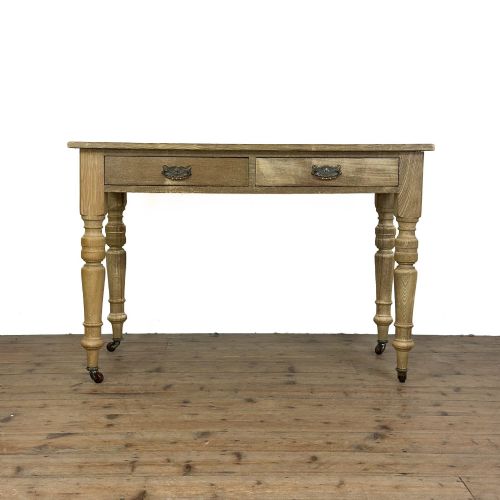
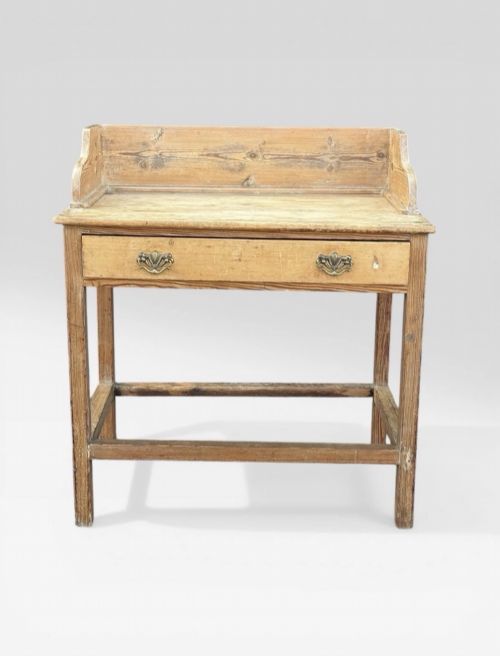
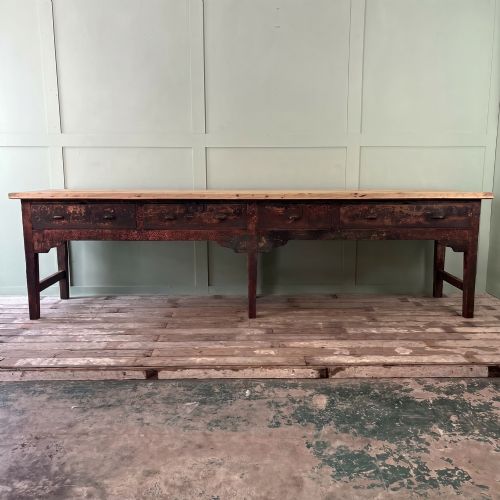



Natural Pine Console Table
Natural pine console table pieces bring honest utility and warmth to a room, offering surface space built from durable timber.
Natural Pine Console Table
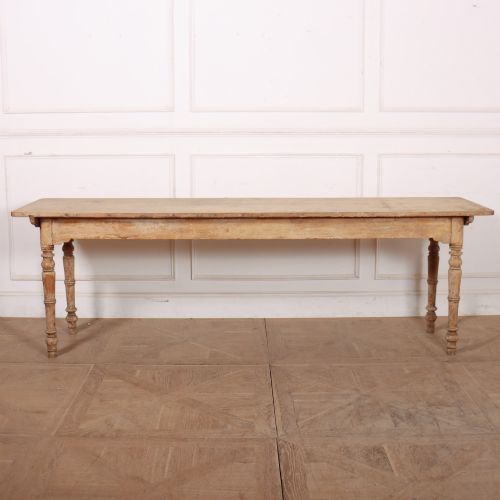
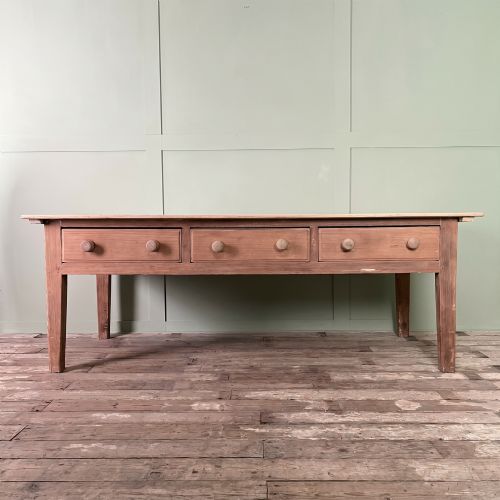
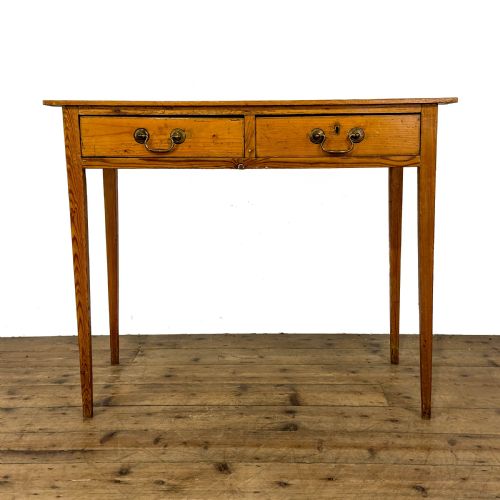
A natural pine console table serves as a functional surface for hallways, kitchens, and living spaces, drawing on forms made for practical tasks. Buyers searching this phrase encounter tables originating from nineteenth-century workshops as well as early twentieth-century examples.
Many items display straightforward rectangular tops, sometimes accompanied by a single drawer to the front frieze or configured as drop-leaf surfaces and demi-lune occasional tables. These pieces reflect regional European and British vernacular traditions, prioritising utility above ornamentation.
Materials and construction methods
Construction relies primarily on solid timber, with pine forming the main body alongside occasional sycamore and supportive elements in metal, brass, and iron. Surfaces frequently show the character of stripped wood or historic paint finishes.
Joinery methods reflect the period of manufacture, utilising traditional carpentry techniques suited to daily use in domestic and working environments. Trestle designs, drawer framing, and drop-leaf mechanisms demonstrate the practical engineering employed by makers of the nineteenth and early twentieth centuries.
Natural Pine Console Table Retail Price Guide 2026
Typical asking prices for natural pine console table among the pieces listed under this phrase on Sellingantiques today, from the lower quarter to the upper quarter. They describe what is for sale here now, not the wider market.
Listings feature pieces spanning the 19th century, Victorian era, and early 20th century up to the 1930s.
Factors of quality in construction and finish
Quality in these tables rests upon the integrity of the timber selection and the retention of original structural elements. Thicker plank tops and well-fitted frieze drawers indicate sturdier construction.
The treatment of the wood surface marks a distinct variation, with carefully scrubbed or scraped finishes preserving the historic texture of the pine. Tables retaining structural balance and authentic regional characteristics demonstrate superior craftsmanship.
The Natural Pine Console Table Glossary
- Console table
- A table designed to stand against a wall, frequently used in narrow spaces like halls or passageways. These tables provide a slim surface footprint while remaining functional for daily placement of objects.
- Frieze
- The horizontal band running directly beneath the top surface of a table. In many pieces within this selection, this area houses a single storage drawer.
- Trestle table
- A table construction where the top rests upon two or more vertical supports connected by a horizontal beam. This design offers robust stability and unhindered legroom.
- Demi-lune
- A half-moon or semicircular shape applied to tables designed to sit flush against a wall. Such pieces often function as occasional or side tables.
- Washstand
- A domestic item of furniture adapted for holding washing equipment, featuring a flat top surface that translates well to modern side table use.
Natural Pine Console Table: Frequently Asked Questions
How do I style a natural pine console table?
Position the table flat against a hallway or living room wall where its linear form complements the surrounding architecture without blocking movement.
Dress the surface with simple ceramics, books, or lighting to utilise the practical depth provided by the timber top.
Are these tables suitable for daily use?
These pieces were originally built for functional roles in kitchens, dairies, and halls, meaning they tolerate everyday domestic tasks well.
Routine placement of items on the surface aligns with the enduring strength of solid pine and timber construction.
What is a scrubbed pine finish?
A scrubbed finish results from historic cleaning and wear that removes old paint or dark sealants to expose the pale grain underneath.
This process leaves the wood with a matte texture that defines many rustic farmhouse and provincial pieces.
How do I distinguish 19th-century pieces?
Nineteenth-century examples display hand-cut joinery details, natural patina from prolonged use, and construction methods predating modern manufacturing.
Examining the underside and drawer framing reveals the tool marks characteristic of earlier workshop production.