


Natural Pearl Drop
Natural pearl drop pieces are fine jewels featuring organic gems shaped by nature, offering the subtle lustre and movement collectors seek in antique pendants and earrings.
Natural Pearl Drop
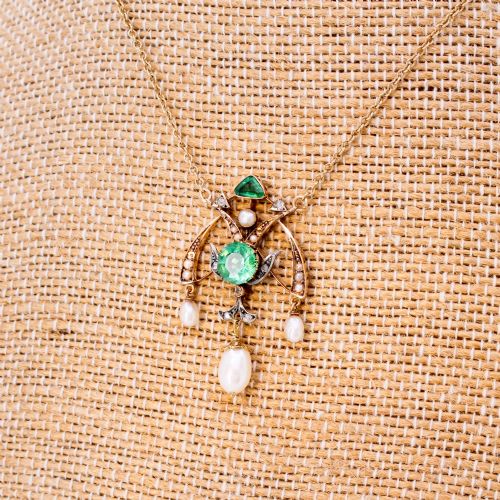
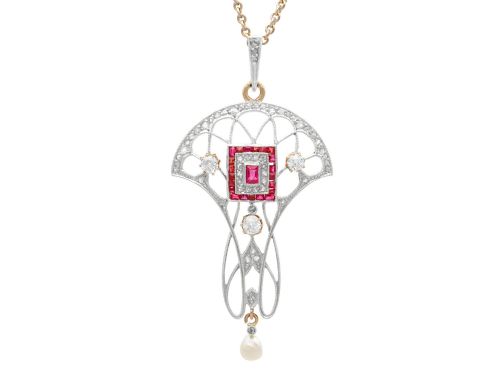
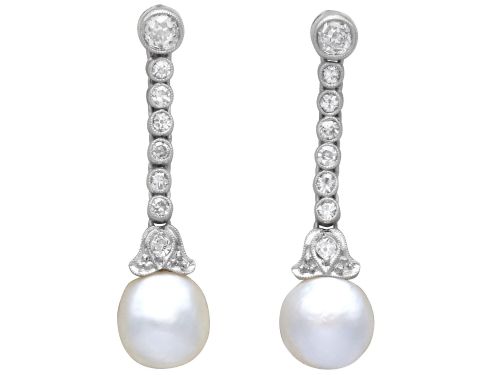
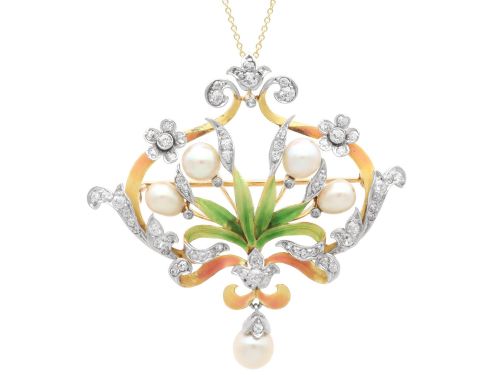
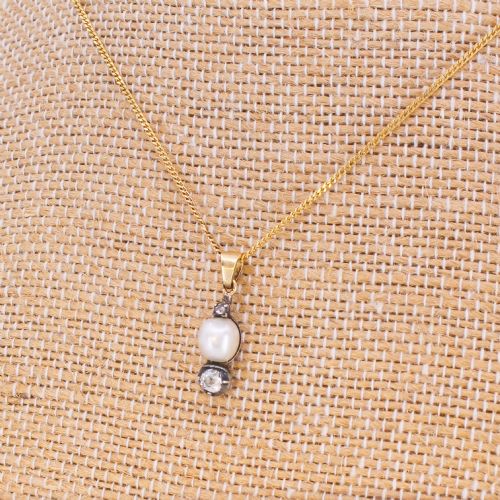
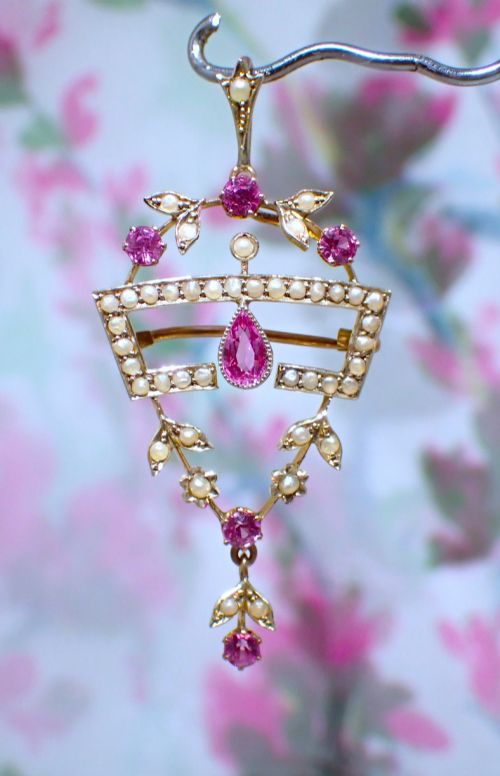
A natural pearl drop consists of organic saltwater or freshwater gems suspended from earrings, necklaces, and pendants. These pieces appear across Victorian, Edwardian, and Art Deco periods, capturing the shifts in design from romantic motifs to geometric layouts.
The most common formats on this page are drop earrings and pendant necklaces. They pair organic pearls with diamonds, sapphires, opals, and coloured stones set in yellow gold, silver, and platinum.
Originating largely from the nineteenth and early twentieth centuries, these jewels reflect periods when natural pearls were harvested directly from marine environments before cultured alternatives dominated the market.
Materials and construction
Metals span 9ct, 12ct, 14ct, 15ct, and 18ct yellow gold, alongside silver and platinum. Jewellers utilised these metals to create secure settings for fragile organic gems and sparkling diamond accents.
Stones such as old-cut, rose-cut, and brilliant-cut diamonds, rubies, sapphires, turquoises, and opals complement the natural pearls. Settings rely on delicate prong, bezel, and pave techniques typical of historical workshops.
Pendants and earrings incorporate articulated joints and drops to maximise the movement of the pearl. This construction allows the organic shape of the drop to catch the light from multiple angles.
Listings feature yellow gold, platinum, and silver alongside diamonds, turquoises, opals, and natural pearls across the Victorian and Edwardian eras.
Assessing quality
The lustre and skin of the natural pearl dictate much of the piece's standing. Pearls with deep orient, smooth surfaces, and uniform shape command greater appreciation than heavily blemished or dull examples.
The integration of supporting gemstones and metalwork defines the overall calibre of the jewel. Fine matching of old-cut diamonds, well-executed platinum or gold settings, and robust original clasps or hooks separate superior examples from standard work.
The Natural Pearl Drop Glossary
- Natural pearl
- A pearl formed entirely by wild molluscs without human intervention. These gems display organic variation in shape, orient, and surface texture.
- Saltwater pearl
- A pearl produced by oysters inhabiting marine environments. They often exhibit a distinct lustre prized in Edwardian and Victorian jewellery.
- Baroque pearl
- An irregularly shaped pearl. Their asymmetric forms frequently inspired creative drop and pendant designs during the Art Deco era.
- Old-cut diamond
- A diamond cut by hand before modern machinery standardised facets. These stones feature smaller tables and open culets that produce a softer candlelit sparkle.
- Parure
- A matching set of jewellery designed to be worn together. Surviving suites often include earrings and pendants sharing identical materials.
Natural Pearl Drop: Frequently Asked Questions
How do I care for natural pearl drop jewellery?
Organic pearls require gentle treatment because acids in perfumes, cosmetics, and skin oils can damage their nacre over time. Wipe them softly with a clean cloth after wearing and store them away from hard gemstones to prevent scratching.
Keep these pieces out of ultrasonic cleaners and chemical dips. Professional cleaning should only be handled by specialists familiar with antique settings and organic materials.
What is the difference between Victorian and Edwardian drops?
Victorian pieces often utilise yellow gold and feature romantic motifs such as doves, hearts, and turquoise clusters alongside natural pearls. The metalwork feels warm and substantial, reflecting mid to late nineteenth-century sentiments.
Edwardian designs shift toward platinum and lighter gold frameworks set with diamonds and saltwater pearls. This era favours garland styles and openwork filigree that create an airy, delicate appearance.
How were these pendants and earrings worn?
Pendants hung from fine gold or platinum chains as neck ornaments, sometimes doubling as brooches through integrated pin mechanisms. Earrings relied on dormeuse or wire fittings to secure the swinging drop against the earlobe.
Parure sets allowed wearers to coordinate multiple pieces for formal evening events. The articulated drops were designed to sway gracefully with movement.
Are all pearls in these listings certified natural?
Many pieces come with specific certification confirming their natural origin through laboratory testing. Testing distinguishes wild pearls from cultured varieties by examining their internal structure under X-ray.
Review individual descriptions to check whether laboratory reports accompany the specific pendant or pair of earrings you are considering.