
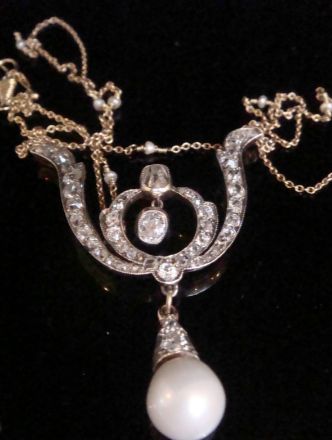


Antique Pearl Diamond Drop
An antique pearl diamond drop combines luminous organic gems with sparkling stones in a pendant or earring configuration designed to catch the light with every movement.
Antique Pearl Diamond Drop
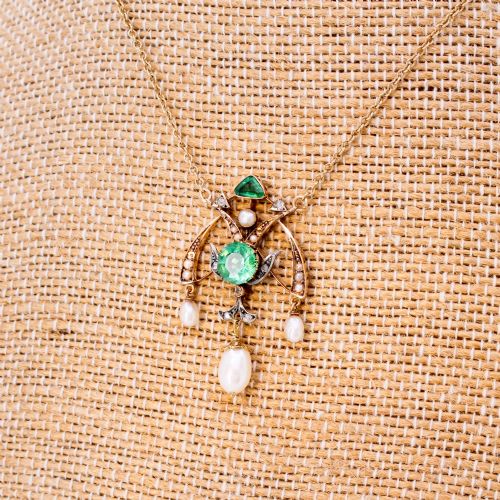
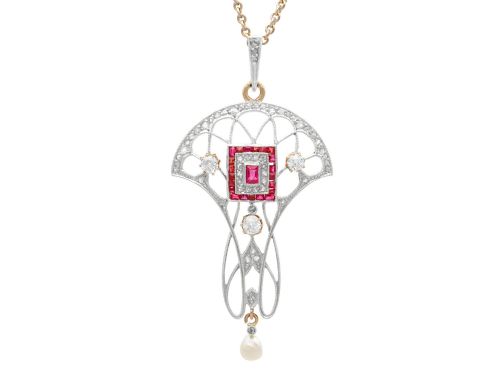
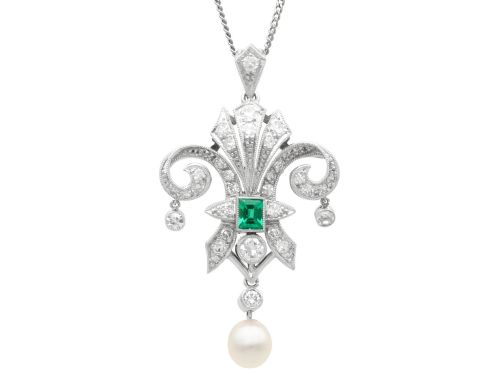
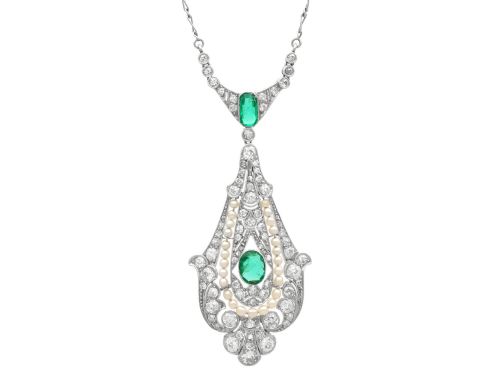
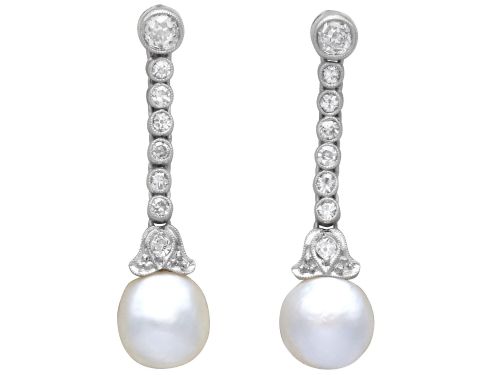
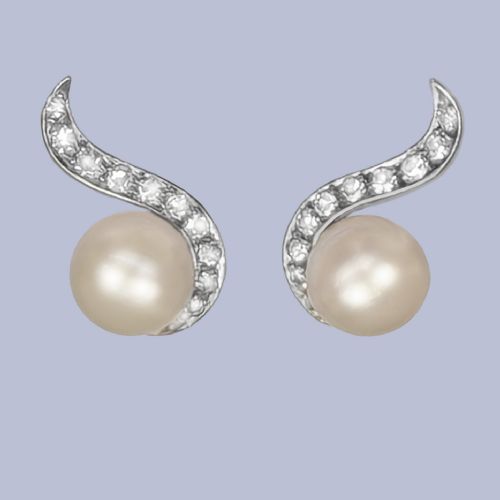
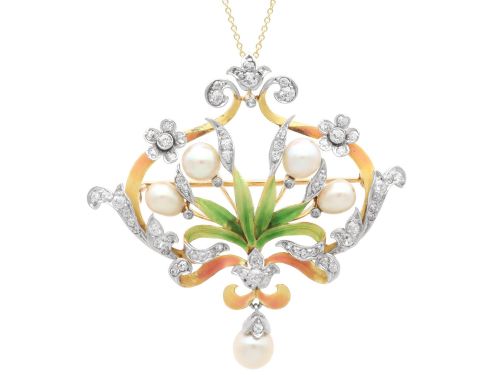
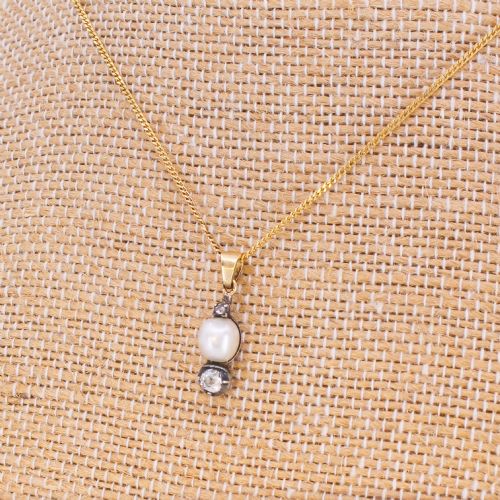
The antique pearl diamond drop appears in various configurations on this page, most commonly as drop earrings, pendants, and lavaliere necklaces spanning the Georgian, Victorian, Edwardian, and Art Deco periods.
Earrings in this grouping feature articulated drops, swinging from hooks or screw backs, while necklaces and pendants often incorporate delicate swags, bows, or foliate mounts.
Makers from the late nineteenth and early twentieth centuries utilised these motifs to showcase organic gems alongside old cut diamonds.
Materials and construction
Craftsmen built these pieces using combinations of yellow gold, rose gold, white gold, silver, and platinum, frequently pairing silver-topped gold settings in earlier Victorian and Edwardian examples to enhance diamond sparkle.
Pearls, including natural saltwater, conch, seed, and freshwater varieties, are combined with diamonds such as old European, old mine, and rose cuts.
Mounts often feature delicate millegrain edges, openwork platinum frames, and hand-engraved foliate details that suspend the central pearl and diamond elements.
Standards of execution
Quality in these drops rests upon the structural integrity of the metalwork and the harmonious integration of the pearl with the surrounding diamonds.
Finely wrought pieces display delicate piercing, secure settings that hold each stone firmly without excess metal, and pearls with good lustre and matching tone.
The precision of the articulation in drop earrings and pendant assemblies dictates how fluidly the piece moves when worn.
The Antique Pearl Diamond Drop Glossary
- Natural pearl
- A pearl formed organically within a mollusc without human intervention. These contrast with cultured varieties through their specific internal structure.
- Lavaliere
- A pendant necklace featuring a central dangling drop, often popular during the Edwardian and Art Nouveau eras. The design typically incorporates symmetrical or flowing floral motifs.
- Old cut diamond
- A hand-faceted diamond cut before the modern brilliant standard was established in the early twentieth century. These stones exhibit smaller tables and higher crowns.
- Millegrain
- A decorative technique featuring a row of small metal beads along the edge of a setting. This finish was widely utilised during the Edwardian and Art Deco periods.
- Seed pearl
- A very small, naturally formed pearl, often drilled and strung in clusters or used to accent floral and geometric designs in Victorian and Edwardian jewellery.
Antique Pearl Diamond Drop: Frequently Asked Questions
How do I care for antique pearl jewellery?
Pearls are organic gems that require gentle handling, as acids from skin contact and cosmetics can damage their nacre over time. Wipe them clean with a soft cloth after wearing and store them separately from harder gemstones.
Avoid immersing antique pearl pieces in liquid cleaners or ultrasonic baths, which can weaken old settings and dissolve the adhesive holding pearls in their cups.
What is the difference between natural and cultured pearls?
Natural pearls grow entirely by chance inside wild molluscs, making them scarce and historically significant in antique pieces. Cultured pearls are grown with human assistance by inserting a nucleus into the oyster.
Most pieces from the Georgian and Victorian eras feature natural pearls, while mid-century pieces may incorporate cultured varieties.
How can I date my antique drop earrings?
Dating relies on the metal combinations, gemstone cuts, and fastening types. Georgian and early Victorian pieces often utilise silver-topped gold with closed-back settings and wire hooks.
Edwardian items frequently employ platinum settings with millegrain work, while Art Deco pieces show geometric symmetry and calibrated stones.
Can I wear these drop earrings daily?
Antique drop earrings can be worn regularly provided they receive proper care and routine inspection of the hooks and clasps. Their delicate metalwork and organic gems require mindfulness during activities that might catch the drop.
Storing them in a dedicated box prevents the dangling components from tangling or sustaining impact damage.