


Natural Opal Pendant
A natural opal pendant brings together fiery play-of-colour and precious metals, offering a distinct piece of antique or vintage jewellery to wear every day.
Natural Opal Pendant
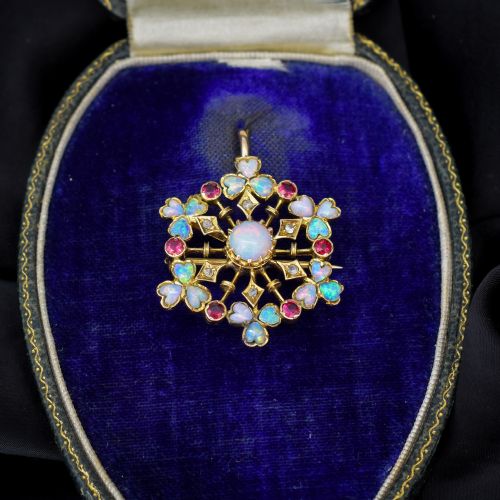
A natural opal pendant is a piece of jewellery designed to suspend from the neck, featuring genuine opal stones set in precious metals. When searching for a natural opal pendant, buyers encounter pieces ranging from delicate floral brooches converted for suspension to bold cluster settings.
The selections span several distinct eras, including Victorian, Edwardian, Art Deco, and mid-century modern periods. Forms vary from simple cabochon solitaires to elaborate multi-stone arrangements incorporating diamonds, pearls, and rubies.
Origin and material types differ across the inventory, encompassing standard white or milk opals alongside darker black opals. Buyers frequently find dual-purpose items that function as both pendants and brooches.
How they were made
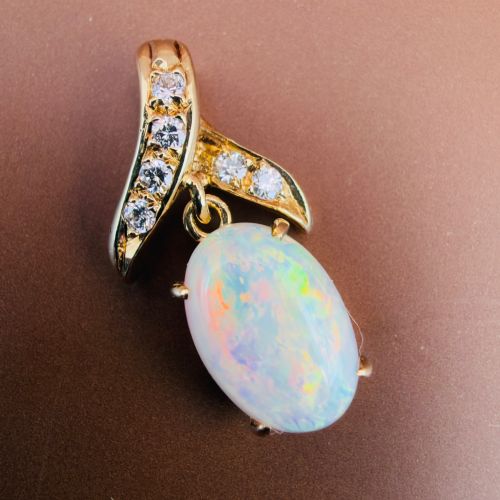
Goldsmiths shaped metals such as yellow gold, rose gold, white gold, and platinum to house the central gems. Cabochon cutting remained the predominant method for shaping opals to display their characteristic play-of-colour without facet lines.
Craftsmen secured these stones using traditional claw settings or flush mounts, frequently pairing the central opal with accent gems like diamonds, natural saltwater pearls, or rubies. Certain Edwardian and Victorian examples utilise intricate wirework and millegrain detailing around the stones.
One lucky clover pendant incorporates a leaf motif to hold the opal and diamond cluster.
What varies in quality
The intensity and breadth of the opal's play-of-colour dictate much of its appeal, with stones exhibiting vibrant flashes across the spectrum sitting at the higher end. The weight and purity of the surrounding metal, such as solid 18ct gold or platinum rather than lower carat alternatives, further distinguish the pieces.
The quality of accompanying gemstones, particularly the cut and clarity of diamonds or the matching of natural pearls, elevates the overall execution of the item. Evidence of skilful hand-craftsmanship in the metalwork and secure stone setting marks superior examples from any period.
The Natural Opal Pendant Glossary
- Cabochon
- A gemstone shaped and polished with a smooth, rounded surface rather than faceted. This style highlights the internal colour play of opals.
- Play-of-colour
- The optical phenomenon where flashes of rainbow hues appear as the stone moves under light. It arises from the internal diffraction of light.
- Cluster pendant
- A jewellery design featuring a central gemstone surrounded by a ring of smaller accent stones, typically diamonds.
- Millegrain
- A decorative technique involving a line of tiny metal beads along the edges of a setting. It is common in Edwardian and Art Deco jewellery.
- Solitaire
- A single gemstone set on its own in a piece of jewellery without secondary accent stones.
Natural Opal Pendant: Frequently Asked Questions
How do I care for my opal pendant?
Opals contain water within their structure and score lower on the hardness scale than diamonds. Avoid exposing them to harsh chemicals, ultrasonic cleaners, or sudden temperature changes.
Store the pendant in a soft pouch away from harder jewellery pieces to prevent scratching. Wipe it gently with a soft damp cloth after wear.
How can I date an opal pendant?
Dating relies on stylistic clues, metal types, and setting techniques. Edwardian pieces often employ platinum on yellow gold with delicate floral motifs, while mid-century items feature heavier gold settings.
Marks, hallmarks, and the specific cut of the accompanying diamonds or pearls also provide clear indicators of the period.
Can I wear an opal pendant daily?
Pendants experience less physical impact than rings or bracelets, making them suitable for regular wear. Protective settings help shield the stone from accidental knocks.
Removing the pendant during strenuous activities or swimming ensures the metal and stone remain secure over time.
What is a convertible pendant?
A convertible pendant functions as both a brooch and a necklace attachment. These pieces feature a hidden bale alongside a pin and clasp mechanism on the reverse.
This versatility reflects Victorian and Edwardian manufacturing practices where accessories served multiple wardrobe functions.