





Natural History Engravings
Natural history engravings bring the observed world of past centuries onto the wall through paper, ink and watercolour.
Natural History Engravings
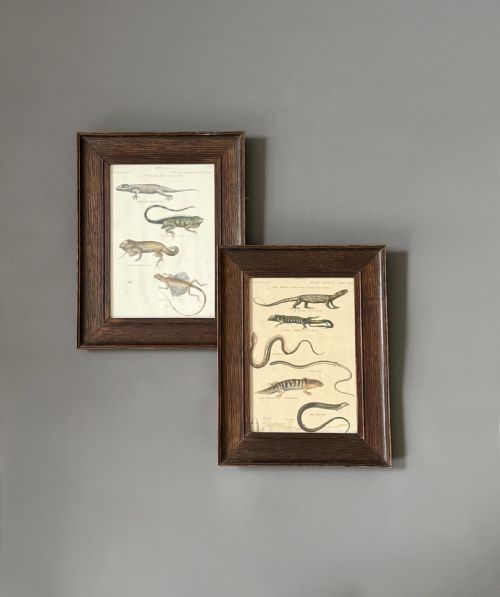
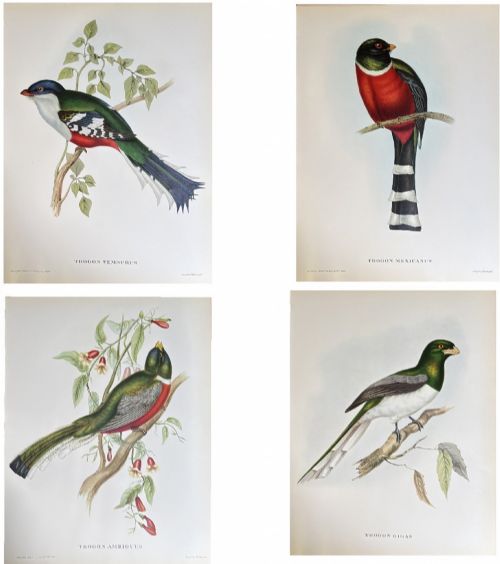
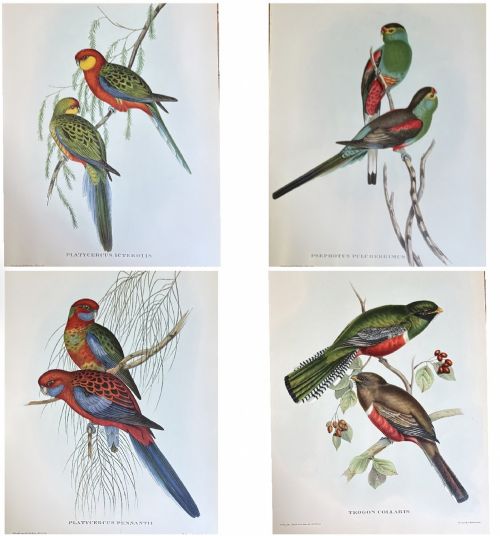
Natural history engravings capture specimens ranging from tropical birds and reptiles to shells, fish and botanical subjects. These framed prints and wall art pieces document scientific observation across the eighteenth and nineteenth centuries.
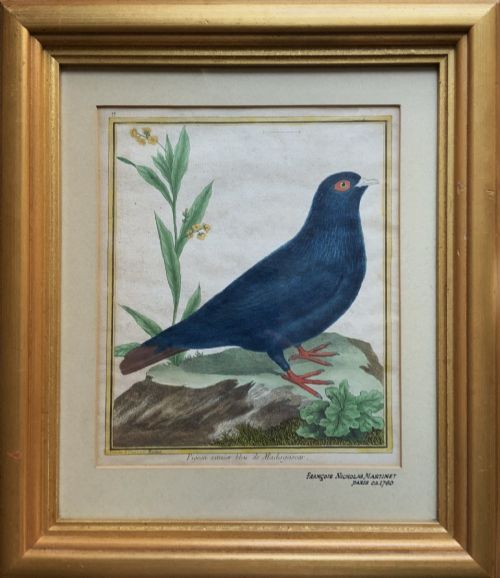
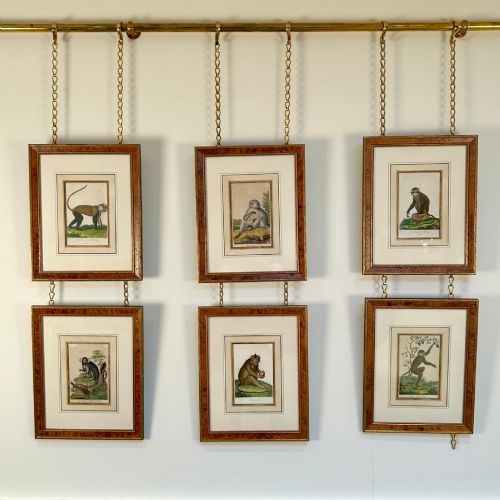
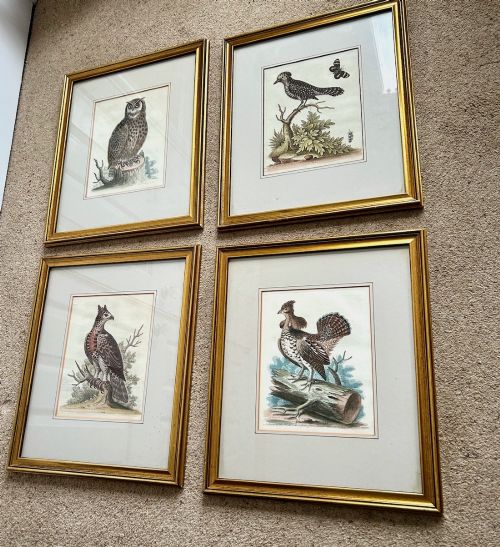
Buyers encounter single plates alongside sets depicting birds, monkeys, serpents and plants. The selection spans Georgian and Victorian periods, presented in frames of wood or gilt wood.
How they were made
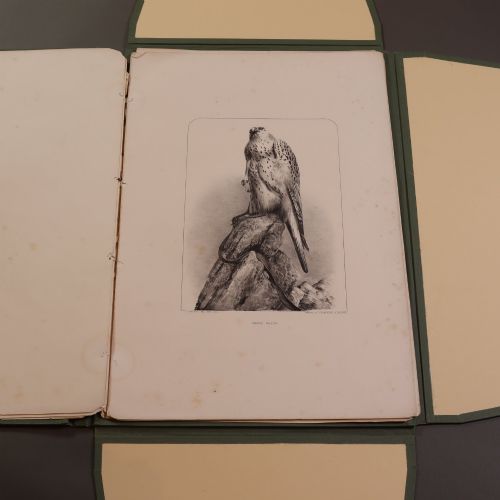
Works rely on printed ink lines upon paper substrates, brought to life through hand colouring using watercolour pigments. Many plates originate from copperplate engravings or lithographs produced for scientific volumes and folios.
Framing materials incorporate traditional wood and gilt wood surrounds, occasionally enclosing glass to protect the delicate paper sheets within.
The listings span the eighteenth and nineteenth centuries, featuring works in paper, ink, watercolour and gilt wood.
What varies in quality
Quality rests upon the precision of the initial plate work and the subtlety of the hand applied watercolour. Early impressions retain crisp lines and vibrant pigment application that later printings can lose.
The preservation of the paper surface and the integrity of the original framing, whether gilt wood or plain timber, influence the overall character of the piece.
François-Nicolas Martinet·Oliver Goldsmith·John Hancock·Jonathan Couch·George Edwards·Buffon·John Curtis·Bernhard Siegfried Clara·Georg Wolfgang Knorr·William Swainson·Edward Lear·Eleazor Albin·Audebert·George Dionysius Ehert·Rev B. Morris
The Natural History Engravings Glossary
- Engraving
- A printmaking technique where an artist cuts lines into a metal plate to hold ink for transfer onto paper. This process allows for fine detail in scientific illustrations.
- Hand colouring
- The application of watercolour or pigment by hand onto a printed monochrome sheet. This adds realism to botanical and zoological subjects.
- Lithograph
- A planographic printing method using stone or metal plates based on the repulsion of oil and water. It became common for producing coloured natural history plates.
- Folio
- A large book format used to publish comprehensive natural history studies with expansive plates. Many individual prints originate from dismantled volumes.
Natural History Engravings: Frequently Asked Questions
How should I hang natural history engravings?
Keep prints away from direct sunlight to prevent the watercolour pigments and paper from fading over time. Maintain stable room humidity to protect both the paper and the wooden frames.
Group related sets together on a wall to replicate the study aesthetics of Georgian and Victorian interiors.
Are these plates from dismantled books?
Many historical plates were originally published within bound scientific volumes or folios documenting ornithology, botany and zoology. These plates were subsequently separated for framing and display.
Individual prints retain their plate marks and text margins from their original publication context.
How do I identify eighteenth century prints?
Eighteenth century examples often display heavier laid paper with visible chain lines when held to the light. The hand colouring tends to use mineral and plant based watercolours unique to the period.
Typography and plate layouts also reflect the publishing conventions of the Georgian era.
What is the difference between an engraving and a lithograph?
An engraving involves incising lines into a hard plate, producing sharp and precise linear detail under magnification. A lithograph relies on a chemical process on stone or metal, offering softer tonal transitions.
Both methods served as the primary vehicles for natural history illustration before modern photography.