


Narrow Walnut Chest Drawers
A narrow walnut chest drawers provides compact storage through vertical proportion, offering rich timber figure and historic craftsmanship.
Narrow Walnut Chest Drawers
A narrow walnut chest drawers is defined by its tall, slender footprint and warm timber tones, designed to maximise storage in compact rooms without overwhelming the floor space. Buyers seek these pieces for their ability to fit narrow alcoves while delivering multiple tiers of deep storage.
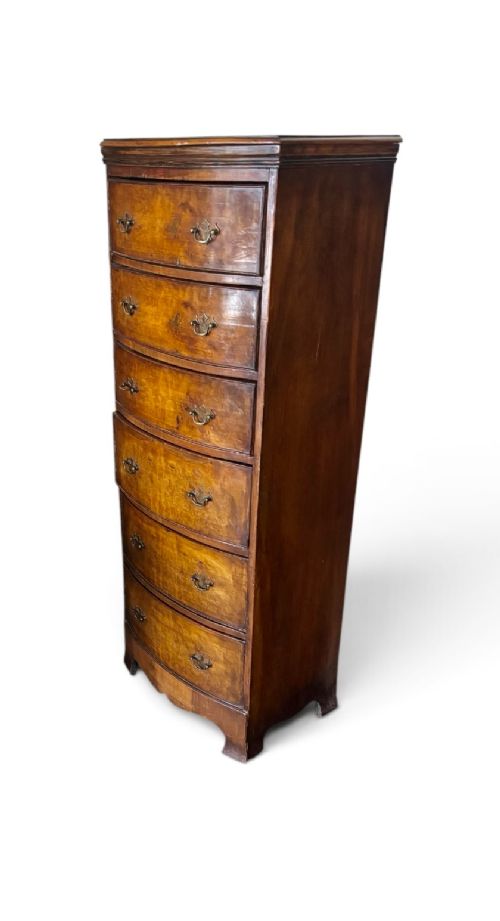
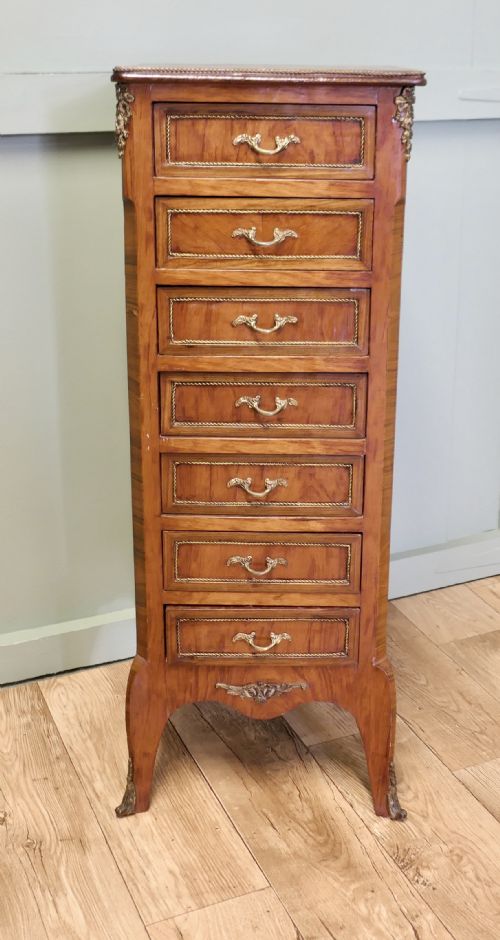
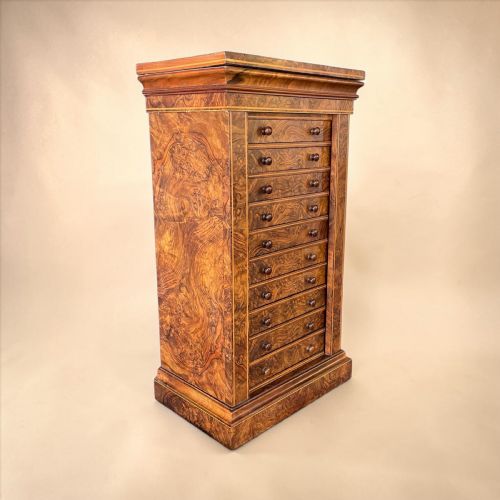
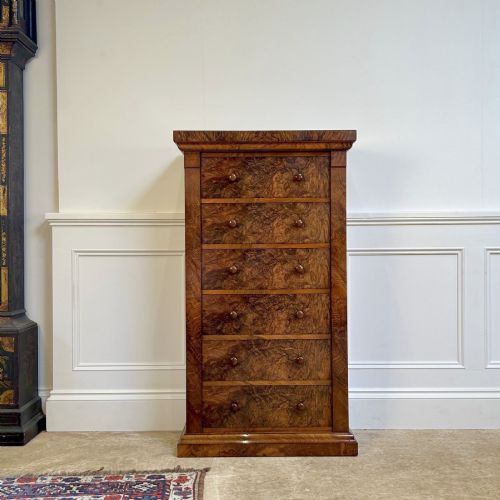
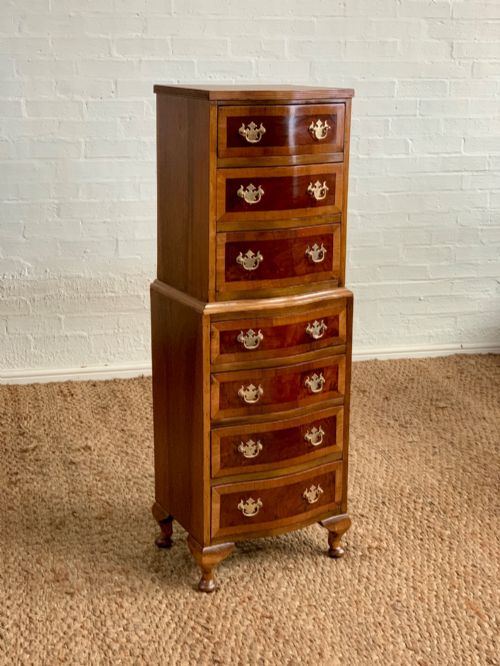
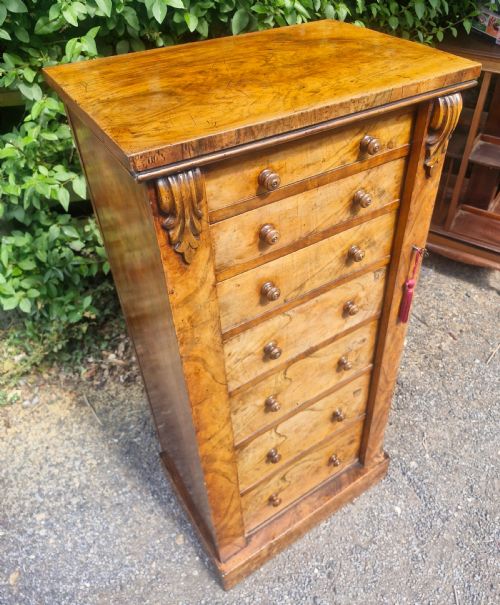
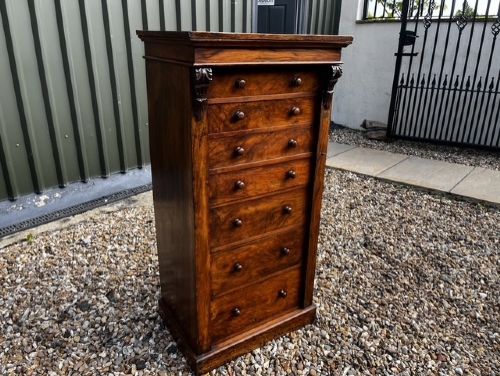
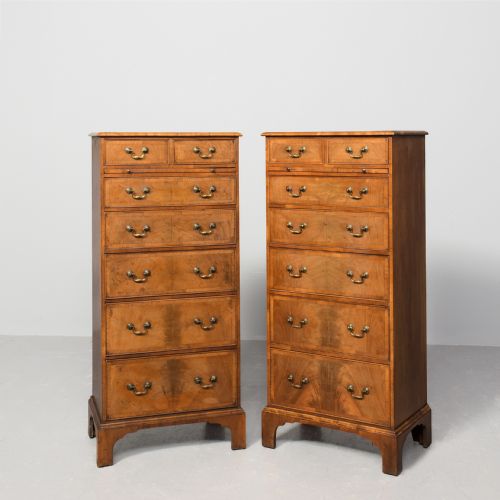
The pieces seen here range from Victorian Wellington chests and tallboys to French semainiers and Edwardian bedside cabinets. The Victorian Wellington chest is particularly prevalent, recognisable by its hinged locking pilaster securing the graduated drawers.
Origins span English cabinet makers of the nineteenth century alongside continental French workshops influenced by Louis styles. Buyers also encounter twentieth-century interpretations, including George III and Queen Anne revival forms dating towards 1930.
Materials and construction methods
Makers utilised solid timber frames combined with decorative veneers, applying burr walnut, figured walnut and occasionally kingwood across drawer fronts to accentuate natural grain patterns. Marquetry and parquetry inlay further decorated surfaces on select French and English examples.
Structural integrity relied on dovetailed drawer construction and secondary softwood carcases, paired with brass handles, escutcheons and occasionally marble tops or ormolu mounts. Locking mechanisms on Wellington chests utilised a hinged side pilaster secured by a key.
Materials recorded across the archive include solid walnut, burr walnut veneer, marble, brass, ormolu and kingwood.
Distinguishing quality tiers
Quality rests on the selection and matching of walnut veneers, where symmetrical burr figuring across multiple drawers indicates superior cabinet work. Plain timber surfaces reflect simpler construction, whereas continuous grain wrapping demonstrates advanced workshop skill.
Hardware integration and internal timber selection also separate standard pieces from high-end commissions. Original brass locks, robust dovetailed drawer linings and functional locking pilasters distinguish better examples from later replacements.
Gillows·S. Mordan & Co·S & H Jewells
The Narrow Walnut Chest Drawers Glossary
- Wellington chest
- A tall, narrow seven-drawer chest featuring a hinged locking pilaster on one side that secures all drawers when locked. It originated in the nineteenth century and is typically fitted with a flat top.
- Semainier
- A French tall narrow chest traditionally containing seven drawers, one for each day of the week. These frequently incorporate marble tops and fine marquetry inlay.
- Burr walnut
- A prized timber veneer harvested from tree growths or burls, producing intricate, swirling grain patterns. It was extensively utilised on high-grade Victorian and Edwardian cabinet work.
- Tallboy
- A two-section piece comprising a chest of drawers stacked upon a base chest or stand, creating an elevated vertical profile. Eighteenth and early twentieth-century examples often follow Queen Anne or George III proportions.
- Escritoire
- A writing cabinet featuring a drop-down fall front that conceals inner pigeonholes and small drawers. Examples in this category combine writing surfaces with narrow vertical drawer storage.
Narrow Walnut Chest Drawers: Frequently Asked Questions
What is a Wellington chest?
A Wellington chest is a tall, narrow set of drawers distinguished by a locking wooden pilaster down one side. Swinging this bar aside allows the drawers to open, while locking it secures them all simultaneously.
Cabinet makers designed these pieces during the nineteenth century to store documents or linen safely in smaller chambers.
How do I care for walnut veneer?
Walnut veneer requires protection from direct sunlight and extreme humidity changes to prevent lifting or drying out. Gentle dusting with a dry cloth maintains the polished surface without damaging the historic finish.
Avoid placing damp items directly onto timber or marble surfaces, using coasters or mats where necessary.
Are these chests suitable for small bedrooms?
These chests are specifically suited to compact rooms because their design prioritises vertical height over floor space. They provide substantial drawer storage while maintaining a narrow footprint.
Many examples function effectively as tall bedside cabinets or narrow tallboys in tight alcoves.
How do I tell a Victorian piece from a 1930s piece?
Victorian examples typically exhibit heavier timber carcases, hand-cut dovetails and traditional wax polishes developed over decades. Mid-period and 1930s pieces often reflect revival styles such as Queen Anne or George III, showing lighter internal construction.
Examining the drawer linings and backboards reveals the hand tools and assembly methods characteristic of each era.