



Narrow Persian Runner
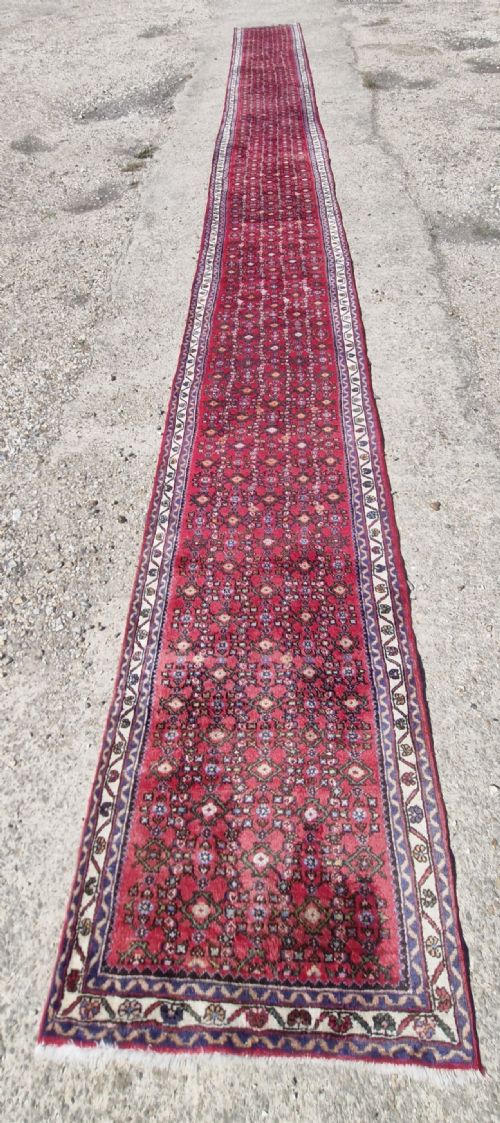
A narrow persian runner brings linear pattern and deep colour to a hallway, drawing the eye along extended floor spaces.
Narrow Persian Runner
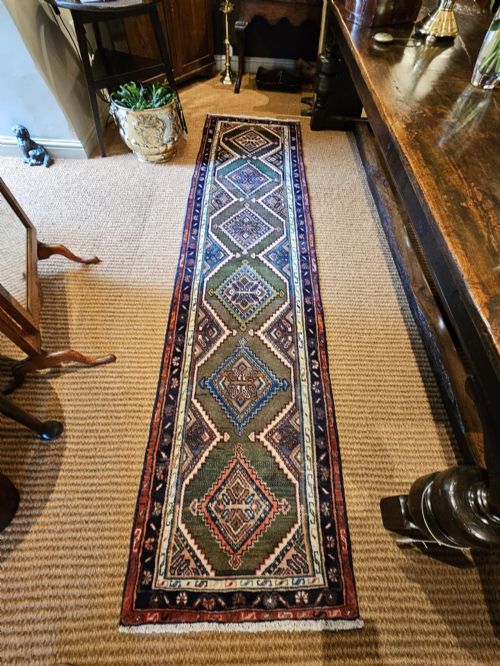
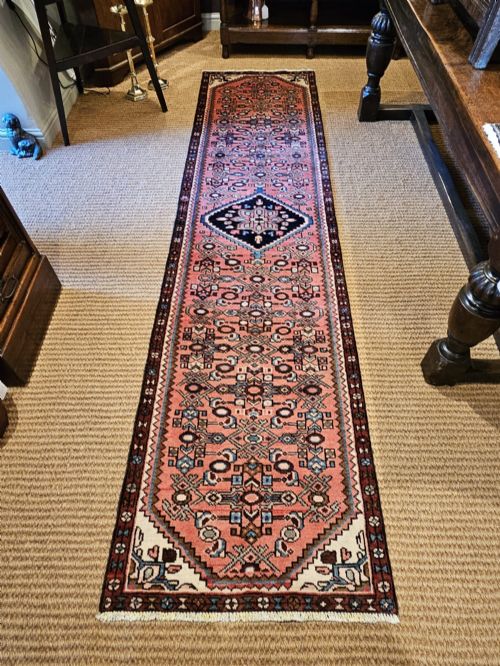
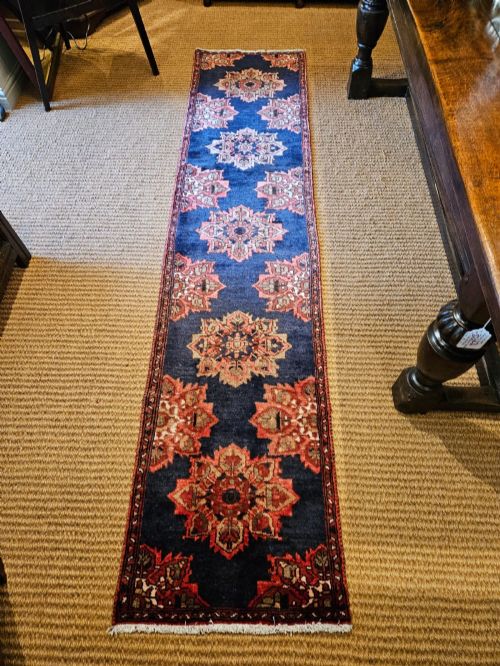
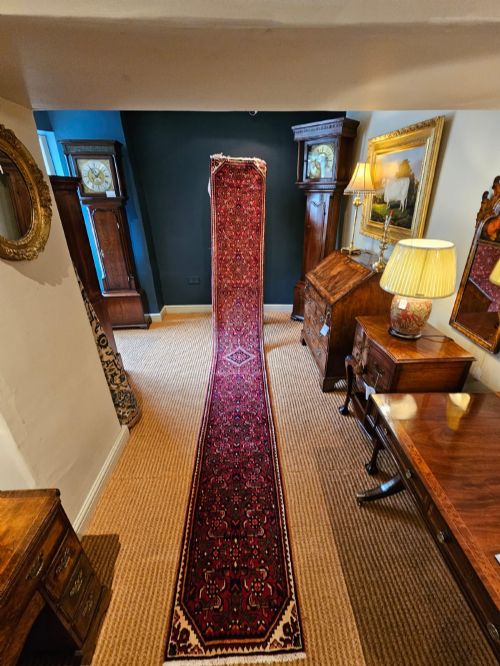
A narrow persian runner is a long, elongated floor textile designed specifically for corridors, staircases and narrow galleries. These pieces range from compact lengths to expansive proportions extending past thirty feet.
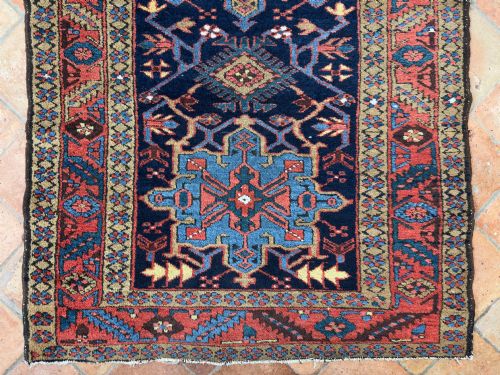
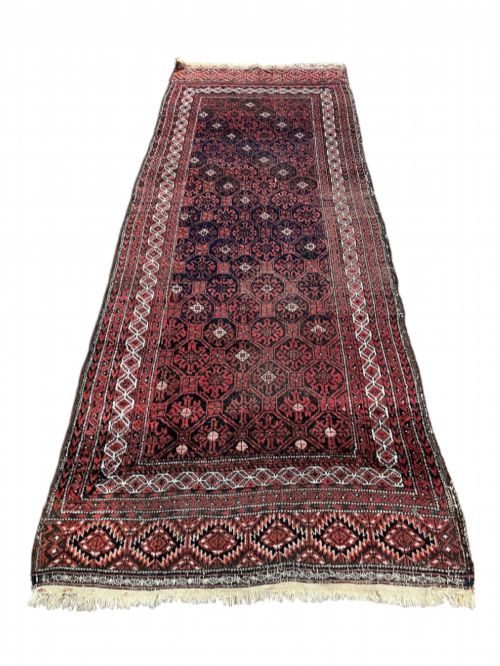
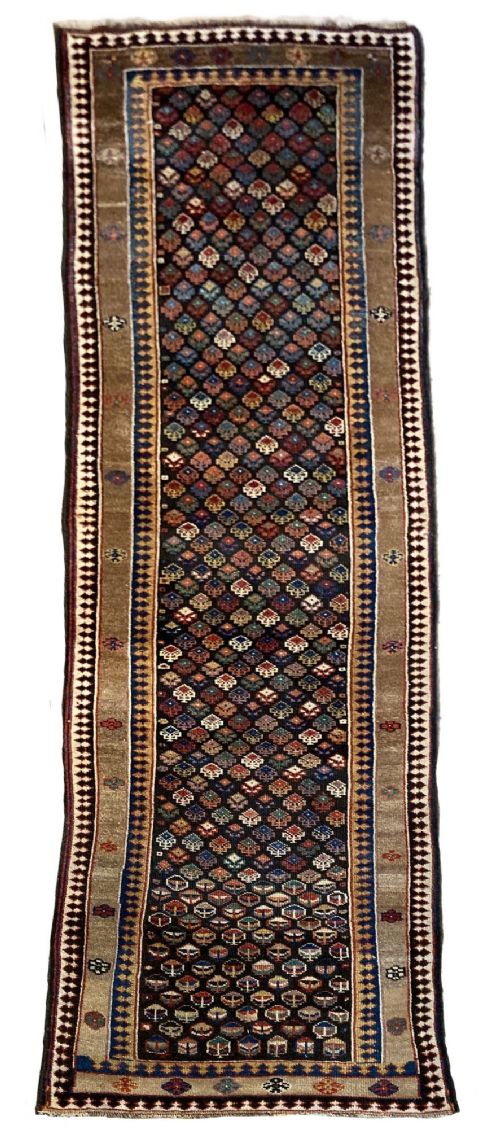
Most examples found here originate from nineteenth and early twentieth-century village and tribal workshops across Persia, including Heriz, Hamadan, Kurdish and Ferahan regions. They display geometric motifs, medallion formats and all-over field designs suited to narrow formats.
How They Were Made
Weavers constructed these runners on horizontal or vertical looms using hand-spun wool for the pile, often paired with cotton foundation warps and wefts. Camel hair also appears in the pile of selected tribal pieces to provide natural brown and golden tones.
Natural dye stuffs yielded the deep indigo blues, madder reds and olive greens characteristic of the period. Knotting techniques varied by region, resulting in durable, dense structures built to withstand heavy foot traffic.
Listings feature traditional materials including hand-spun wool, cotton foundations and natural camel hair.
What Varies in Quality
Quality rests in the precision of the weave and the handling of the narrow proportions. Superior examples maintain straight, consistent edges and balanced border widths along extended lengths without unwanted bowing.
The handle of the wool and the clarity of the dye palette dictate visual success. Finely knotted tribal and village pieces exhibit crisp motif definition, whereas lesser examples show wool compaction or irregular field geometry.
The Narrow Persian Runner Glossary
- Warp
- The vertical foundation threads stretched tightly on the loom before weaving begins. The fringe of the rug is formed from these continuous parallel threads.
- Weft
- The horizontal threads passed alternately over and under the warp threads after each row of knots. This binds the structure together across the width of the runner.
- Pile
- The dense surface layer of knotted wool or camel hair that forms the tactile face of the runner. Shorter pile heights reveal finer structural detail.
- Gul
- An octagonal medallion or repeating tribal motif frequently found in Central Asian and Persian weaving traditions. These stylized forms often denote specific tribal origins.
Narrow Persian Runner: Frequently Asked Questions
How do I clean a wool runner?
Vacuum gently without using a rotating beater bar to protect the wool pile and fringe edges from pulling.
Professional specialist cleaning is recommended for addressing deep-set dust or historical soiling on antique textiles.
Where should I place a long runner?
These pieces excel in high-traffic linear spaces such as corridors, hallways, entryways and long landing floors.
Ensure you measure the exact floor clearance between skirting boards to accommodate the specific width of the piece.
Do I need an underlay?
A quality rug underlay prevents slipping on wooden or tiled floors and stops the runner from shifting under foot.
It also reduces friction between the wool foundation and the floorboards, extending the lifespan of the antique textile.
How do I identify a village runner?
Village and tribal rugs typically display spontaneous geometric layouts, abrash colour variations and asymmetric motifs woven from memory.
Town workshop pieces tend to follow rigid cartoons with precise symmetry and finer knot counts.