
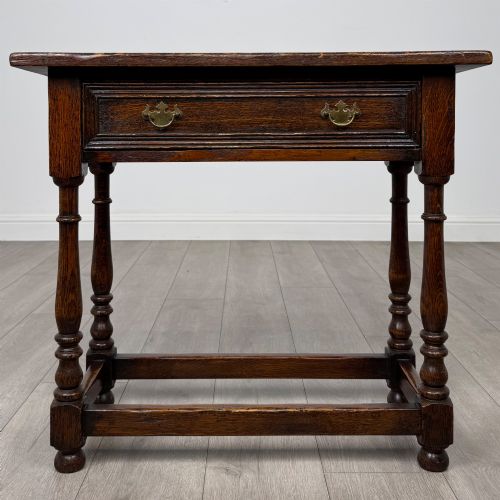
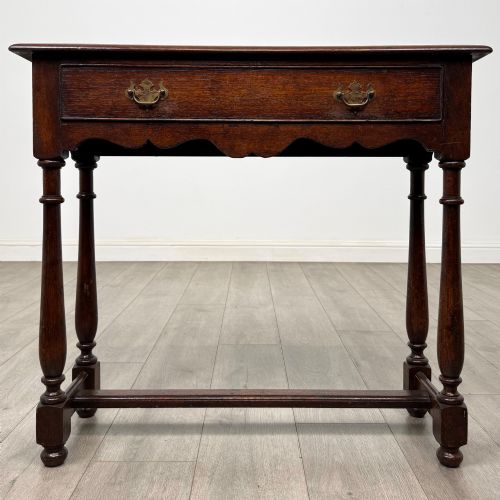

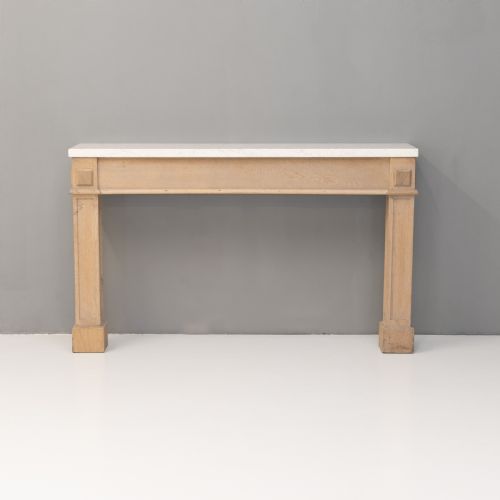


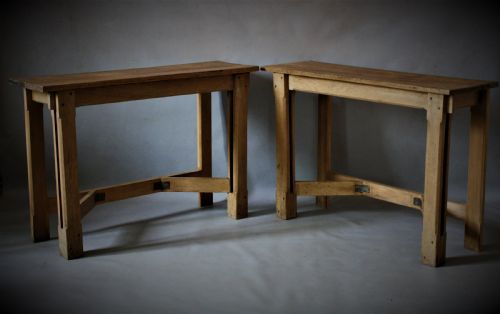
Narrow Oak Side Table
These narrow oak side table examples offer compact surface space and solid timber construction, suiting tight hallways and compact living areas.
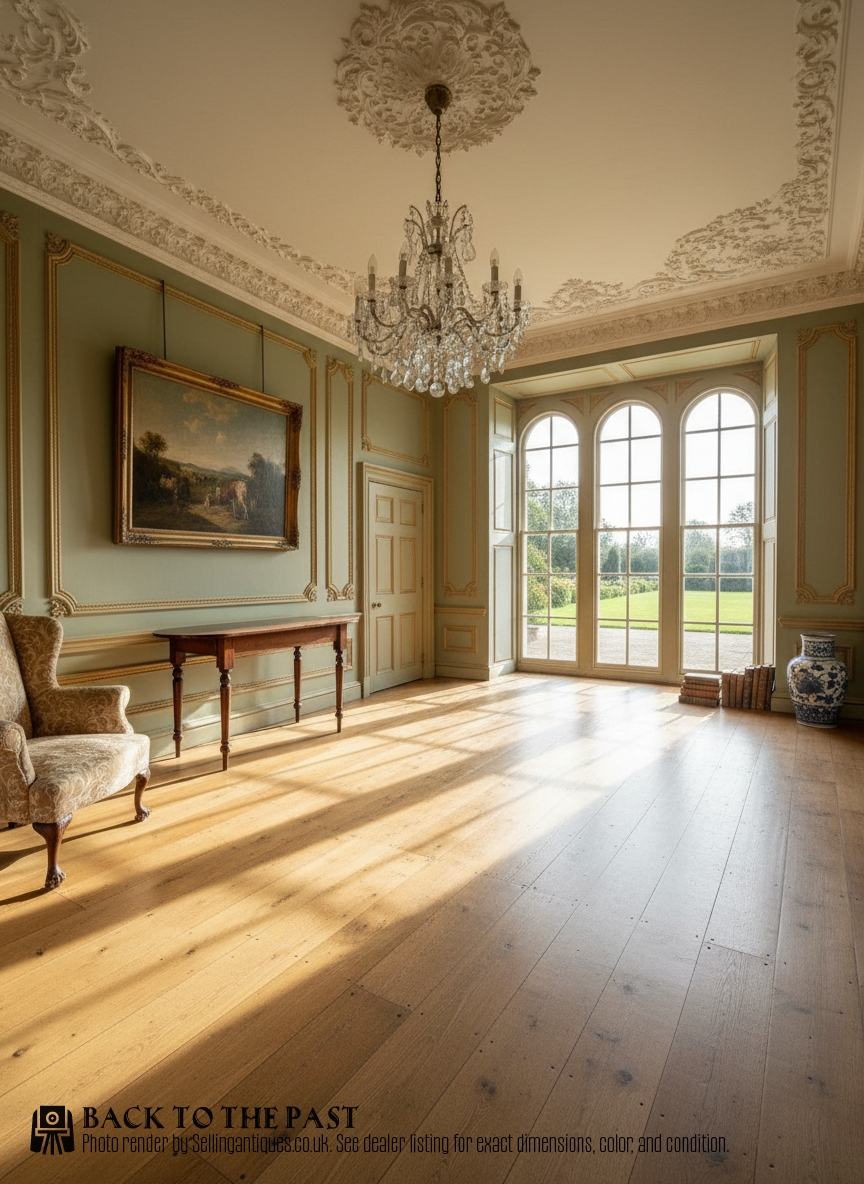
Narrow Oak Side Table
A narrow oak side table provides practical surface area in hallways, beside seating, and along narrow corridors where standard furniture simply will not fit. When searching for a narrow oak side table, buyers encounter formats ranging from simple Edwardian and twentieth-century examples to Victorian console tables and nineteenth-century trestle designs.
The material palette centres firmly on solid oak, frequently accompanied by supporting elements in brass, iron, or marble. Surviving forms include console tables, hall tables, reading stands, and small dresser bases designed with shallow depths.
Stylistic influences span Jacobean revival, English country, Gothic revival, and Arts and Crafts manners. These diverse origins demonstrate how cabinetmakers adapted compact proportions to suit domestic spaces across the nineteenth and twentieth centuries.
Materials and construction
Makers constructed these pieces primarily using solid oak timbers, sometimes selecting bleached wood surfaces or ebonised finishes to alter the natural tone. Joinery methods relied on sturdy framing to support narrow proportions without sacrificing stability.
Metal components such as brass handles and iron underframes appear on specific gothic and industrial variants, adding structural rigidity. Secondary timbers like pine occasionally appear in internal framing or drawer linings.
The listings span from the late seventeenth century through the Edwardian period, uniting solid oak and bleached wood with iron and marble elements.
Evaluating quality and proportion
Quality in these pieces rests upon timber selection and the integrity of the original construction. Solid oak builds with honest proportions and minimal alteration command greater interest than heavily restored or later adapted examples.
Subtle details such as carved underframes, gallery rails, or matching pairs distinguish finer workshop production from utilitarian utility furniture. The harmony between the slender depth and the overall height dictates how successfully the piece sits within a hallway or living space.
The Narrow Oak Side Table Glossary
- Console table
- A table designed to stand against a wall, frequently supported by wall brackets or distinct legs.
- Trestle table
- A table featuring a horizontal beam supported by two vertical legs or frames at each end.
- Dresser base
- The lower section of a kitchen or dining dresser, typically fitted with cupboards and drawers.
- Ships gallery
- A raised wooden edge or rim around the top of a table to prevent items sliding off during movement.
- Jacobean revival
- A nineteenth-century revival style emulating the heavy turned supports and dark panelling of seventeenth-century English furniture.
Narrow Oak Side Table: Frequently Asked Questions
Where should I place a narrow oak side table?
These pieces suit narrow hallways, tight entryways, and small landings where floor space is limited. Their shallow depth allows them to sit flush against walls without obstructing pathways.
They also function effectively behind sofas or as compact lamp stands in living rooms, providing surface area without dominating the room.
How do I identify the period of an oak side table?
Dating relies on examining construction methods, timber patination, and stylistic markers such as gothic underframes or arts and crafts details. Edwardian and twentieth-century pieces often show lighter timber treatments, while nineteenth-century examples display darker finishes or heavier turning.
Comparing hardware like brass pulls and observing drawer dovetailing further helps establish whether a piece originates from the Victorian era or later.
Are narrow oak side tables structurally sturdy?
Solid oak construction provides inherent strength, meaning these tables handle daily use well despite their slender proportions. Many feature underframes or trestle designs that brace the legs against lateral movement.
Heavier examples with marble tops or iron supports offer additional weight, keeping the console steady against busy hallway walls.
How do I care for antique oak furniture?
Maintain the timber by dusting regularly with a dry cloth and avoiding placement near direct heat sources or strong sunlight. Excessive temperature changes can cause oak to dry out or split over time.
Applying occasional appropriate wax preserves the natural lustre of the wood without building up heavy chemical residues.