
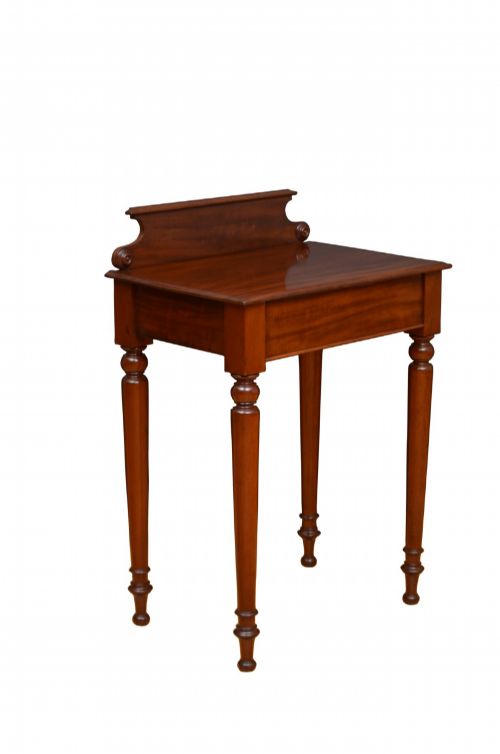
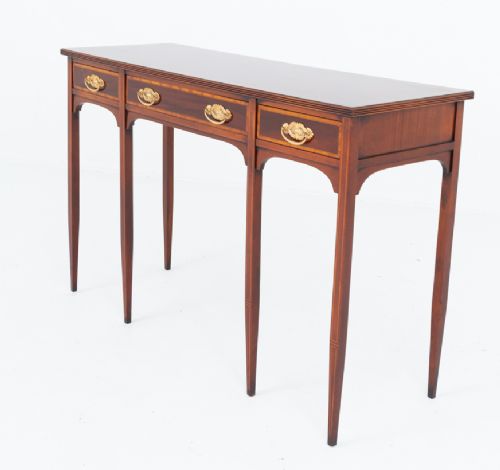
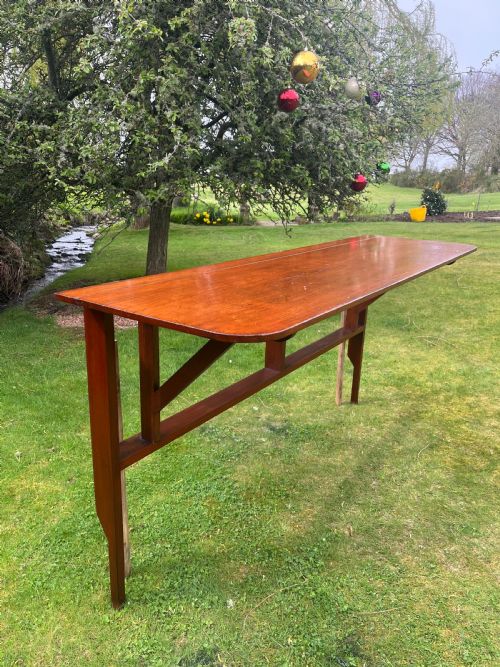


Narrow Mahogany Console Table
A narrow mahogany console table is a slender, purposeful ledge for a hallway or reception room, prized for its timber warmth and compact footprint.
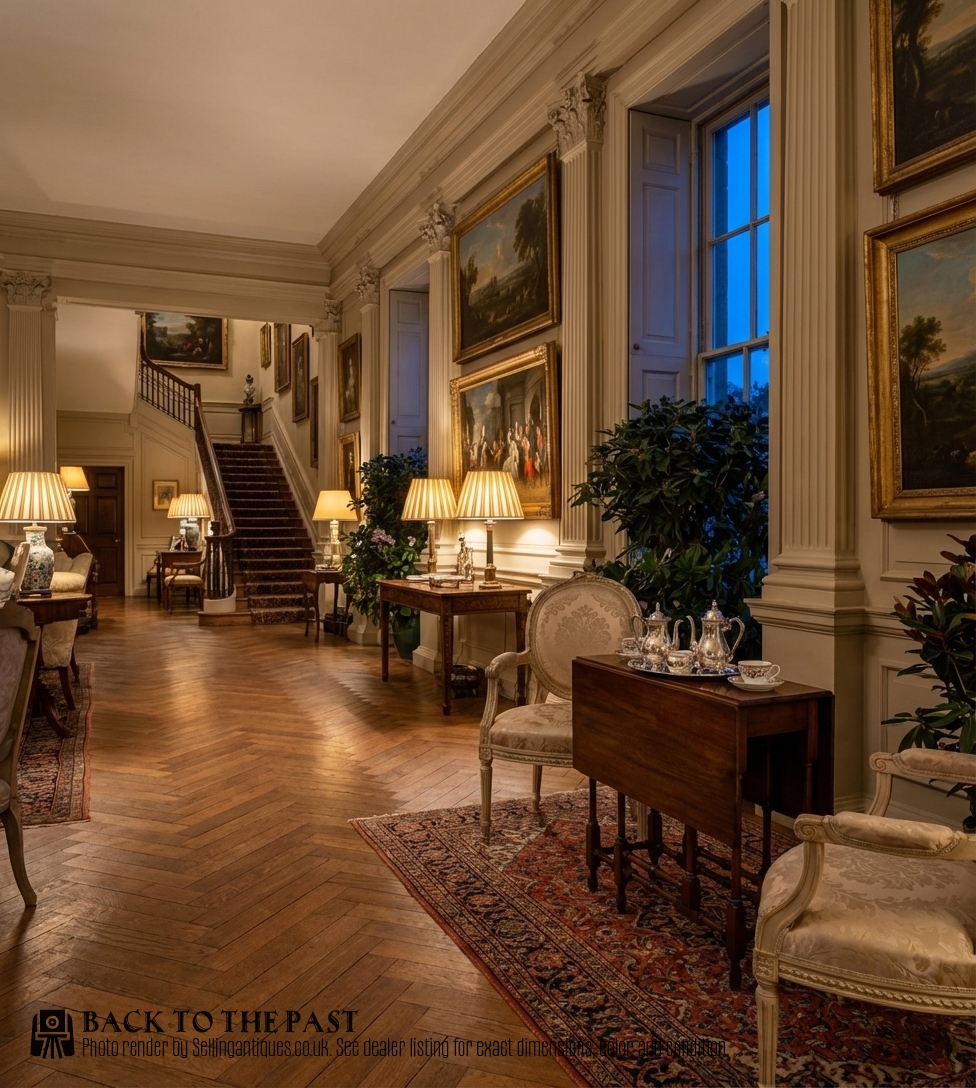
Narrow Mahogany Console Table
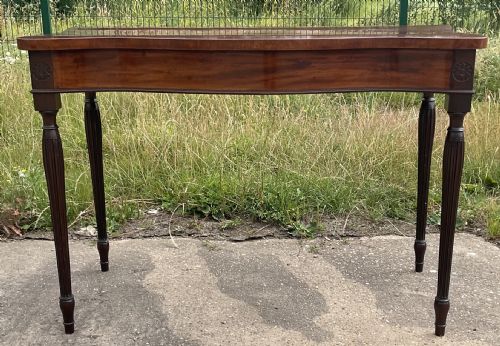
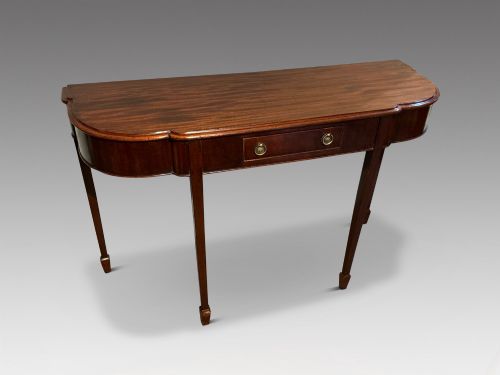
A narrow mahogany console table sits flush against a wall in a hallway, corridor or drawing room where floor space is limited. The pieces here span the nineteenth century through the Edwardian era and into the early twentieth century, taking the form of console tables, pier tables, servers and occasional tables.
Georgian and Victorian examples dominate the selection, alongside revival pieces in the Regency and Sheraton styles. Makers often built these items with shallow depths to fit narrow circulation spaces while offering a display surface for lamps or ornaments.
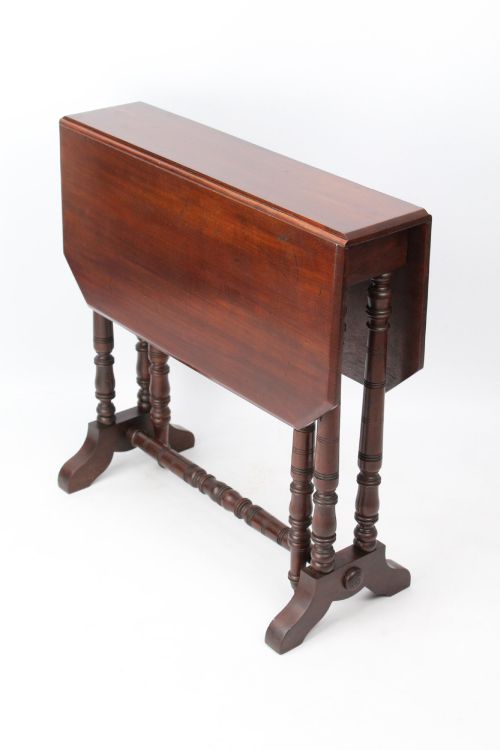
Buyers also encounter related forms such as Sutherland tables with drop leaves and small sideboards of modest proportions. The underlying utility remains consistent across all these variations: a long, narrow timber surface designed to occupy minimal floor space.
Quality distinctions
Quality rests in the selection of the timber and the crispness of the cabinetwork. Finer tables display carefully matched mahogany veneers with harmonious grain patterns, whereas simpler pieces utilise plain timber boards without decorative inlay or figured figuring.
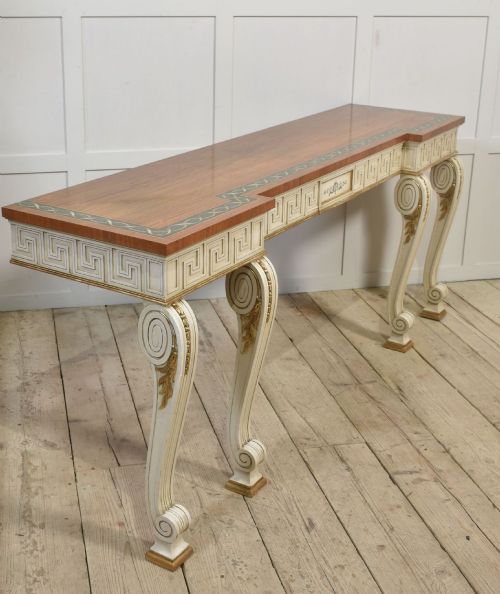
The sophistication of the carved or inlaid details separates standard production from superior workshops. Crisp satinwood stringing, well-turned legs and substantial marble tops indicate a higher grade of craftsmanship than plain painted or unadorned surfaces.
Listings feature mahogany, marble, brass, and satinwood inlay across nineteenth-century and Edwardian forms.
Druce and Co
The Narrow Mahogany Console Table Glossary
- Console table
- A table designed to stand against a wall, frequently supported by brackets or front legs. These items often feature decorative carving on the front apron.
- Sutherland table
- A narrow drop-leaf table with hinged flaps supported by swinging gate legs. When folded down, the table occupies a very minimal depth.
- Pier table
- A low table designed to stand against the wall beneath a pier glass or mirror. They share the shallow proportions typical of narrow console tables.
- Satinwood inlay
- Contrasting light-coloured wood inserted into the mahogany surface in geometric or floral patterns. This decorative technique is characteristic of Sheraton Revival pieces.
- Serpentine front
- A furniture front characterised by a wavy outline with a convex centre flanked by concave curves. This contour requires precise woodworking skill.
Narrow Mahogany Console Table: Frequently Asked Questions
Where should I place a narrow console table?
These pieces suit narrow hallways, landings, and entrance spaces where a standard table would obstruct passage. Their shallow depth allows them to sit comfortably behind sofas or against blank corridor walls.
They provide a practical surface for post, keys, or a small lamp without encroaching on the floor area of the room.
How do I identify a Victorian piece?
Victorian items frequently exhibit darker mahogany tones, robust turned legs, and occasional use of heavy brass castors. Construction tends to be substantial, reflecting the interior fashions of the nineteenth century.
Detailing ranges from plain functional drawer tables to elaborately carved Sutherland tables with multiple gate-leg supports.
What is the difference between a console and a side table?
Console tables are specifically engineered to stand against a wall, sometimes requiring attachment for absolute stability. Side tables are traditionally free-standing items finished on all four sides.
In practice, many antique listings use the terms interchangeably based on proportions and general appearance.
How do I care for antique mahogany?
Protect the timber by avoiding direct sunlight and excessive heat sources that can dry out the polish. Regular dusting with a soft, dry cloth maintains the finish without needing heavy chemical polishes.
Applying a traditional beeswax polish occasionally will nourish the wood and preserve the depth of the grain.