

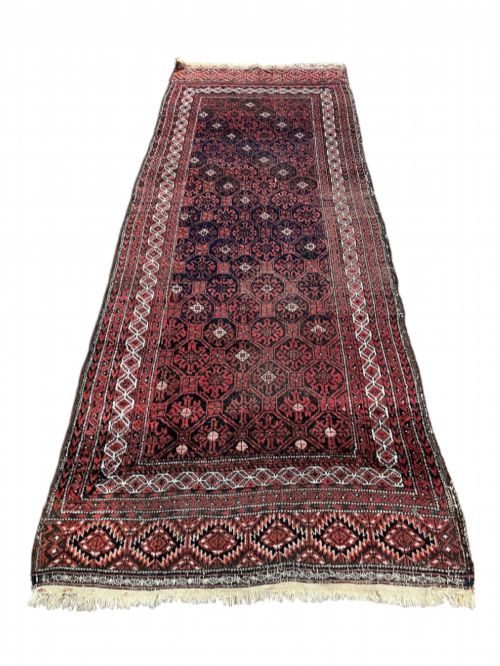
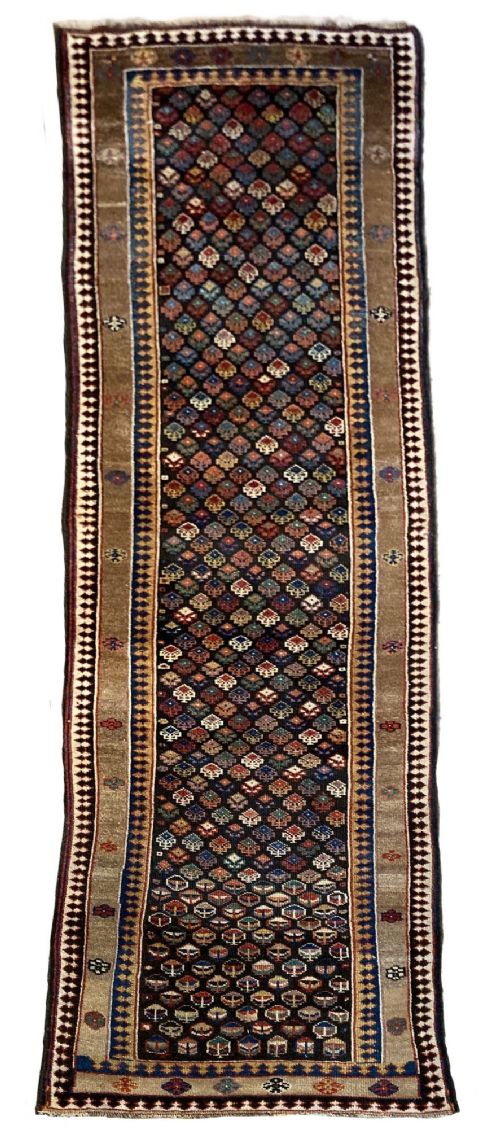


Narrow Hallway Runner
A narrow hallway runner bridges spaces with purposeful length, offering dense wool weaves designed to endure heavy foot traffic.

Narrow Hallway Runner
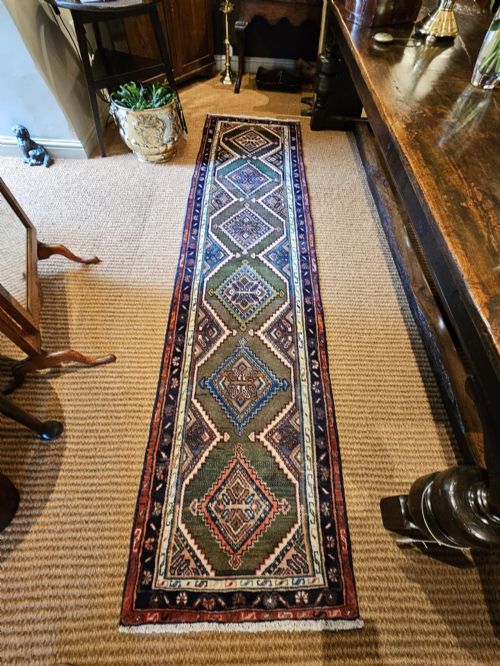
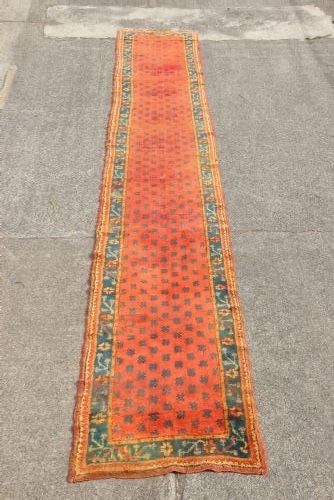
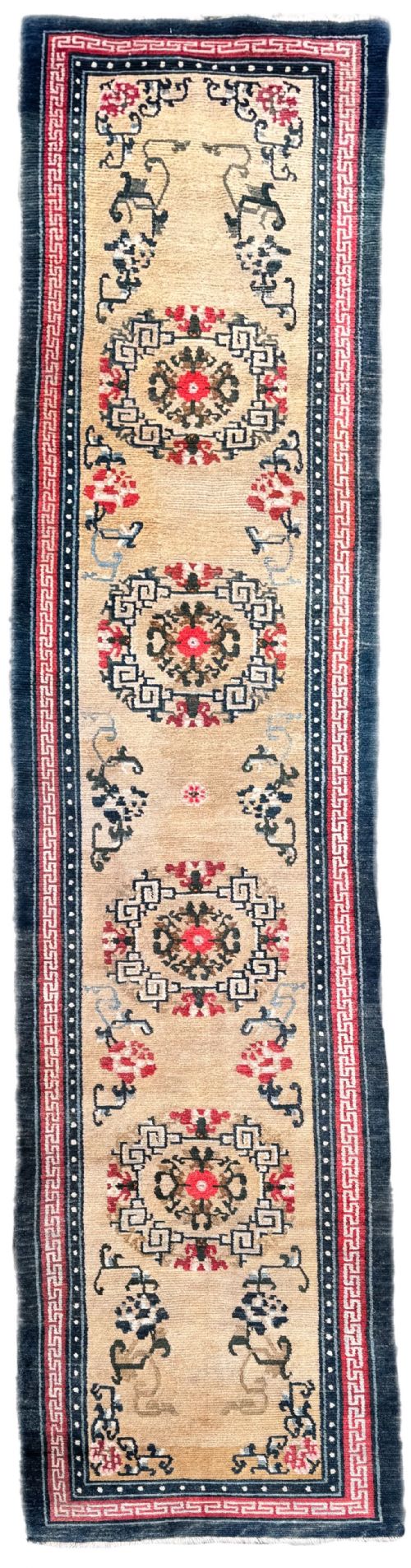
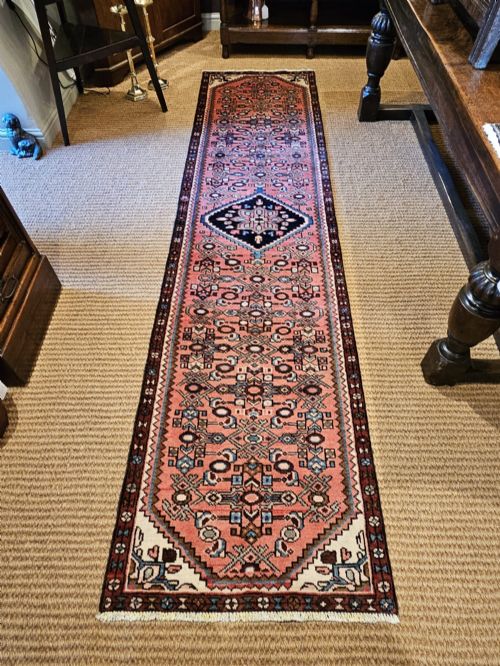
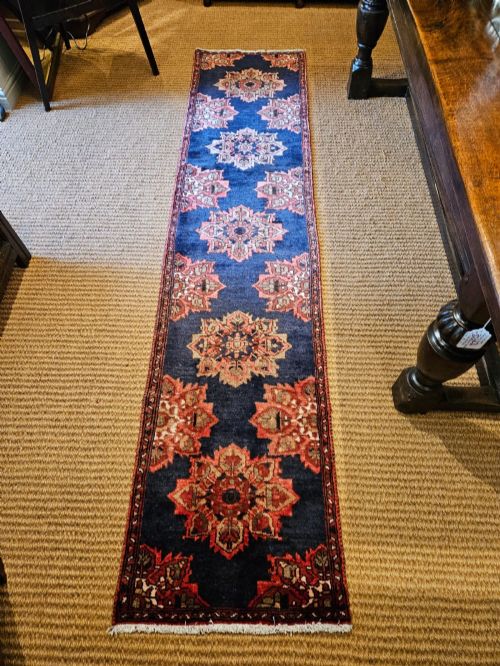
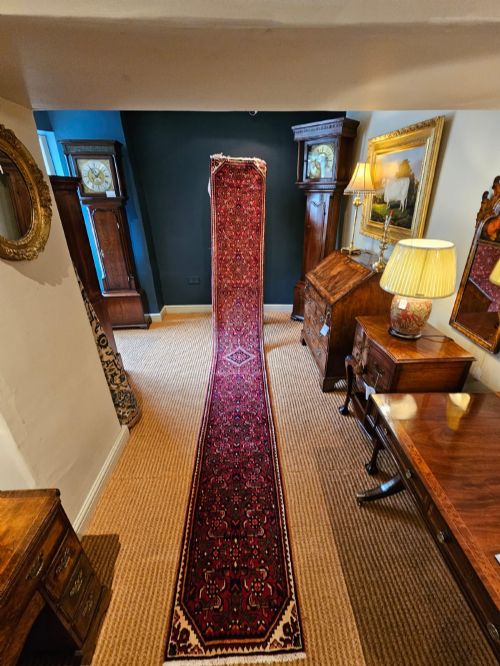
A narrow hallway runner brings linear orientation to corridors, landings and extended transitional spaces. These pieces span production dates from the nineteenth century through the early twentieth century, originating primarily from Persian, Turkish, Moroccan and Tibetan traditions.
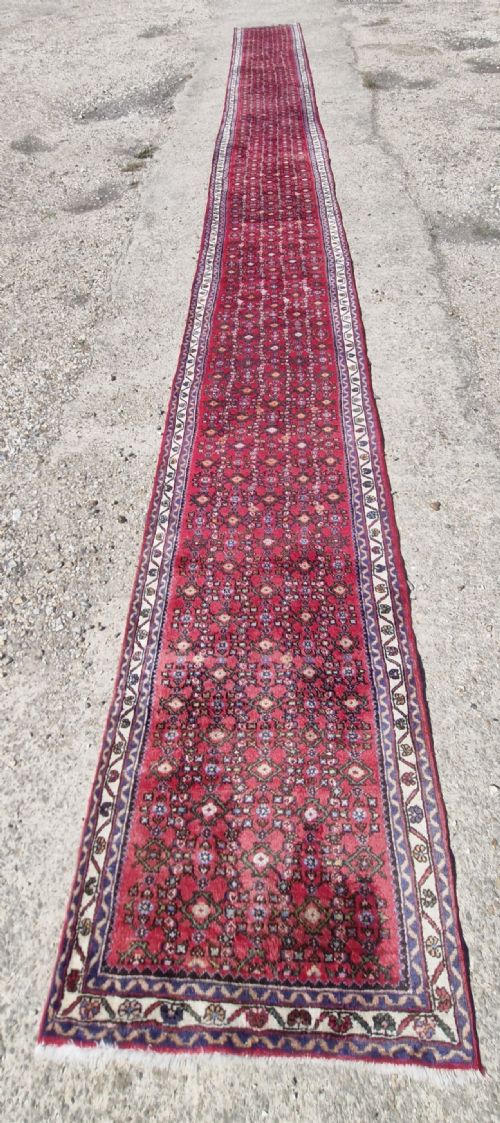
The format relies on elongated proportions to suit domestic architecture that demands floor coverings of restricted width. Common regional types encountered include Heriz, Hamadan, Kurdish and Baluch examples, each shaped by traditional village and tribal weaving methods.
Makers construct these long carpets using specific regional geometries and medallion layouts tailored to narrow dimensions. The visual impact depends on how effectively the border patterns frame the central field along an extended axis.
Materials and Construction
The foundational materials comprise natural wool, hand-spun wool, cotton and camel hair. These organic fibres provide resilience underfoot while maintaining the flexibility required for long format floor coverings.
Weavers employ traditional knotting techniques on vertical looms, combining durable wool piles with sturdy cotton or wool foundations. Natural dye sources yield deep regional palettes dominated by indigo blues, madder reds and earthy neutral tones.
Narrow Hallway Runner Retail Price Guide 2026
Typical asking prices for narrow hallway runner among the pieces listed under this phrase on Sellingantiques today, from the lower quarter to the upper quarter. They describe what is for sale here now, not the wider market.
The listings span multiple decades of production, incorporating nineteenth-century pieces alongside examples dated through the nineteen-thirties.
Evaluating Execution
Quality rests in the density of the knotting and the crispness of the geometric or floral motifs rendered along the length. Tighter construction yields superior durability and sharper definition across intricate medallions and border guards.
The choice of wool and the depth of the pile dictate how well the surface resists compression in high-traffic corridors. Finer pieces maintain structural integrity and colour saturation despite decades of practical domestic use.
The Narrow Hallway Runner Glossary
- Runner
- A long, narrow carpet format specifically proportioned for corridors, hallways and staircases. This layout directs movement through interior spaces.
- Pile
- The upright yarn loops or cut ends that form the soft surface of a carpet. Density in this layer contributes directly to longevity.
- Kilim
- A flat-woven carpet produced without a pile, often featuring sharp geometric motifs. These textiles are lighter and sit flush against the floor.
- Warp
- The vertical foundation threads stretched tightly on the loom before knotting begins. All horizontal weft threads and knots interlock with this structure.
Narrow Hallway Runner: Frequently Asked Questions
Where do narrow hallway runners work best?
These elongated floor coverings suit narrow corridors, transitional landings and extended entryways where standard rectangular carpets fail to fit. Their linear dimensions naturally guide movement through domestic floor plans.
Placing them in high-traffic areas protects underlying wooden flooring while introducing texture and pattern to otherwise utilitarian spaces.
How do I identify a Heriz runner?
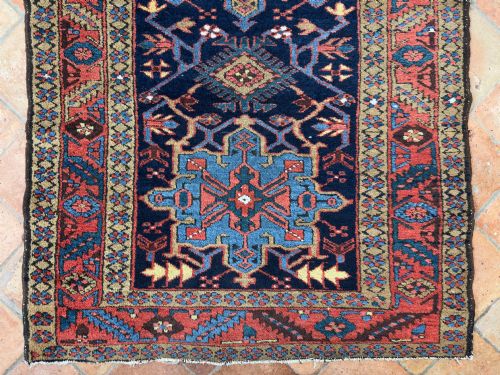
Heriz examples typically display bold, geometric medallion designs anchored by robust corner spandrels. The colour palette often incorporates deep reds, navy blues and contrasting ivory highlights.
Constructed with sturdy foundations, these pieces project a heavier, more architectural aesthetic compared to finer village weaves.
What materials make up these runners?
Traditional examples rely principally on natural wool, hand-spun wool, cotton and occasional camel hair for pile and foundation structures. These natural fibres withstand sustained daily friction.
Vegetable and natural mineral dyes provide the foundational colour palette, developing subtle variations in tone over decades of exposure.
How are nineteenth-century pieces dated?
Dating relies upon structural analysis, including the tightness of the weave, wool preparation methods and specific regional design vocabularies. Nineteenth-century examples often exhibit hand-spun wool and traditional natural dye palettes.
Stylistic shifts in border motifs and medallion geometry further help place pieces within specific decades from the eighteen-seventies onward.