


Narrow Book Shelving
Narrow book shelving offers a practical answer for compact rooms, housing collections within slender footprints of oak, mahogany, and pine.
Narrow Book Shelving
Narrow book shelving comprises open bookcases, whatnots, and corner cabinets designed for restrained floor spaces. Pieces span the Victorian, Edwardian, and early twentieth-century periods, alongside revival styles including Arts and Crafts, Regency, and Sheraton.
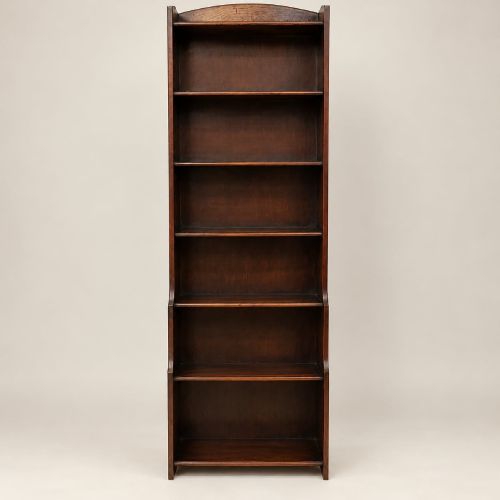
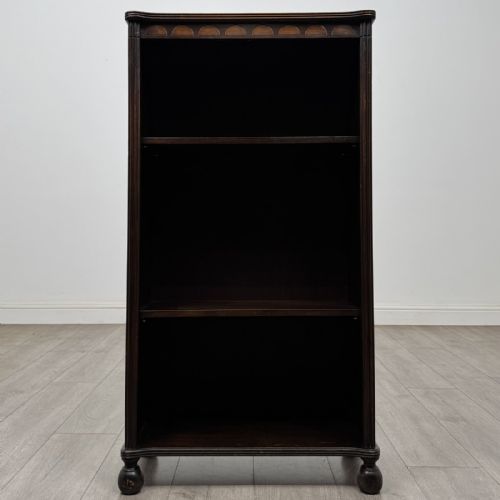
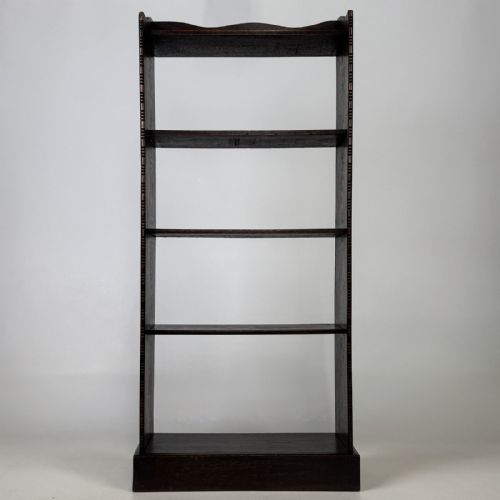
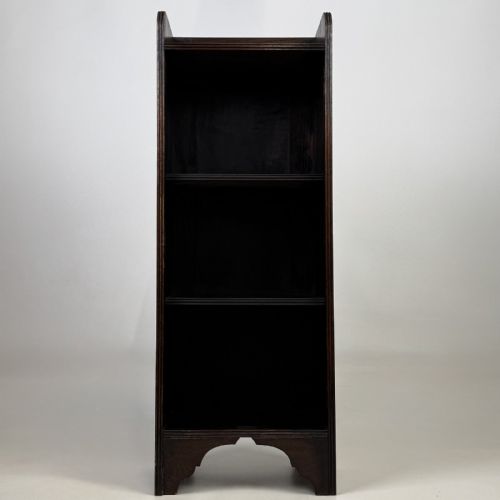
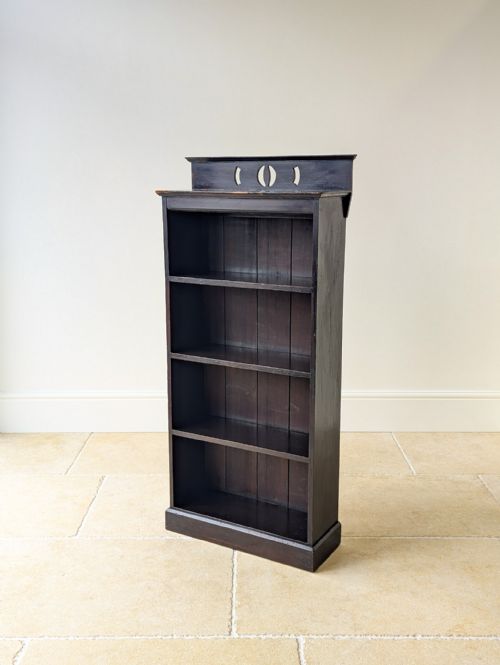
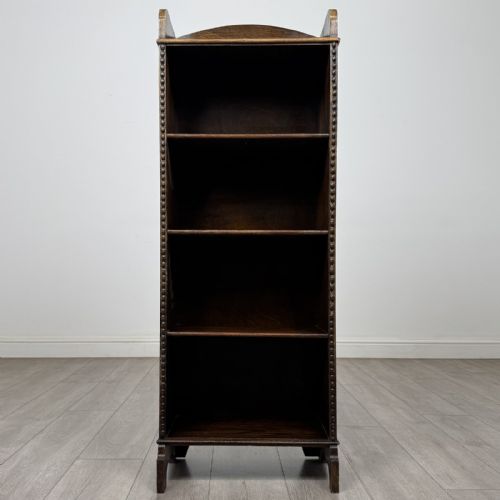
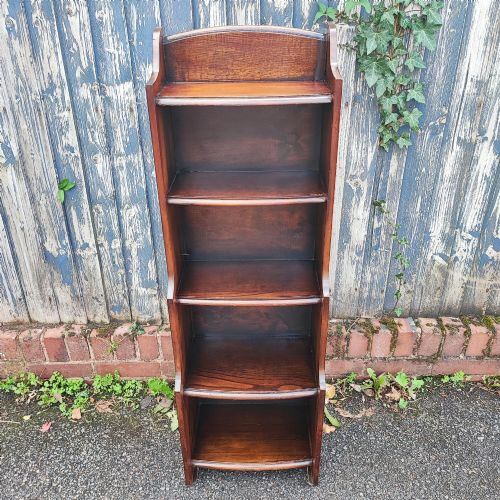
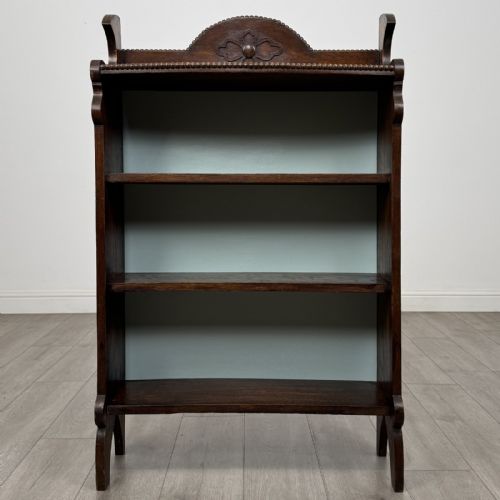
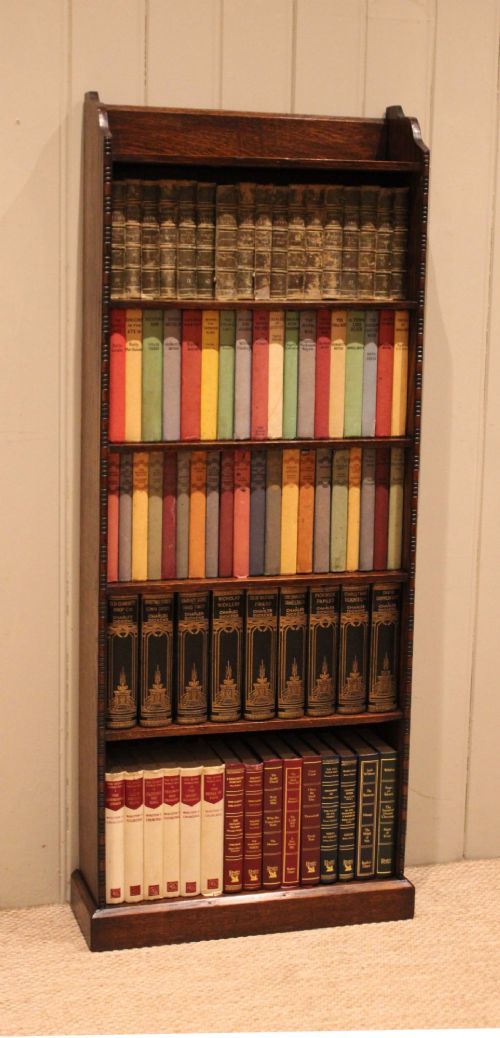
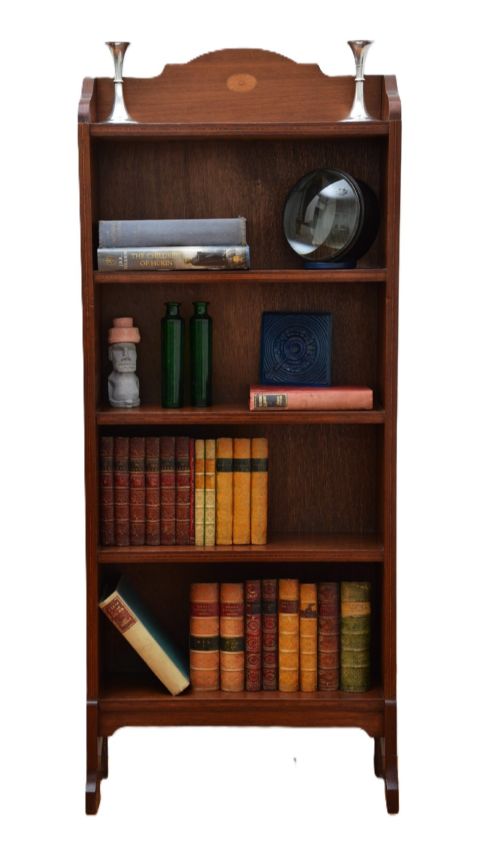
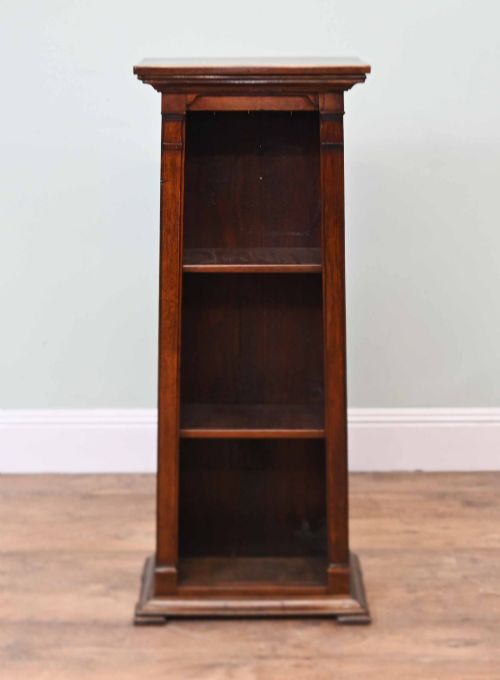
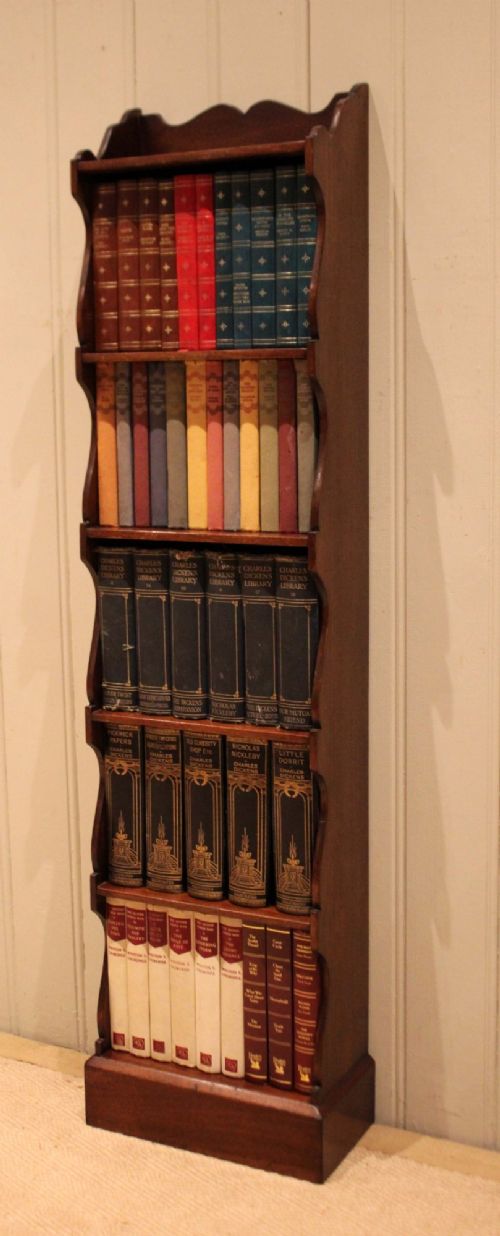
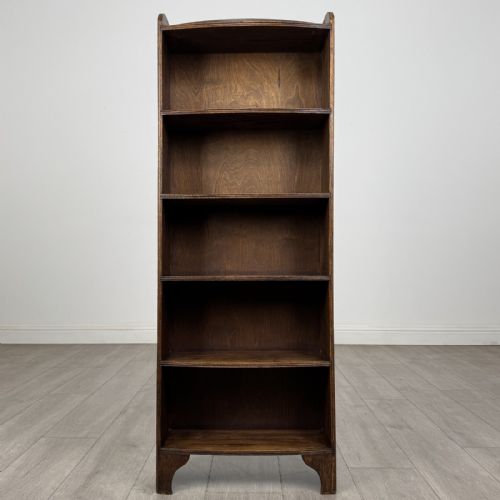
The prevailing form on this page is the open bookcase, often constructed in oak or mahogany. These examples frequently feature adjustable shelves, raised galleries, or arched tops, providing functional storage without heavy proportions.
Dimensions remain slender to fit alcoves and narrow passages, utilising vertical space efficiently. Variations include satinwood inlay, carved edges, and glazed or open fronts tailored for domestic libraries.
Materials and Construction
Makers relied primarily on solid oak and mahogany for structural integrity, supplementing them with pine, stained pine, and rosewood. Inlay work utilised satinwood, while decorative accents incorporated brass and ormolu mounts.
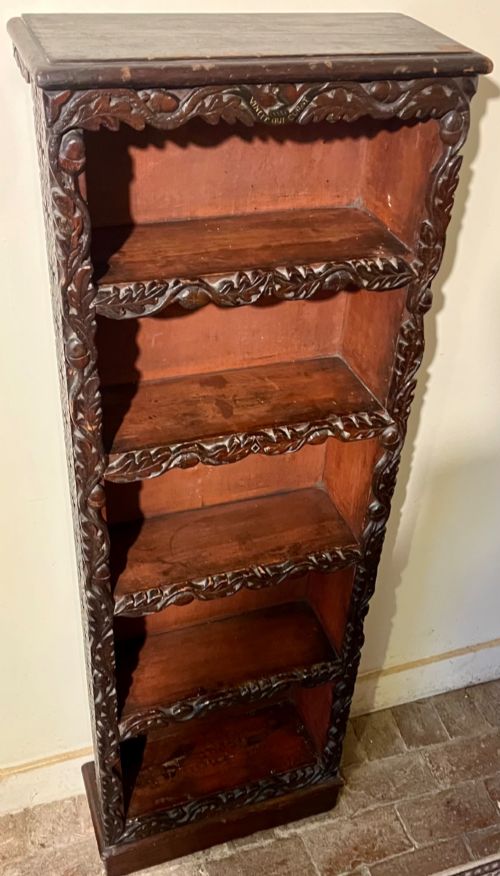
Construction techniques balanced utility with decorative detail, employing beaded edges, carved top edges, and decorative cut-outs. Open shelves were frequently made adjustable to accommodate varying volumes, supported by slender pillars or simple uprights.
Narrow Book Shelving Retail Price Guide 2026
Typical asking prices for narrow book shelving among the pieces listed under this phrase on Sellingantiques today, from the lower quarter to the upper quarter. They describe what is for sale here now, not the wider market.
Listings feature pieces spanning the nineteenth century through the 1930s, constructed predominantly in oak and mahogany with occasional pine and rosewood.
Assessing Quality
Quality rests upon the selection of timber and the precision of the joinery rather than mere age. Dense, figured mahogany and quarter-sawn oak exhibit superior stability and grain pattern compared to plain stained pine.
Refinement appears in secondary details such as hand-cut inlay, well-executed carved galleries, and sturdy adjustable shelf mechanisms. Simpler pieces rely on clean proportions and honest construction rather than applied ornamentation.
Ercol·Waring and Gillows·Wylie Lochhead·E.A. Taylor
The Narrow Book Shelving Glossary
- Open Bookcase
- A bookcase lacking doors, providing direct access to the interior shelves. This form dominates the selection for ease of use in smaller rooms.
- Whatnot
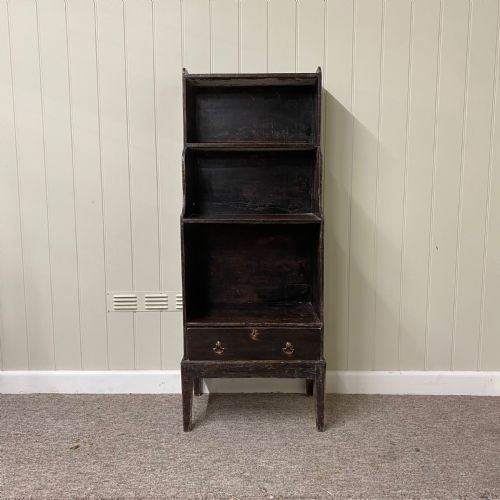
- A multi-tiered piece of furniture designed for displaying books and decorative objects. These often feature slender vertical supports and several open stages.
- Gallery
- A raised ornamental border running along the top edge of a piece. It prevents items from sliding off the upper surface.
- Satinwood Inlay
- Contrasting light-coloured wood inserted into the primary timber surface to create decorative patterns. It appears frequently on Edwardian mahogany pieces.
- Adjustable Shelves
- Shelves that can be moved to different heights using internal slots or supports. This system allows the storage of books of various sizes.
Narrow Book Shelving: Frequently Asked Questions
How do I choose between oak and mahogany?
Oak offers a robust, textured grain suited to Arts and Crafts or vernacular interiors. Mahogany provides a smoother, darker surface associated with refined revival styles.
Consider the existing wood tones in your room to select a harmonious match.
Are these shelves suitable for heavy books?
Many examples feature adjustable wooden shelving designed for standard volumes. Solid timber construction provides reliable support for everyday library use.
Check whether the shelves are fixed or adjustable depending on your storage needs.
What is a raised gallery used for?
A raised gallery frames the top surface of the bookcase with a decorative wooden rail. Historically, it kept small items secure while adding height and visual interest to the silhouette.
It distinguishes standard shelving from pieces with finished top display areas.
How do I date an Edwardian bookcase?
Edwardian pieces often combine lighter mahogany timbers with subtle satinwood inlay or slender pillars. They reflect a transition away from heavier Victorian proportions toward lighter domestic furniture.
Construction marks and stylistic cues help confirm the period alongside timber choice.