
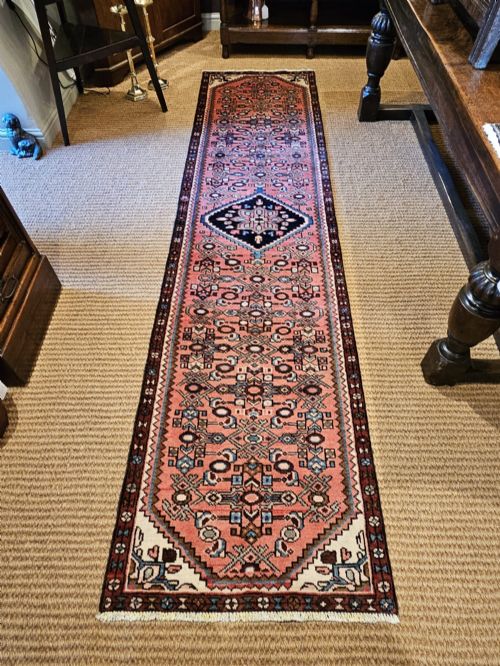
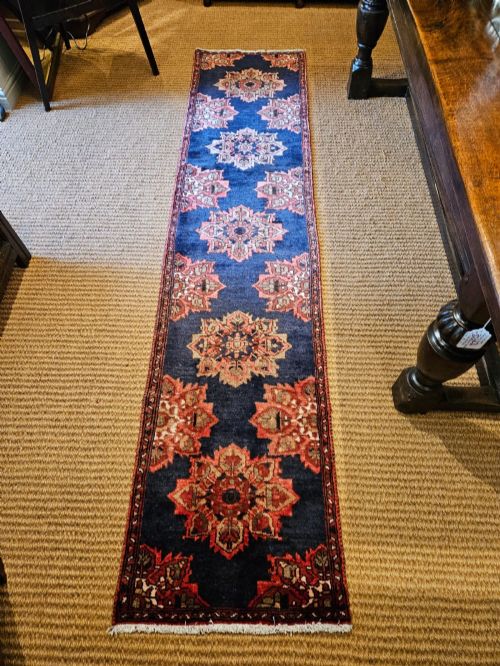
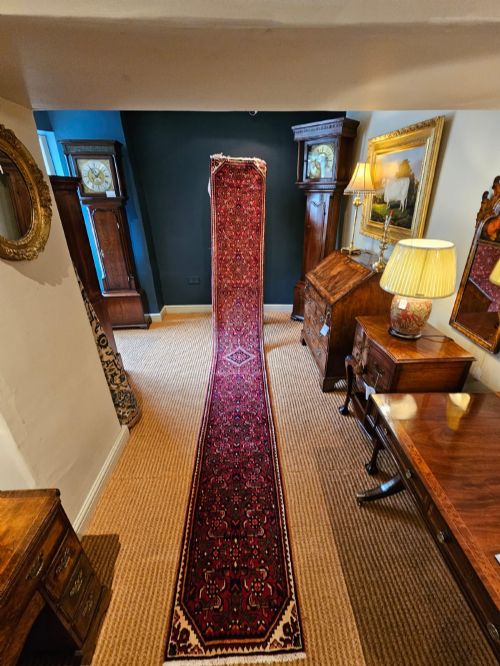
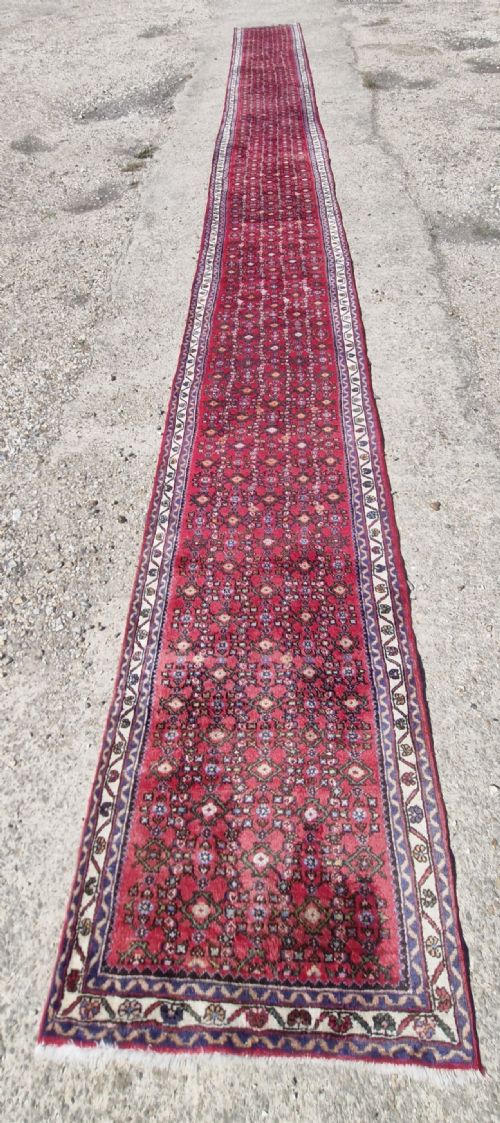


Narrow Rug
A narrow antique rug brings linear character and historic texture to a hallway or landing.
Narrow Rug
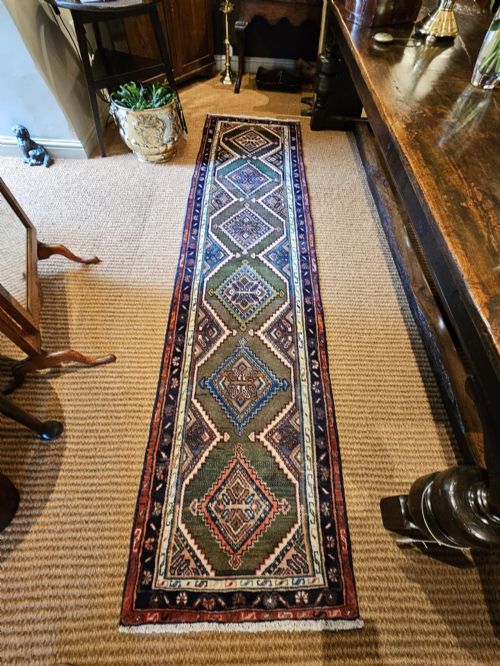
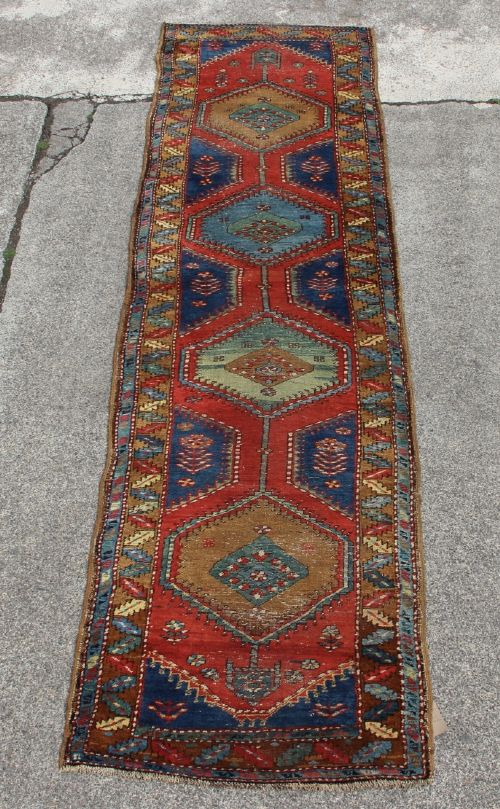
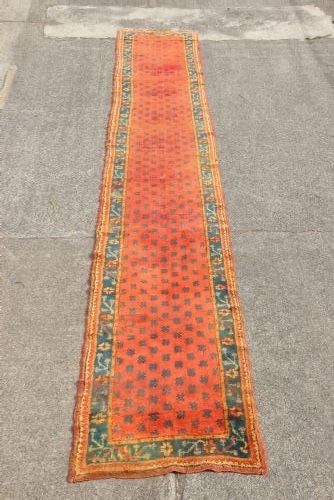
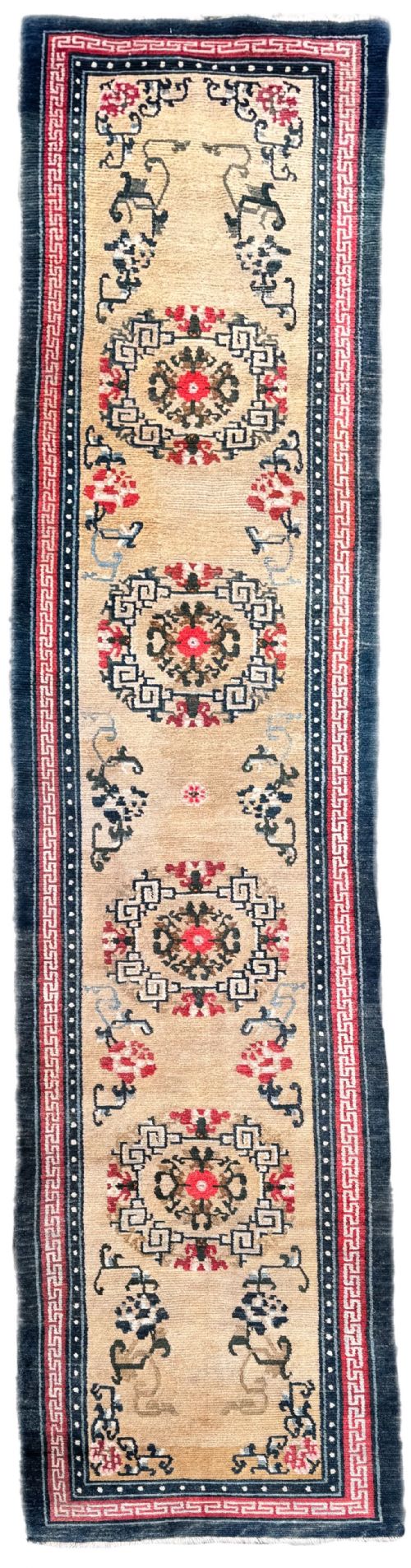
A narrow antique rug spans long proportions designed specifically for corridors, staircases and narrow rooms. When you examine a narrow antique rug on this page, you encounter elongated floor coverings originating largely from Persian, Turkish, Caucasian and Tibetan weaving traditions.
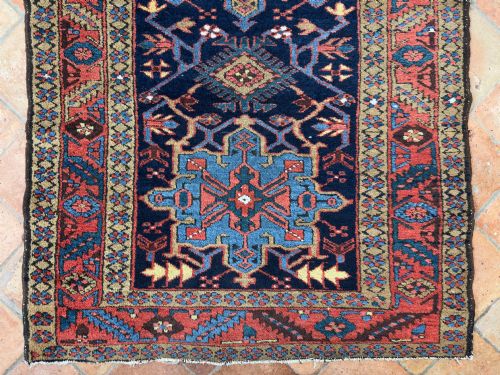
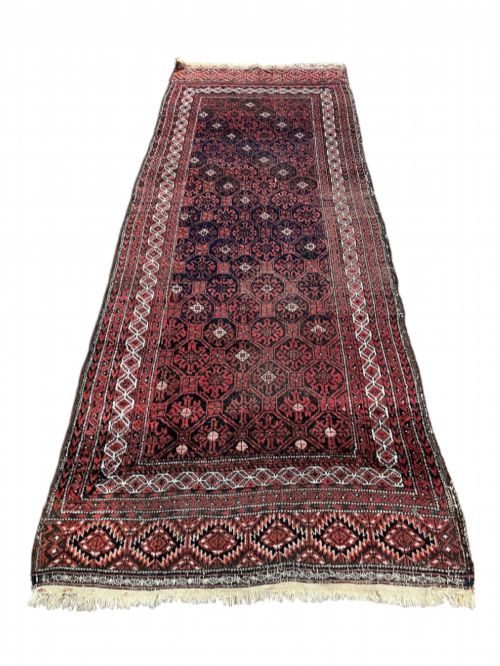
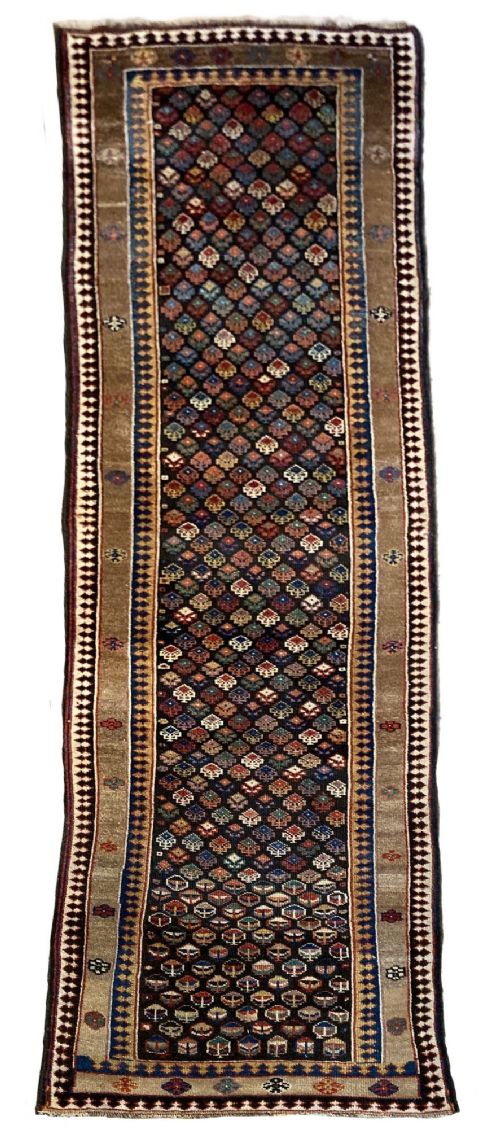
The selections date predominantly from the late nineteenth century through to the 1930s. These pieces include specific regional types such as Heriz, Hamadan, Kurdish, Oushak and Baluch runners.
Most examples serve practical roles in heavy-traffic domestic spaces while displaying distinct tribal and village design motifs. The forms range from compact lengths to expansive corridors exceeding thirty feet.
Materials and Construction
Weavers constructed these textiles primarily using wool, hand-spun wool and cotton foundations, occasionally incorporating camel hair for natural tone variations. The foundation warps and wefts typically rely on cotton or wool, providing structural stability for heavy floor use.
Piles are knotted by hand onto the foundation grids, creating dense surfaces that withstand prolonged foot traffic. Natural dyestuffs yield the deep reds, blues, greens and earthy neutrals recorded across the inventory.
The inventory spans the nineteenth century through the 1930s, featuring wool, cotton, hand-spun wool and camel hair across Persian, Turkish, Caucasian and Tibetan origins.
Assessing Quality and Execution
Knot density and the precision of the geometric or floral layout dictate the refinement of the weaving. Finer wool selection and greater yarn consistency contribute to structural longevity and tactile richness.
The integrity of the original side cords and end finishes indicates how well a textile has survived decades of domestic use. Pigment saturation and the subtlety of colour shifts across the field separate standard village output from master workshops.
The Narrow Rug Glossary
- Runner
- A long, narrow carpet format traditionally utilised in hallways, corridors and on staircases. These pieces measure significantly longer than they are wide.
- Warp
- The vertical foundation threads stretched lengthwise on the loom before knotting begins. The fringe typically develops from these extended threads.
- Weft
- The horizontal threads passed across the warps between rows of knots to bind the structure firmly together. Proper beating of the weft ensures a tight and durable weave.
- Kilim
- A flat-woven textile produced without a pile by tightly interweaving warp and weft strands. Some listed pieces combine flat-woven sections with knotted pile areas.
- Pile
- The upright cut or loop yarn surface formed by individual knots tied to the warp threads. The depth and density of this layer determine the softness underfoot.
Narrow Rug: Frequently Asked Questions
Where should I place a narrow antique rug?
These elongated formats suit hallways, entryways, corridors and long landings where standard rectangular carpets fail to fit. They guide movement through a floor plan while protecting high-traffic wooden flooring.
Ensure you place a suitable underlay beneath the textile to prevent slippage and reduce friction against the floorboards.
How do I clean an antique runner?
Gentle surface vacuuming without the beater bar engaged removes embedded dust and grit from the wool pile. Avoid shaking the textile harshly by the ends, as this strains historical foundations.
Professional specialist cleaning remains necessary for deeper washing to protect natural dyes and fragile wool fibres.
How do I identify Persian regional styles?
Heriz runners often display bold geometric medallions and robust corner spandrels woven with sturdy wool. Hamadan and Kurdish pieces tend to feature all-over repetitive field patterns executed in indigo and madder red tones.
Examining the knotting structure and edge binding helps differentiate village output from specific tribal workshops.