







Narrative Interior Canvas
A narrative interior canvas depicts domestic daily life and historical scenes within domestic rooms, offering buyers a window into Victorian social routines and narrative storytelling.
Narrative Interior Canvas
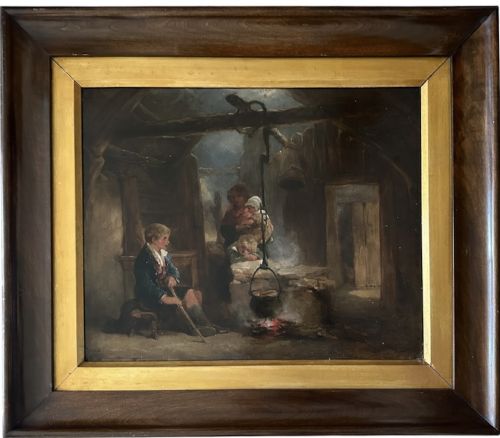
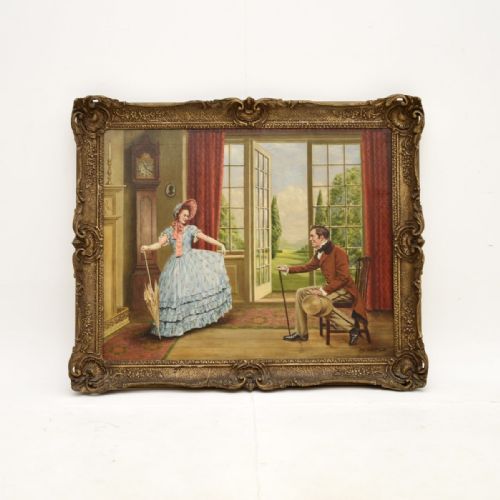
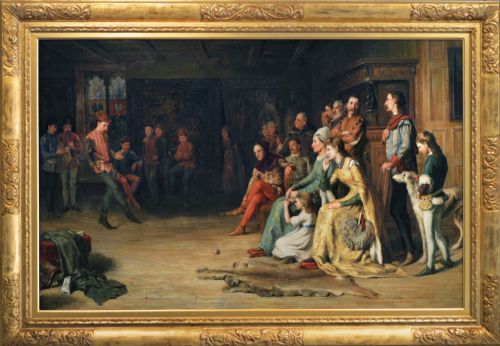
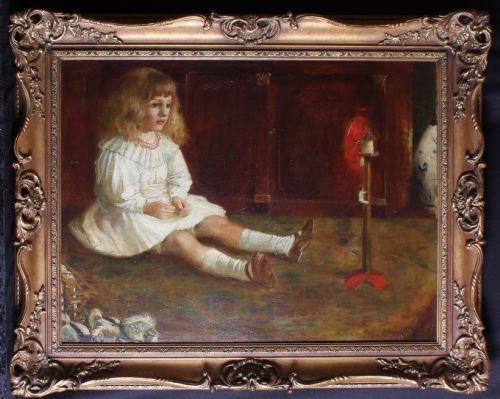
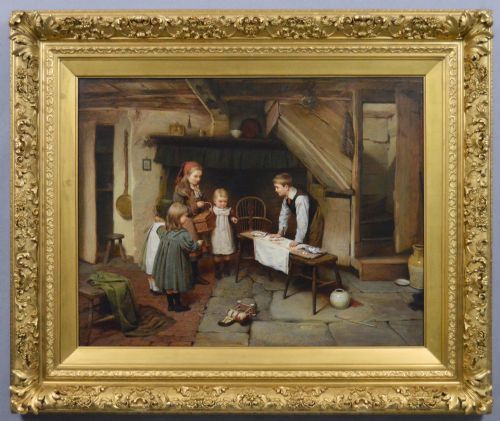
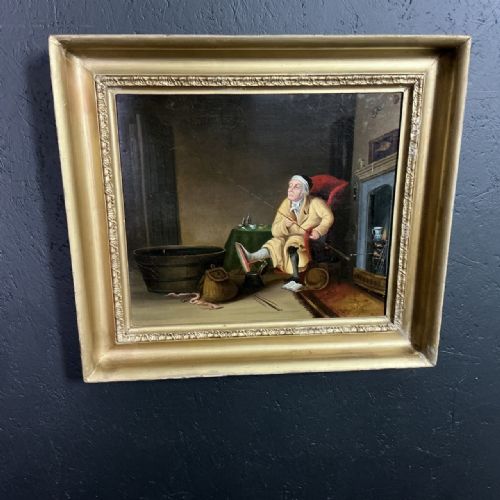
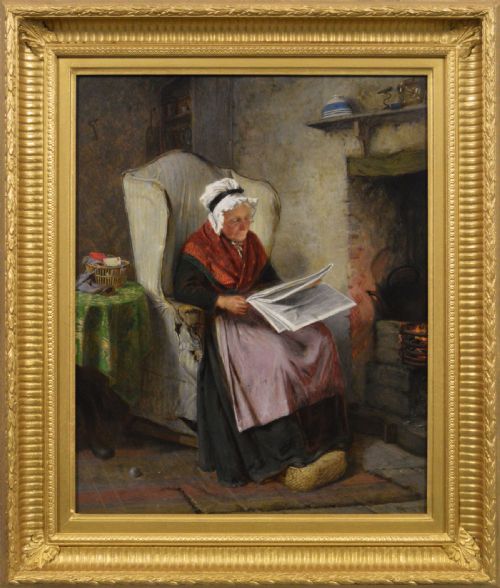
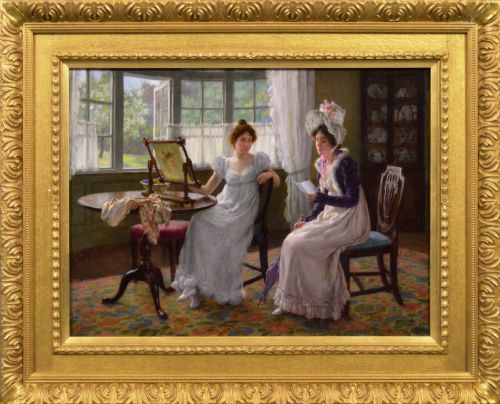
A narrative interior canvas portrays figures engaged in domestic routines, social visits or historical pastimes inside nineteenth-century rooms. These works capture specific moments of human interaction, from tea times and fireside chats to children playing in cottages or country houses.
The versions most commonly met on this page originate from the Victorian period, spanning the mid-nineteenth century through to the early twentieth century. British genre painters dominate the selection, depicting detailed domestic scenes framed in giltwood or wood.
Collectors acquire these paintings for their storytelling depth, architectural background details and historical costume accuracy. Each piece presents a self-contained domestic drama staged within a period interior.
Materials and Techniques
Artists painted these works primarily using oil paint applied to stretched canvas or, occasionally, wood panels. Oil paint permitted delicate blending of light, fabric textures and facial expressions across the domestic setting.
Narrative Interior Canvas Retail Price Guide 2026
Typical asking prices for narrative interior canvas among the pieces listed under this phrase on Sellingantiques today, from the lower quarter to the upper quarter. They describe what is for sale here now, not the wider market.
Listings feature works from the nineteenth century through the Edwardian era, predominantly executed in oil on canvas within period wooden frames.
Assessing Artistic Merit
Quality separates through the artist's ability to render complex human expressions, hand gestures and interpersonal tension convincingly. Superior works balance the central narrative with meticulously detailed interior backgrounds, including textiles, pottery and period furniture.
Compositional structure and lighting control determine the strength of the piece. Master practitioners direct the viewer's eye through clever placement of light sources, such as windows or fires, whereas lesser works rely on static figure placement.
George Whitton Johnstone·Stephen Samuel Lewin·Alfred Lyndon Grace·James Hamilton·Harry Brooker·Byam Shaw·Alexander Rosell·John Arthur Lomax·Charles Haigh Wood·Haynes King·James Kyd·Edwin Thomas Roberts·Robert Alexander Hillingford·George Smith·Edwin Hughes·Rolinda Sharples·Pauline Delacroix Garnier·Alfred Provis·Henry Collins·Ralph Hedley·Robert Gemmell Hutchison·Thomas Gist·Francesco Bergamini·Charles Hunt Jnr
The Narrative Interior Canvas Glossary
- Genre painting
- Artwork depicting scenes from ordinary life, typically featuring people in domestic or social settings rather than mythological or historical subjects. These paintings serve as visual records of past manners and domestic interiors.
- Oil on canvas
- Pigment mixed with drying oil applied to a woven fabric support stretched across a wooden frame. This medium allowed artists to work slowly and achieve deep colour saturation.
- Giltwood
- Wood that has been treated and covered with a thin layer of gold leaf or gold paint. Frames utilising this finish were standard for nineteenth-century exhibition paintings.
- Realism
- An artistic movement focused on representing everyday subjects and situations accurately and truthfully. In interior scenes, this translates to faithful depictions of domestic objects and architecture.
Narrative Interior Canvas: Frequently Asked Questions
What is a genre interior painting?
A genre interior painting depicts everyday people in domestic rooms rather than grand historical or religious subjects. These works focus on common activities like tea drinking, fireside gatherings or children playing.
Artists used these scenes to tell subtle stories about social class, family relationships and home life during the nineteenth century.
How should I display these paintings?
These works suit traditional living spaces, studies or hallways where their rich gilt frames and detailed brushwork can be appreciated closely. Hang them at eye level on neutral walls away from direct sunlight.
Maintaining stable indoor humidity protects the canvas support and prevents cracking in the original oil layers and giltwood frames.
How do I identify a Victorian interior canvas?
Victorian interior canvases usually feature characteristic nineteenth-century furnishings, heavy drapery, period costumes and domestic animals such as dogs or cats. Artists often signed and dated the works on the front or inscribed details on the reverse.
Examining the canvas texture, stretcher bars and framing style helps confirm the nineteenth-century origin of the piece.
Why do some paintings show multiple figures?
Multiple figures allowed artists to construct complex social narratives, showing interactions like courtship, family disputes or shared meals. These arrangements created dynamic tension within the enclosed space of a domestic room.
Painters used groupings of people to demonstrate skill in portraiture, character study and interior perspective.