




Napoleon III Display Cabinet
A napoleon iii display cabinet brings French Second Empire opulence into a room through rich wood, glass, and metal mounts.
Napoleon III Display Cabinet
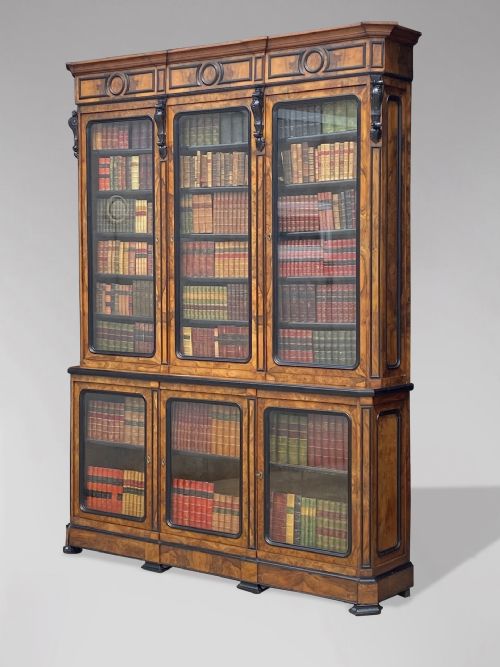
A napoleon iii display cabinet encompasses refined nineteenth-century French case pieces designed to showcase porcelain, books, and decorative objects behind glass. The listings here frequently feature forms such as pier cabinets, credenzas, side cabinets, and bookcases dating predominantly from the middle to late nineteenth century.
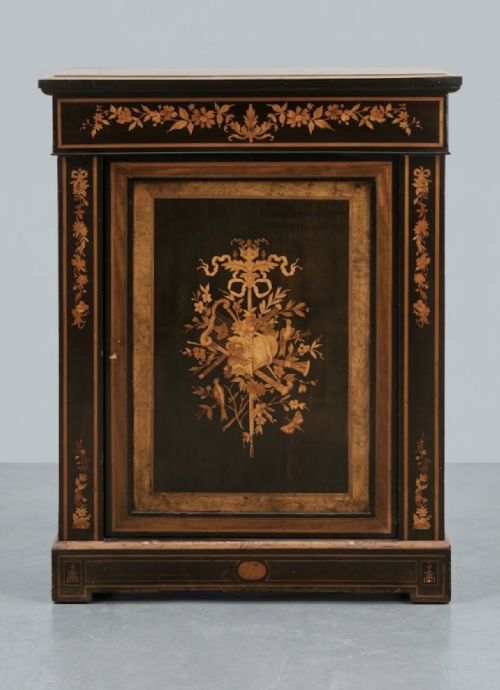
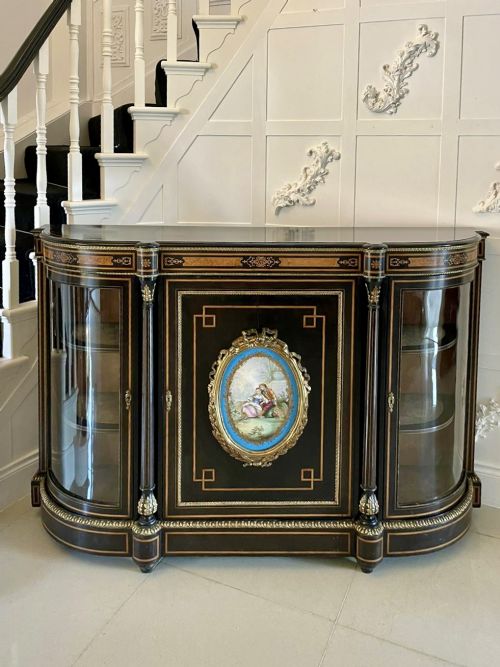
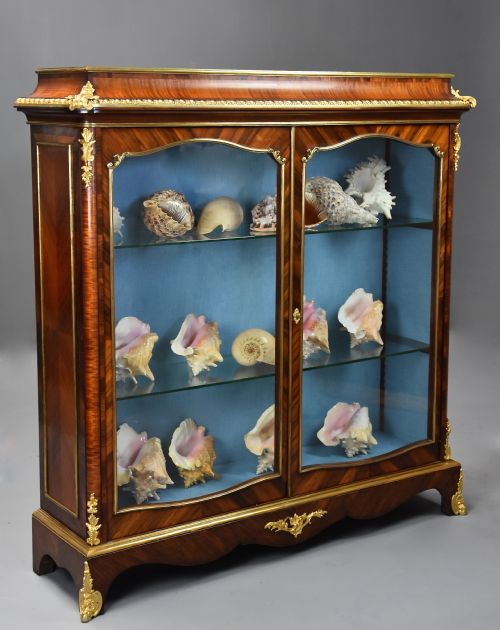
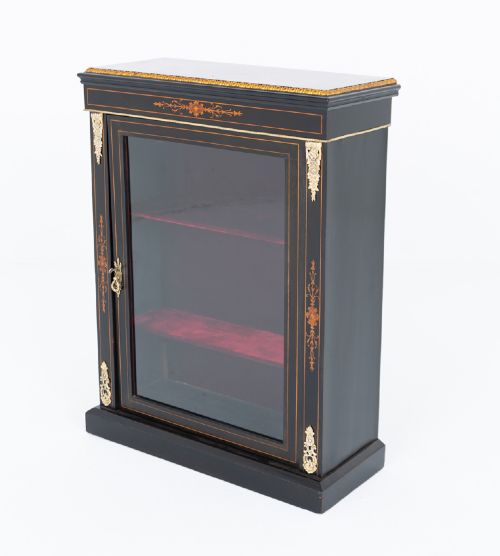
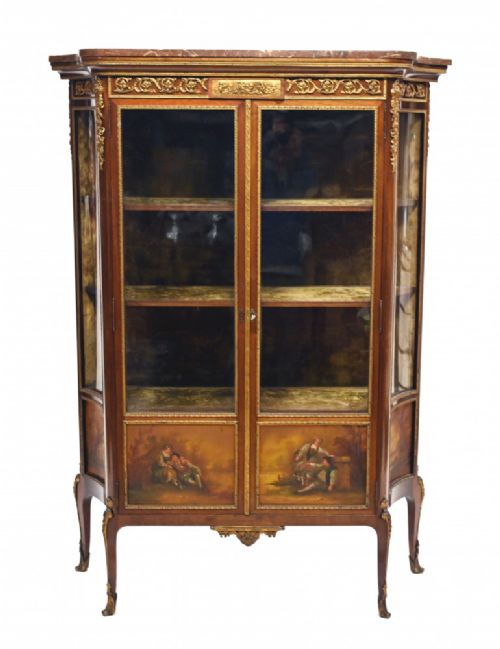
Makers and workshops constructed these display pieces in styles ranging from direct French Napoleon III and Second Empire expressions to Louis XV revivals and empire influences. Buyers frequently encounter ebonised wood or warm rosewood and kingwood carcasses fitted with glazed doors and open shelving.
The physical scale varies from neat pier cabinets suited to intimate spaces up to monumental credenzas and bookcases intended for grand reception rooms. Most examples retain their original glass panels and internal configurations designed for display.
Materials and construction
Cabinet makers built these carcasses using foundational timbers like walnut, mahogany, and ebonised wood, overlaid with meticulous veneers of kingwood, rosewood, amboyna, and satinwood. Many pieces incorporate elaborate brass and tortoiseshell marquetry executed in the Boulle technique.
Craftsmen mounted cast and gilt ormolu decoration around doors, cornices, and plinths to accentuate the architectural lines of the furniture. Inset elements frequently include hand-painted Sevres style porcelain plaques and pietra dura panels.
Woods recorded across the inventory include kingwood, rosewood, walnut, ebonised wood, satinwood, and amboyna.
Craftsmanship and detail
The distinction between standard production and exhibition quality pieces lies in the crispness of the ormolu mounts and the precision of the brass and tortoiseshell inlay. Finer cabinets display deeply chased metalwork and tightly fitted marquetry that remains flush with the surrounding wood.
Materials dictate the upper tier of the range, where genuine pietra dura panels, fine porcelain plaques, and figured woods like amboyna or kingwood replace simpler ebonised finishes. Structural integrity in heavy marble tops and glazed doors also separates superior workshop output.
Paul Sormani
The Napoleon III Display Cabinet Glossary
- Boulle
- Marquetry technique utilising brass and tortoiseshell inlaid in ornate floral or arabesque patterns. This decorative method defines many nineteenth-century French case pieces.
- Ormolu
- Gilt bronze mounts applied to furniture for architectural accent and ornamentation. The quality of these metal fittings depends on the depth of the casting and chasing.
- Pier cabinet
- A narrow cabinet specifically built to stand against the wall space between windows. These upright pieces maximise display potential in smaller floor areas.
- Credenza
- A low cabinet featuring cupboards or glazed doors, frequently mounted with porcelain plaques and marble tops. Originating in Italy, the form evolved significantly in nineteenth-century France.
- Vernis Martin
- A type of simulated Japanese lacquer developed in France, utilised on decorative panels and vitrines. It provides a luminous, translucent finish to painted surfaces.
Napoleon III Display Cabinet: Frequently Asked Questions
What is a napoleon iii display cabinet?
A napoleon iii display cabinet is a nineteenth-century French case piece created during the Second Empire, featuring glazed doors for exhibiting valuables.
These pieces utilise rich veneers, gilt bronze mounts, and intricate marquetry to achieve a decorative aesthetic suited to formal entertaining spaces.
How were these cabinets used?
Original owners used these cabinets to display collections of fine porcelain, glassware, books, and small objets d'art within parlours and libraries.
The glass doors protected delicate items from dust while allowing guests to admire the owner's refined collections.
How do I style a napoleon iii cabinet?
Integrate the cabinet into a room by placing it against a clear wall where its ormolu mounts and polished wood can catch the light.
Keep the interior lighting considered and populate the shelves sparingly with ceramics or books to maintain the intended visual balance.
How do I identify the period?
Look for characteristic materials such as ebonised wood, Boulle marquetry, and Sevres style porcelain plaques typical of the mid to late nineteenth century.
Construction methods, such as hand-cut dovetails and fire-gilt bronze, further confirm the nineteenth-century French origin.