


Napoleon III Candlesticks
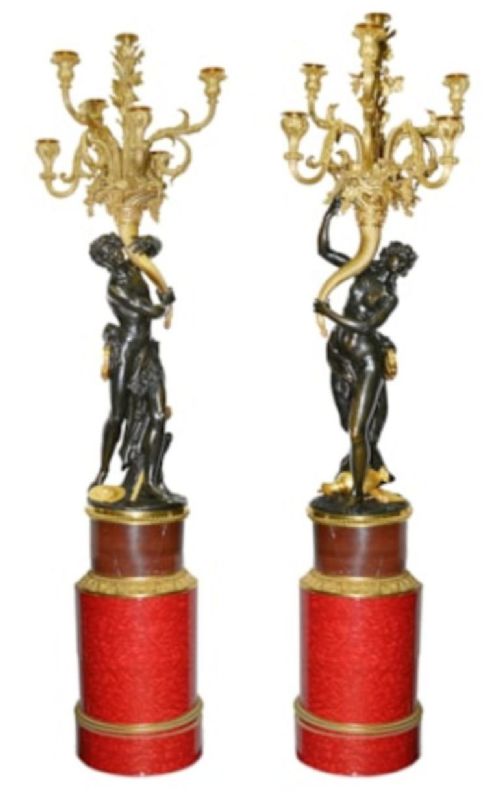
Napoleon iii candlesticks bring heavy French Second Empire luxury to a room, cast in gilt bronze and mounted on marble.
Napoleon III Candlesticks
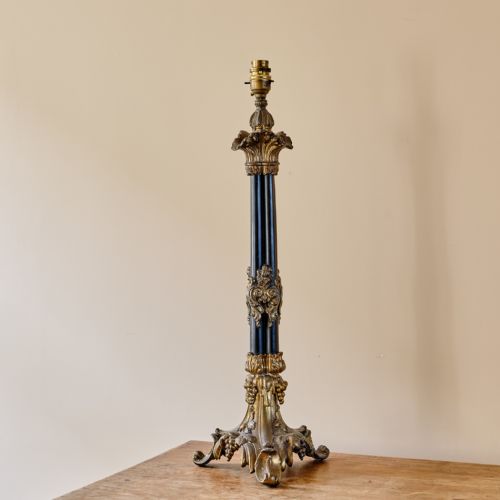
When you search for napoleon iii candlesticks, you are looking at nineteenth-century French lighting cast in bronze, brass, and gilt bronze, often incorporating marble bases and champleve enamel. The pieces on this page span the middle and late decades of the nineteenth century, reflecting the revivalist tastes of the French Second Empire.
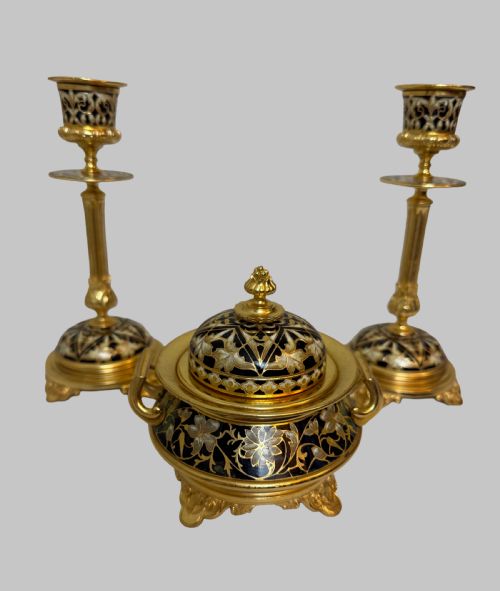
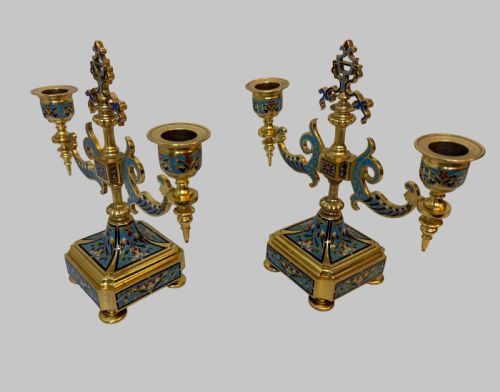
The most common forms you will meet are paired candlesticks and multi-branch candelabra, alongside related desk accessories like inkwells and cassolettes. Styles range from Rococo Revival and Louis XVI style to French Neoclassical and French Empire, often featuring cherubs or classical ornamentation.
Makers and workshops of the period produced both simple brass domestic lighting and elaborate gilt bronze and tortoiseshell boulle-work pieces. These items served as functional table lighting and decorative mantel garnitures in nineteenth-century interiors.
How They Were Made
Foundry workers cast these objects in bronze, brass, and silvered bronze using traditional metal-casting techniques before finishing the surfaces with fire-gilding or ormolu. Ormolu application required mercury gilding to bond gold leaf to the bronze base, producing the characteristic warm lustre seen on Napoleon III pieces.
Craftsmen combined cast metal with carved white or coloured marble bases, and occasionally applied champleve enamel cells or scarlet red tortoiseshell boulle-work panels. Detail work such as cherubs, scrolling foliage, and classical drapery was hand-chased after casting to sharpen the definition of the metal.
The archive and current selection demonstrate that these French objects frequently take the form of paired candlesticks, multi-branch candelabra, and desk accessories.
What Varies in Quality
The distinction between ordinary and superior napoleon iii candlesticks lies in the crispness of the hand-chasing on the bronze and the weight of the cast. Top-tier examples show deep, sharp relief in the acanthus leaves and figurative elements, whereas lesser pieces exhibit softer, shallower detail resulting from worn moulds.
Material combination and maker attribution also elevate quality, particularly when gilt bronze is paired with finely turned marble or champleve enamel work. The presence of a signature from a known foundry such as Ferdinand Barbedienne marks the upper tier of production.
Ferdinand Barbedienne
The Napoleon III Candlesticks Glossary
- Ormolu
- Gilt bronze, created by applying an amalgam of gold and mercury to a bronze object and heating it to drive off the mercury. This technique produces a durable, rich golden surface finish characteristic of French luxury goods.
- Champleve
- An enamelling technique where troughs or cells are dug into the metal surface and filled with vitreous enamel powder before firing. The resulting coloured patterns sit flush with the surrounding bronze.
- Candelabra
- A branched candlestick designed to hold multiple candles simultaneously. These pieces often feature removable central light fittings or branches.
- Boulle-work
- A form of marquetry using tortoiseshell and brass inlaid in contrasting patterns. Named after French cabinetmaker Andre-Charles Boulle, it appears on nineteenth-century decorative bases.
- Cassolette
- A decorative vase or vessel with a reversible lid that functions either as an urn or a candlestick. They were popular garniture items in nineteenth-century French interiors.
Napoleon III Candlesticks: Frequently Asked Questions
How do I date napoleon iii candlesticks?
Dating relies on stylistic clues and material combinations recorded across the nineteenth century, spanning from the 1850s to the 1890s. The presence of specific revival styles, such as Louis XVI or Rococo, helps narrow the decade of manufacture.
Changes in metal finishing, such as the shift from mercury gilt bronze to later electroplating, also indicate the period of production within the nineteenth century.
Were these originally wired for electricity?
Napoleon iii candlesticks were made strictly for wax candles during the nineteenth century. Later conversions to table lamps or wired electric lights occurred in the twentieth century.
Many surviving examples retain their original sconces and socket configurations without electrical alterations.
How do I clean gilt bronze?
Gilt bronze surfaces require only gentle dusting with a soft brush to remove surface particles. Moisture and chemical cleaning agents damage the fragile ormolu layer.
Professional conservation is necessary if heavy tarnish or dirt obscures the underlying metal finish.
Did Napoleon III design these objects?
The term Napoleon III describes the stylistic period of the French Second Empire rather than items personally commissioned by the emperor. Workshops and foundries produced these luxury goods to satisfy contemporary bourgeois and aristocratic taste.
The style draws heavily on earlier French royal aesthetics, particularly Louis XVI and French Empire motifs.