
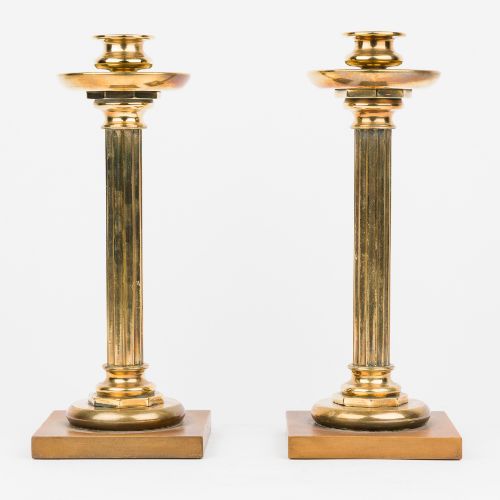
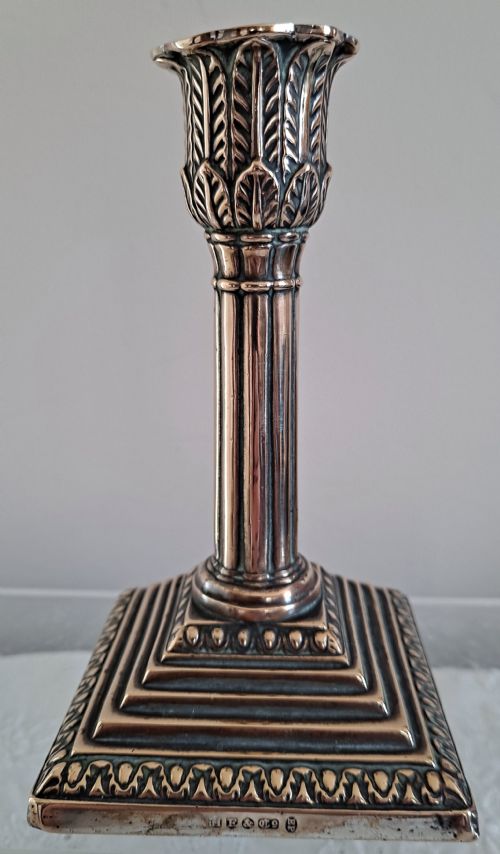
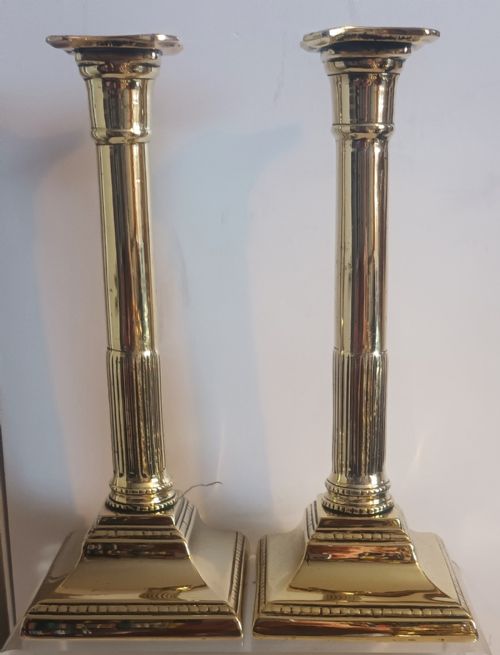
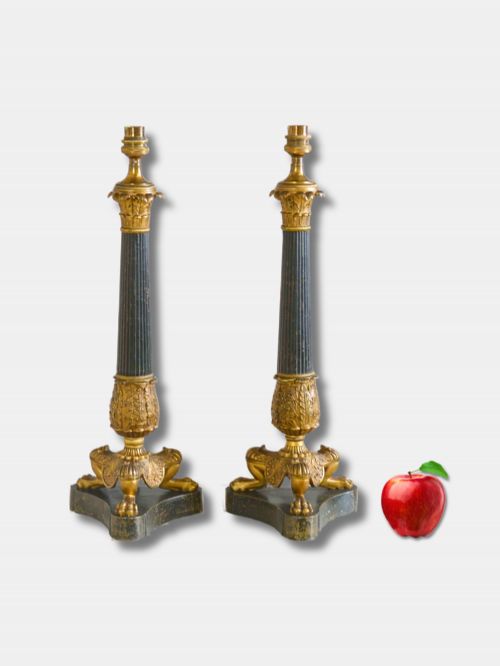
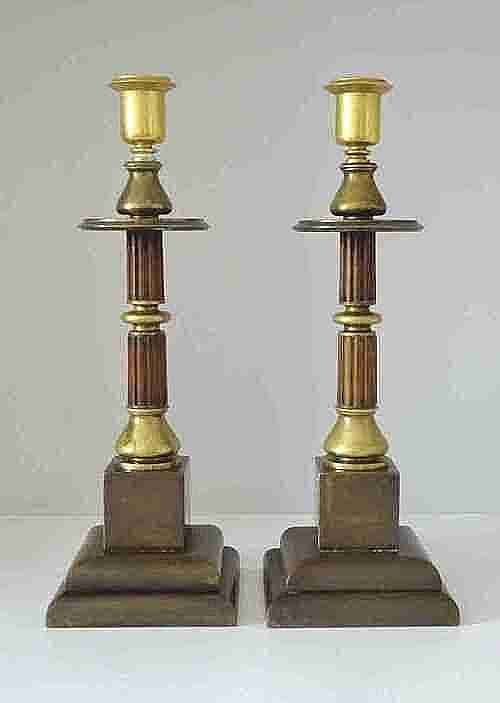
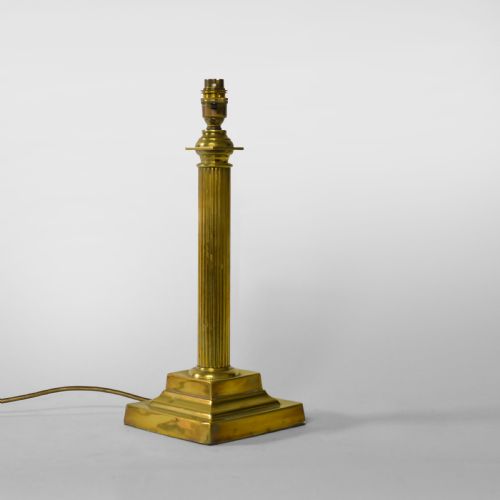


Brass Fluted Column Candlesticks
Brass fluted column candlesticks bring classical architectural order to a room, catching the light across stepped bases and slender shafts.
Brass Fluted Column Candlesticks
When you search for brass fluted column candlesticks, you find pieces shaped by classical architecture, taking cues from Greek and Roman orders. These items span periods from the Georgian and Regency eras through the Victorian age up to the 1920s.
The inventory on this page ranges from traditional chamber and table sticks to converted table lamps. Alongside standard brass, you meet bronze, ormolu, silver plate and occasional pairings with porcelain or cut glass.
Georgian and Victorian examples dominate the selection, often appearing as matched pairs. Makers from these centuries favoured column designs for their balance and formal presence on a dining table or sideboard.
Materials and construction methods
Foundry work relies on casting, where molten brass or bronze is poured into moulds to create heavy stepped bases and fluted shafts. Turning on a lathe often refines the cylindrical columns before hand-finishing.
Gilt bronze and ormolu pieces require application of gold leaf or mercury gilding over base metals. Silver-plated variations involve fusing a thin layer of silver onto a copper or brass body.
Listings feature brass, bronze, and ormolu materials across Georgian, Victorian, and 1920s periods.
Distinctions in quality and execution
Superior examples display crisp channelling along the fluted shaft and deep relief on the Corinthian or Ionic capitals. Lesser pieces show softened cast details where moulds have worn through repeated use.
Weight and stability separate better workmanship from ordinary production. A heavy cast base ensures the column stands true, while thin sheet metal construction lacks the substance of earlier periods.
The Brass Fluted Column Candlesticks Glossary
- Fluting
- Vertical parallel grooves cut into the shaft of a column. This detail mimics classical stone architecture and catches light across the metal surface.
- Ormolu
- Finely ground high-carat gold mercury-gilded onto a bronze base. This technique creates a rich yellow-gold finish seen on French Empire and Regency pieces.
- Ionic capital
- The upper portion of a column decorated with spiral scroll motifs. It marks the transition from the vertical shaft to the supporting top plate.
- Corinthian column
- A slender pillar topped with an ornate capital carved with acanthus leaves. This style appears frequently on formal 19th-century desk and table lamps.
Brass Fluted Column Candlesticks: Frequently Asked Questions
How do I date a brass column candlestick?
Dating relies on base construction, assembly methods, and the specific classical style applied to the capital. Georgian and Regency pieces typically show heavier casting and sharper detailing than later Victorian revivals.
Changes in metal composition and finishing marks also help narrow the decade of production. Examining the threading on screws or the wear patterns underneath provides further clues to age.
Were these candlesticks converted to lamps later?
Many column candlesticks were adapted for electricity during the 20th century to serve as table lamps. Converted pieces often retain their original weighted bases and fluted shafts while hiding wiring through the centre.
Unconverted pairs retain their original drip pans and sockets for wax candles. Buyers choose between untouched survival pieces and period electrical conversions depending on room placement.
How do I clean antique brass safely?
Gentle dusting with a soft, dry cloth preserves the aged patina that collectors value. Avoid harsh commercial polishes that strip away historical surface character and darker oxidation.
If cleaning is necessary, warm soapy water applied sparingly removes accumulated dirt. Dry the metal thoroughly immediately afterwards to prevent spotting.
Can I mix different heights on a mantel?
Pairing candlesticks of varying heights creates visual depth when arranged with other decorative objects. Matching pairs should remain together, but single columns work well alongside mixed brass pieces.
Proportion matters more than exact uniformity in a wider display. Ensure taller columns anchor the ends while shorter sticks sit towards the centre.