
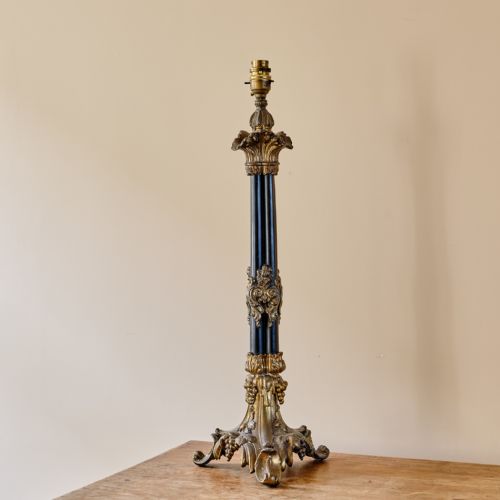
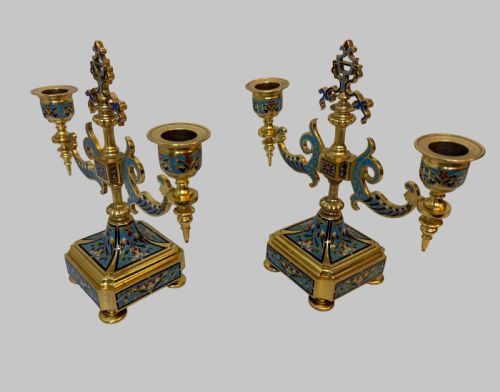


Ornate French Brass Candlesticks
Ornate French brass candlesticks are cast and chased metal lighting pieces that bring nineteenth-century continental display to a table.
Ornate French Brass Candlesticks
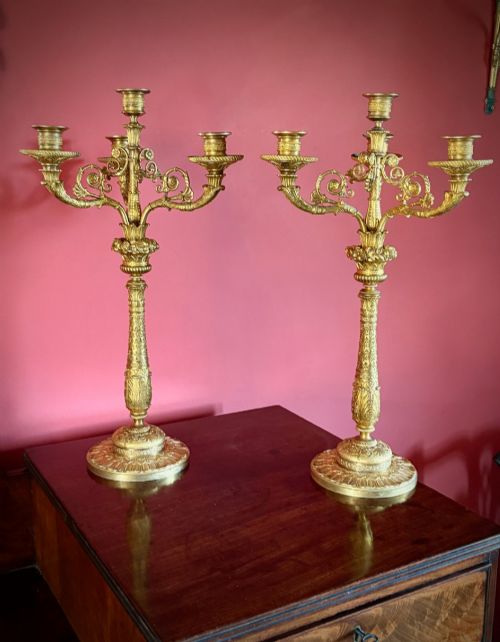
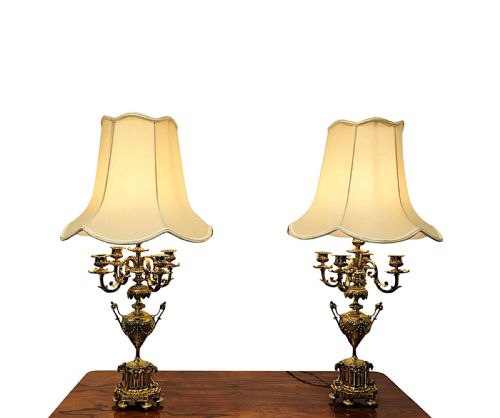
When searching for ornate french brass candlesticks, a buyer encounters nineteenth-century lighting pieces including candelabra, wall sconces, and table lamps. These items reflect periods from the Regency era through to the early twentieth century, spanning decades of continental metalwork.
The objects frequently appear in styles such as Rococo Revival, French Empire, and Neoclassical. Pairs dominate the selection, often taking the form of multi-branch candelabra or converted lamps designed for domestic interiors.
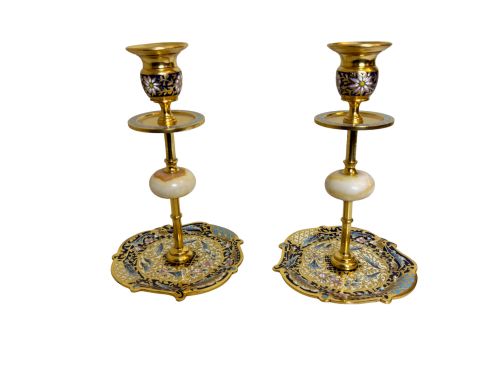
Makers utilised cast brass, ormolu, and gilt bronze, occasionally incorporating materials like champleve enamel, onyx, marble, and tortoiseshell boulle-work. Many of these pieces originate from French workshops adhering to traditional aesthetic movements.
Materials and Construction
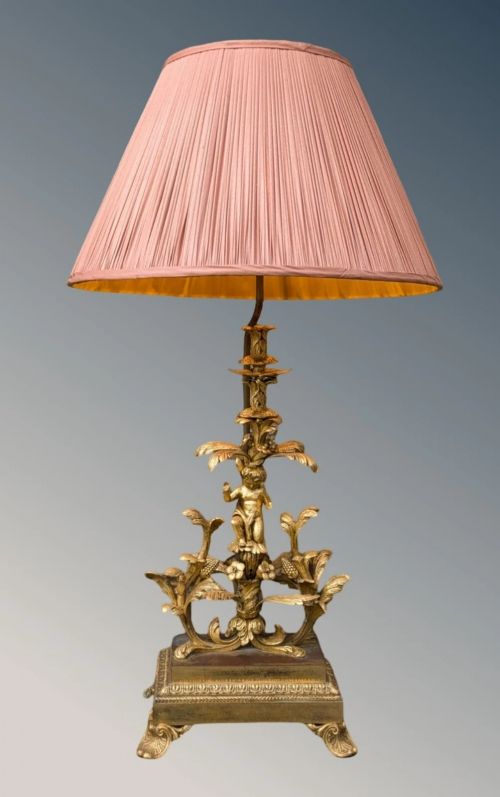
Foundry workers shaped these objects primarily through metal casting, utilising brass, bronze, and gilt ormolu. Artisans then chased the cooled metal surfaces to sharpen botanical motifs, cherubs, and architectural details.
Selected examples integrate decorative inserts such as onyx, marble bases, champleve enamel panels, or scarlet red tortoiseshell boulle-work. Wiring and fabric elements appear on pieces that underwent later conversion into table lamps.
Several nineteenth-century candlesticks preserve dancing cherubs among their scrolling brass branches.
Assessing Quality and Execution
The crispness of the chasing separates superior castings from softer production. Stronger pieces display deep relief and cleanly defined ornamentation without loss of detail across scrolling arms or figural elements.
The application of gilding and ormolu dictates visual depth. Heavier metal gauge and integrated stone bases like marble or onyx indicate higher grade manufacturing from nineteenth-century foundries.
The Ornate French Brass Candlesticks Glossary
- Ormolu
- Gilt bronze produced by applying a mercury and gold amalgam to a bronze object, then heating to drive off the mercury. This technique creates a rich golden surface finish seen on nineteenth-century French pieces.
- Candelabra
- A branched lighting fixture holding multiple candles or lamp bulbs. These items often feature three, five, or six stems.
- Champleve
- An enamelling technique where troughs or cells are hollowed out of a metal surface and filled with vitreous enamel paste before firing. It frequently appears alongside gilt bronze on decorative candlesticks.
- Boulle-work
- An elaborate marquetry process using tortoiseshell and brass inlay, applied to select high-end nineteenth-century decorative items.
- Regency
- A British and continental design period spanning the early nineteenth century, characterised by classical revival motifs.
Ornate French Brass Candlesticks: Frequently Asked Questions
How do I clean antique brass candlesticks?
Dust gently with a soft dry cloth to preserve the surface finish. Avoid harsh chemical polishes that strip original ormolu or gilding.
Keep the metal away from damp environments to prevent corrosion on exposed brass or bronze areas.
Were these items converted to electricity?
Many nineteenth-century candelabra and candlesticks underwent later conversion into table lamps or electric lighting fixtures. This adaptation allowed period metalwork to function with modern wiring.
Unconverted pairs retain their original sockets intended solely for wax candles.
What styles are common in these pieces?
Rococo Revival and French Empire dominate the aesthetic range, featuring scrolling foliage, classical urns, and figurative elements like dancing cherubs. Neoclassical and Victorian influences also appear across nineteenth-century items.
Design choices reflect French decorative tastes from the 1850s through to the early 1900s.
How can I tell if a piece is French?
Stylistic markers such as cast bronze construction, champleve enamel panels, and specific revival forms point to continental manufacture. Many listings explicitly connect these design traits to French workshops.
Weights and mounting details often correspond to standard nineteenth-century foundry practices in France.