

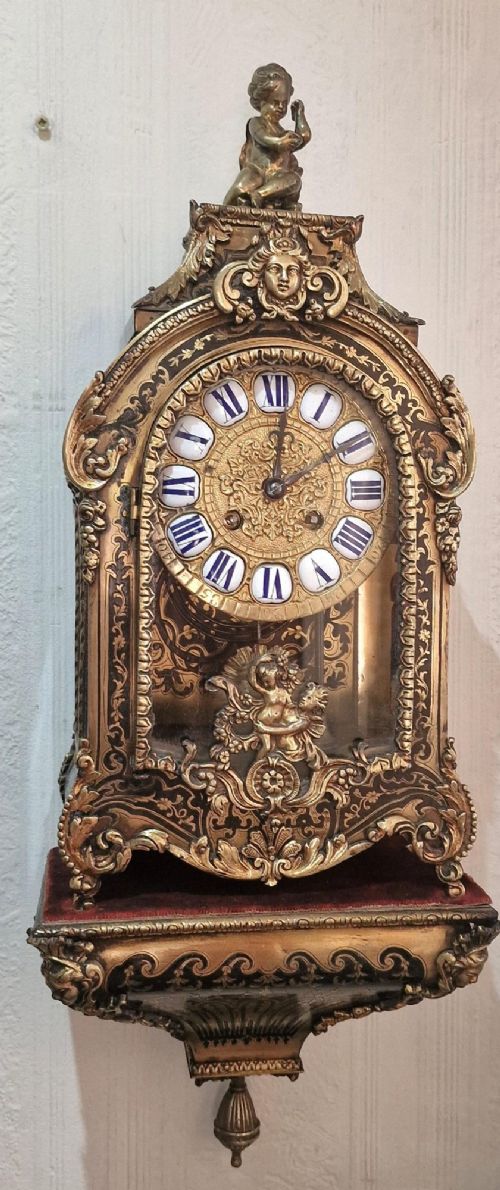


Napoleon III Bracket
These pieces for a napoleon iii bracket bring grand French design into a room, offering ornate support for clocks and decorative objects.
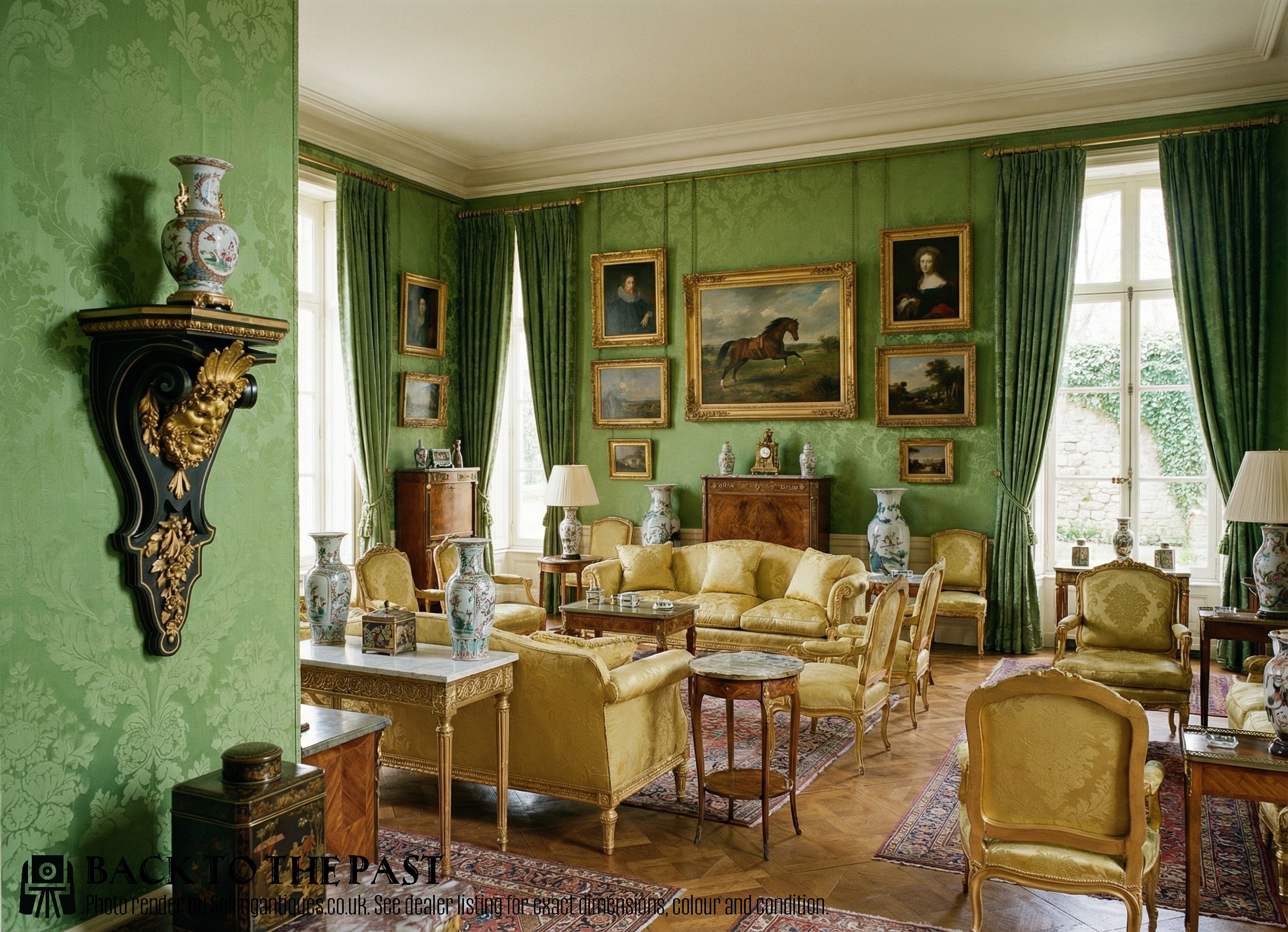
Napoleon III Bracket
When you search for a napoleon iii bracket, you are looking at ornamental wall supports and console tables designed to hold heavy French clocks or display pieces. These pieces belong to the nineteenth century, spanning decades from the eighteen sixties to nineteen hundred, and reflect the opulent taste of the Second Empire.
You are most likely to meet wall brackets and console tables fashioned in French styles such as Rococo Revival and Louis XV Revival. Many examples pair directly with matching mantel clocks, creating a coordinated display of ornate woodwork and metalwork on the wall.
The objects combine architectural strength with decorative flair, often appearing alongside Boulle work clocks and gilt bronze ornaments. Each piece provides a dedicated platform that elevates timepieces and sculptures above standard furniture surfaces.
How They Were Made
Makers utilised rich materials including tortoiseshell, brass, ormolu, and gilt bronze, often mounted upon ebonised wood or figured walnut. The technique of Boulle marquetry involves inlaying brass and tortoiseshell into intricate patterns across wooden carcases.
Foundry workers cast ormolu and gilt bronze elements into scrolling foliage and Rococo motifs, subsequently chasing the metal surfaces by hand. Enamel dials and glass panels complete the clock components mounted upon these architectural brackets.
Napoleon III Bracket Retail Price Guide 2026
Typical asking prices for napoleon iii bracket among the pieces listed under this phrase on Sellingantiques today, from the lower quarter to the upper quarter. They describe what is for sale here now, not the wider market.
Current listings feature materials ranging from tortoiseshell and ormolu to marble and glass, spanning the eighteen sixties to nineteen hundred.
What Varies in Quality
The distinction between tiers rests upon the precision of the brass and tortoiseshell inlay and the crispness of the gilt bronze casting. Superior examples display deep chasing in the metal mounts and seamless alignment across the wooden structure.
Simpler versions rely on basic brasswork and plain wood, whereas higher quality pieces integrate intricate enamel work and complex figural or architectural detailing that defines the period aesthetic.
A.D. Mougin·Malecot of Paris·Henri Dasson
The Napoleon III Bracket Glossary
- Boulle
- A form of marquetry using brass and tortoiseshell inlaid in contrasting patterns. This technique gained immense popularity in France during the seventeenth century and saw a major revival in the nineteenth century.
- Ormolu
- Gilt bronze created by applying a mixture of gold and mercury to a bronze base and heating it. The process yields a rich golden surface that resists tarnish over decades.
- Rococo Revival
- A nineteenth century design movement drawing on asymmetrical scrollwork, C-scrolls, and naturalistic plant motifs. It dominated French decorative arts during the Second Empire.
- Console Table
- A table fixed to a wall and supported by ornamental brackets or legs. These items often accompany wall brackets to form matched interior sets.
Napoleon III Bracket: Frequently Asked Questions
What is a napoleon iii bracket used for?
These brackets serve as decorative wall supports specifically built to hold heavy French mantel clocks and bronze sculptures. They project from the wall to display timepieces at eye level.
Collectors also utilise console tables from the same period to achieve a similar elevated display effect on the floor. Both forms place decorative arts at the centre of a room's interior scheme.
How do I identify a napoleon iii clock bracket?
Look for characteristic nineteenth century French revival styles, particularly Rococo motifs and elaborate Boulle marquetry involving brass and tortoiseshell. The use of gilt bronze mounts and ebonised wood is also typical.
Dates cluster around the eighteen sixties to eighteen eighties, reflecting the height of Second Empire production. Many pieces feature matching architectural details designed to complement specific mantel clocks.
Are these brackets strong enough for heavy clocks?
Yes, they were engineered from solid woods like walnut and reinforced with metal brackets to support substantial brass and marble clocks. The structural design balances aesthetic ornamentation with practical load bearing.
Proper wall fixings remain essential when mounting these heavy wooden and bronze pieces today. The platform must be secured directly into wall studs or masonry.
What materials are common in these pieces?
The primary materials include brass, tortoiseshell, ormolu, gilt bronze, and various woods such as walnut and ebonized timber. Enamel and glass frequently appear on the accompanying clock faces.
Craftsmen combined these elements to create high contrast textures that catch candlelight and daylight. The interplay between dark tortoiseshell and bright brass defines the visual language of the period.