


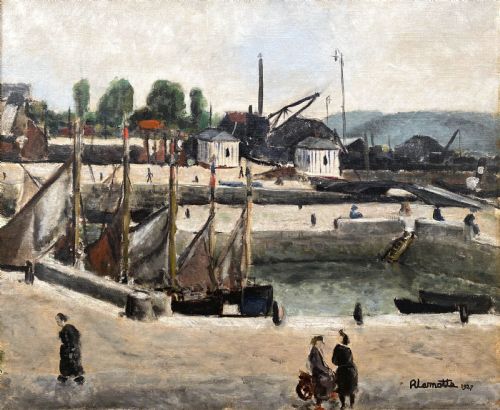


Muted Tone Oil Painting
A muted tone oil painting brings a quiet depth to a room through restrained palettes and careful handling of light.
Muted Tone Oil Painting
A muted tone oil painting captures landscapes, portraits, and street scenes through subtle colour harmonies rather than vivid pigments. These works rely on restrained shades to create mood and atmosphere within the composition.
The selections span from the late nineteenth century through to the mid-twentieth century, encompassing British Impressionism, Post-Impressionism, and Realism. Buyers frequently encounter regional British scenes, French coastal views, and quiet domestic studies.
Makers recorded in this group include established artists such as Ernest Higgins Rigg, Owen Bowen, and Fred Stead, alongside continental and Canadian painters. Their works demonstrate how painters used subdued palettes to record light and form.
Materials and construction
Painters applied oil paint to stretched canvas or prepared wood panels, building up texture and depth with brushwork. These grounds hold the pigment stable over decades while retaining the subtle variations introduced by the artist.
Many works retain their period frames, commonly constructed from gilt wood that complements the subdued tones of the canvas. The combination of oil medium and timber support defines the physical presence of these artworks.
Muted Tone Oil Painting Retail Price Guide 2026
Typical asking prices for muted tone oil painting among the pieces listed under this phrase on Sellingantiques today, from the lower quarter to the upper quarter. They describe what is for sale here now, not the wider market.
Paintings utilise canvas and wood panel supports, housed in gilt wood frames from the nineteenth and twentieth centuries.
Assessing quality and execution
Quality rests in the confidence of the brushwork and the precision with which the artist manages tonal relationships. Stronger examples hold the viewer's attention through deft handling of light across a restrained palette.
The relationship between the canvas and its original or period frame influences the overall integrity of the piece. Well-preserved surfaces retain their original varnish layers and pigment saturation without heavy intervention.
A. McDonald·Gyrth Russell·Ernest Higgins Rigg·Florence Hess·Andrew Young·Fred Stead·Saint Exupery·Lamotte·Owen Bowen·JAMES BERTRAND·Meninsky·Augustus William Ennes
The Muted Tone Oil Painting Glossary
- Oil paint
- A slow-drying medium made by combining pigments with drying oils such as linseed. This allows artists to blend tones directly on the support.
- Wood panel
- A rigid wooden support used by painters as an alternative to stretched canvas. It provides a smooth, stable surface for detailed work.
- Post-Impressionism
- An art movement extending Impressionism while rejecting its limitations. Artists explored more structured forms and expressive use of tone.
- Gilt wood frame
- A wooden moulding coated with gold leaf or metallic paint. These surrounds protect the edges of the canvas and frame the composition.
- British Impressionism
- A painting style influenced by French techniques adapted by British artists. It focuses on natural light and everyday subjects rendered with loose brushwork.
Muted Tone Oil Painting: Frequently Asked Questions
How do I care for an oil painting?
Keep the artwork away from direct sunlight and sources of extreme heat or humidity. Stable indoor environments prevent the canvas and wood support from warping or cracking.
Dust the surface gently with a soft, dry brush without applying pressure to the paint layer. Avoid using water or chemical cleaning products on the canvas.
How do I identify the period of a painting?
Examine the materials used for the support, such as the weave of the canvas and the construction of the stretcher or wood panel. Stamped manufacturer marks on the back can also narrow down the date.
Compare the style, clothing, and subject matter with dated examples by the same artist or regional school. Framing styles often correspond to the era in which the work was created.
Where should I hang these paintings?
Select interior walls that do not experience dampness or drastic temperature fluctuations throughout the year. Subdued palettes suit studies and libraries where quiet lighting complements the restricted tones.
Ensure the hanging wire and wall fixings are secure and rated for the weight of the framed artwork. Wall placement should allow comfortable eye-level viewing.
What defines a regional British school?
Regional schools gather artists who worked within specific geographic areas, such as the Staithes group in Yorkshire. These painters shared subjects, techniques, and local landscapes.
Their work reflects the specific light and weather conditions of the coast or countryside where they lived. This local focus gives the paintings a distinct regional character.