


Muted Tone Landscape Watercolour
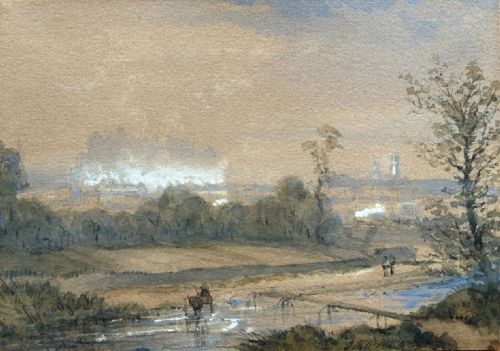
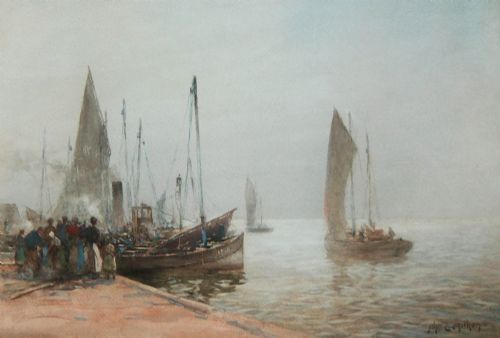
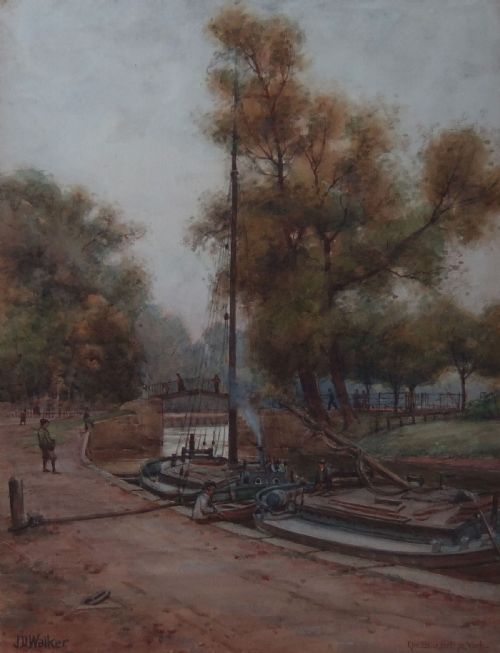
These muted tone landscape watercolour works capture quiet country scenes and coastal views with subtle washes of pigment on paper.
Muted Tone Landscape Watercolour
A muted tone landscape watercolour presents understated washes of pigment to depict countryside views, coastal panoramas and village scenes. When you search for muted tone landscape watercolour, you encounter original works spanning the nineteenth and twentieth centuries.
The selection on this page centres on British and European landscapes created across several decades, including Victorian pieces, Edwardian pastoral scenes and mid-century compositions. These paintings record specific locations from Scotland to Devon, alongside French village views.
Paper serves as the primary support for these watercolours, often paired with a card mount to frame the composition. Most examples bear artist signatures and capture historic buildings, rural cottages and open topography.
Assessing the works
Compositional balance and brushwork control separate standard topographical records from more accomplished artistic interpretations. The handling of subtle pigments dictates the atmospheric success of each landscape.
Provenance and documented authorship elevate individual pieces, particularly when signed by established regional artists or members of recognised painting groups. The clarity of the paper support and the preservation of delicate washes also influence the standing of a work.
Listings feature paper supports, watercolour pigment and card mounts across Victorian, Edwardian and mid-century periods.
John R Prentice·James E Aitken·Fred Lawson·Louie Stanley Maurice Prince·Sidney James Beer·Kate E Booth·Henry Charles Fox·Thomas James Lloyd·Stephen John Batchelder·Edward Killingworth Johnson·Thomas Swift Hutton·Irene Lagut·Maurice Asselin·Cuthbert Crossley·John D Walker·Alfred Leyman
The Muted Tone Landscape Watercolour Glossary
- Watercolour
- A paint consisting of pigment suspended in a water-soluble vehicle, applied in washes to paper. This medium allows transparent layers of colour to build up luminosity.
- Card mount
- A protective paperboard border placed around a painting. It separates the artwork from the glass in a frame and provides structural support.
- Pigment
- The finely ground coloured powder that gives watercolour paint its hue. Natural and synthetic variants create the subdued palette seen in these landscapes.
- Pastoral
- A genre of art depicting rural life and idyllic country scenes. These compositions typically feature fields, cottages, livestock and gentle topography.
Muted Tone Landscape Watercolour: Frequently Asked Questions
What periods do these watercolours date from?
The available watercolours span from the mid-nineteenth century through the Victorian and Edwardian eras into the mid-twentieth century, including works from the nineteen-twenties, thirties and forties.
This broad chronological range records changing regional painting styles across British and continental European art.
Where were these landscape scenes painted?
The locations depicted include various British sites such as Scottish landscapes, Yorkshire coastal scenes, Devon villages, Suffolk streets and Welsh valleys, alongside French village views.
Artists frequently inscribed specific place names onto the paintings or recorded local landmarks like almshouses, bridges and inns.
How should I frame an antique watercolour?
Watercolours require careful framing behind glass with a neutral card mount to prevent direct contact with the glazing. Keeping the paper away from direct sunlight protects the delicate pigments from fading.
Using acid-free backing materials preserves the integrity of the paper support over time.
Are these watercolours signed by the artists?
Many of the listed works feature signatures or monograms from the original creators, while others are attributed through historical records and stylistic analysis.
Signed pieces often provide a direct link to known nineteenth and twentieth-century painters and regional art groups.