
Music Stand Drawer
A music stand drawer brings together practical sheet storage and fine period timber, offering a neat compartment for scores beneath an open rack.
Music Stand Drawer
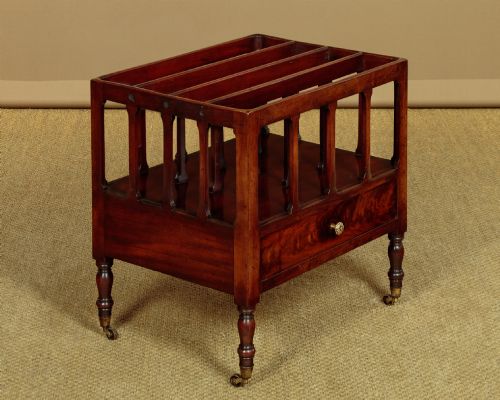
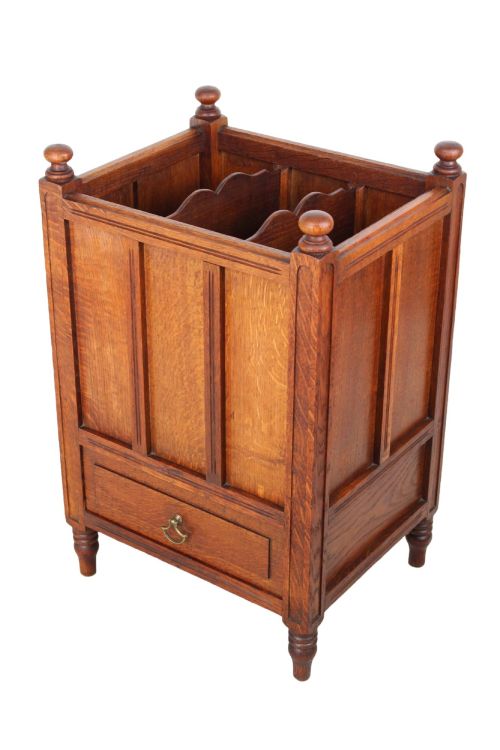
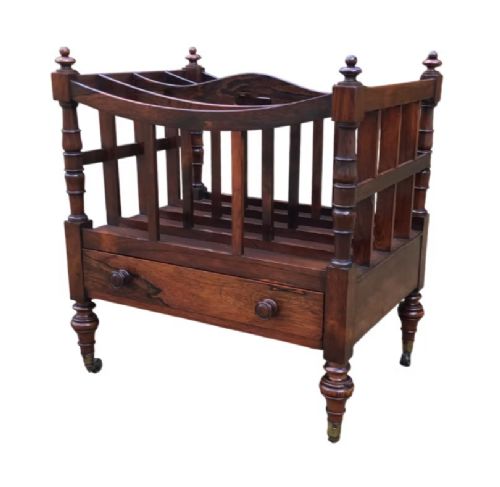
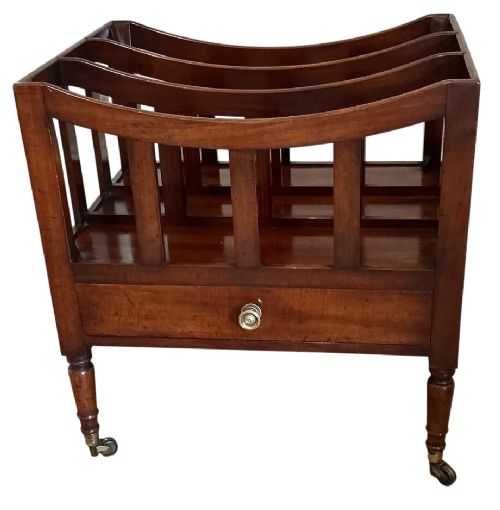
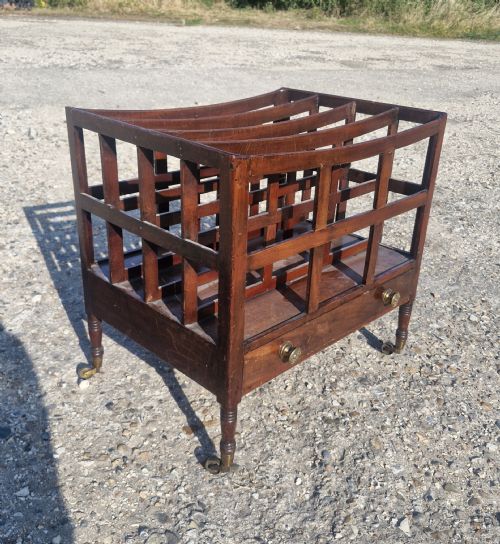
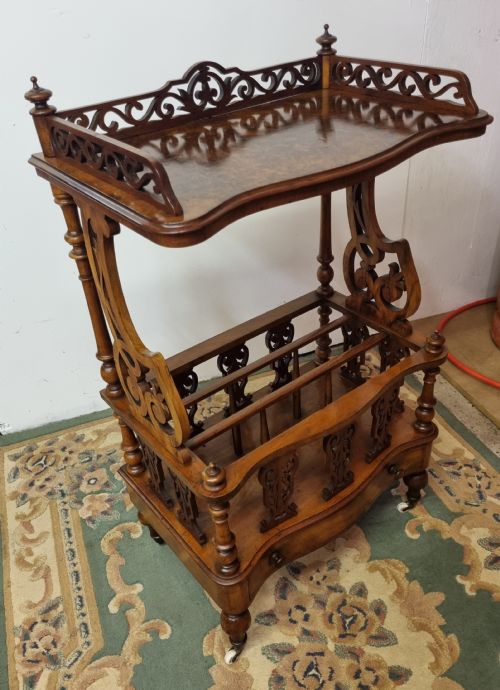
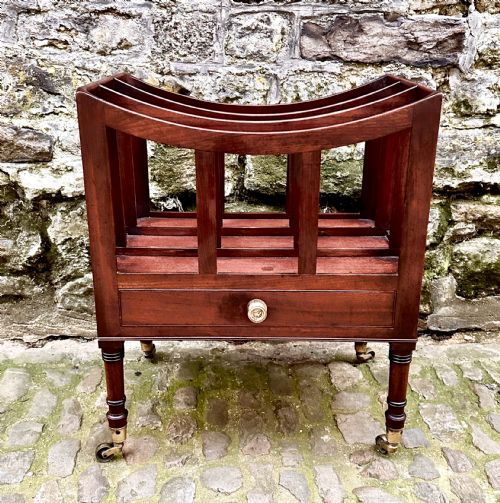
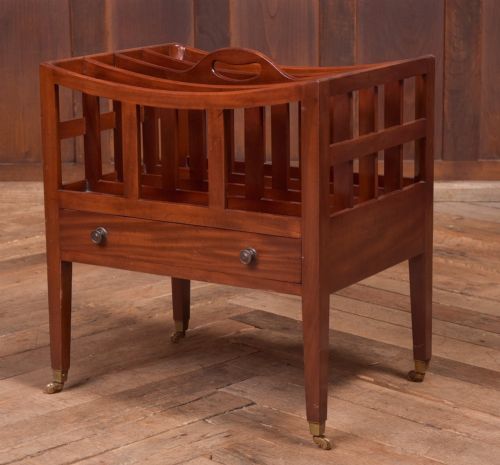
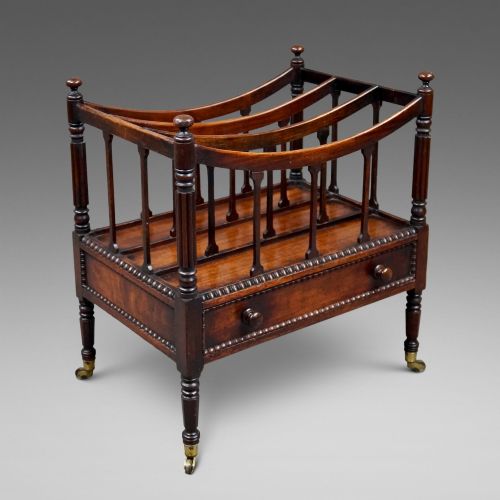
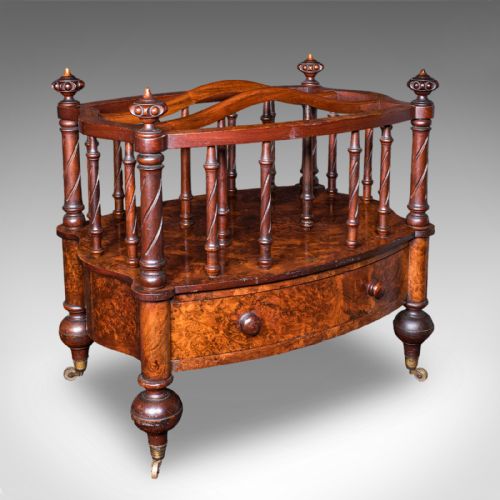
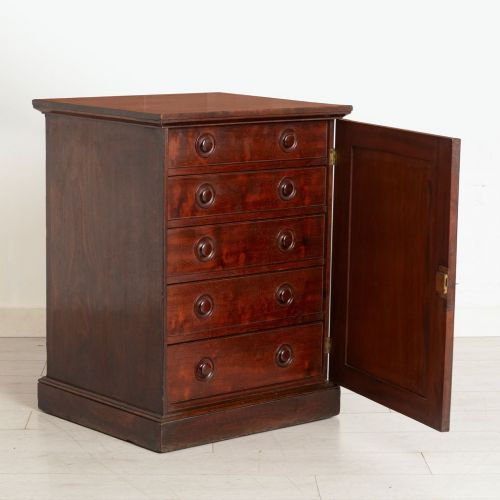
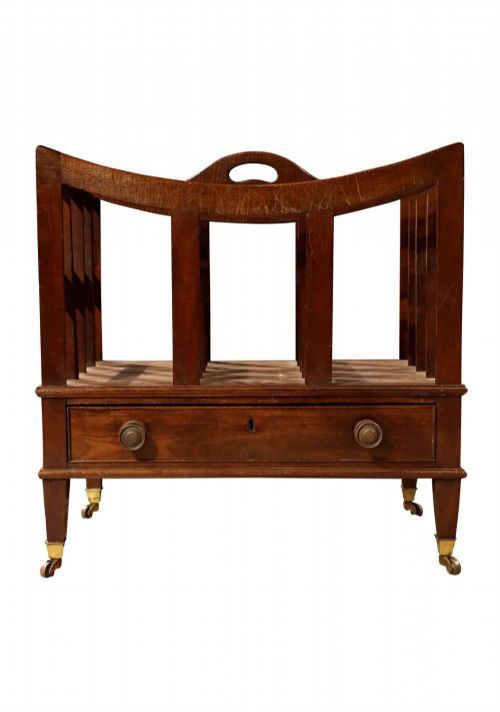
When you search for a music stand drawer, you are looking at items designed to hold scores, magazines, and newspapers in domestic settings from the Georgian, Regency, Victorian, and Edwardian eras. The most common forms on this page are canterburys and music cabinets, which frequently incorporate small drawers beneath partitioned shelves or enclosed compartments.
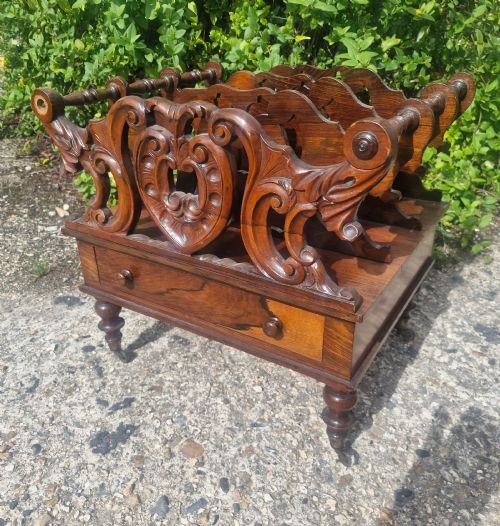
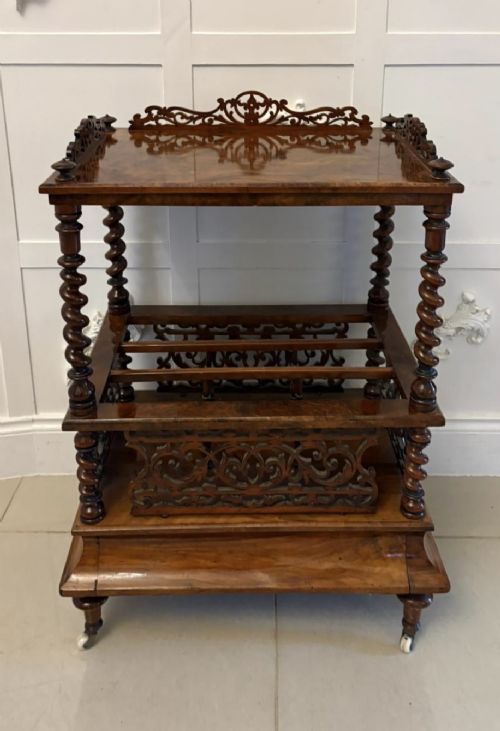
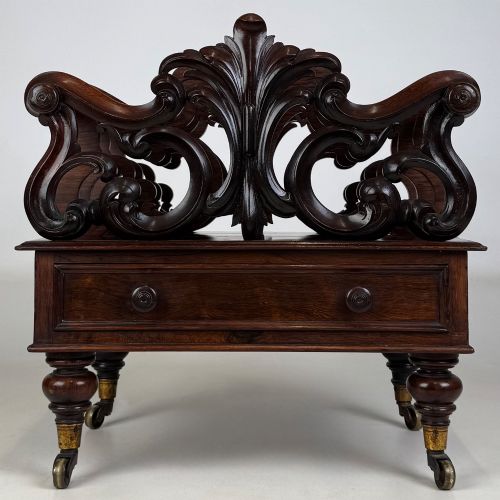
The materials and styles span from classic mahogany and rosewood boat-shaped Regency pieces to burr walnut Victorian designs and inlaid Edwardian sheet music cabinets. These items bridge the gap between freestanding stands and low storage cabinets, often featuring turned legs, castors, and upright divisions intended for orderly sorting.
Materials and construction
Surfaces were finished to highlight the natural grain of the timber, particularly on figured burr walnut and rich mahogany panels. Interior drawer construction typically employed solid secondary woods with dovetailed corners, ensuring smooth movement when accessing smaller accessories or sheet music.
Early musicians clearly possessed an impressive appetite for sheet music, given the sheer number of sturdy compartments built to contain them.
What separates the finest examples
Quality in these pieces is dictated by the selection of timber figures, such as highly figured burr walnut or rich grain-matched mahogany, paired with crispness in carved details like Prince of Wales feathers or turned uprights. Superior examples display refined proportions and integrated drawer construction that aligns seamlessly with the partitions above.
The integrity of the original brass castors and the precision of the joinery further distinguish workshop standards. Lesser pieces present simpler secondary timbers and plainer surfaces without the nuanced inlay or sculptural turning seen on the best period specimens.
Edwards and Roberts
The Music Stand Drawer Glossary
- Canterbury
- A low freestanding stand with partitioned sections for holding sheet music, magazines, or newspapers, often featuring a single or double drawer at the base. This form originated in the late 18th century and remained popular through the Victorian period.
- Boat-shaped
- A curved hull-like profile characteristic of certain Regency canterburys, where the sides sweep upward in a continuous, graceful line. This silhouette is frequently paired with rosewood veneers and brass castors.
- Music cabinet
- An upright enclosed piece of furniture designed specifically for sorting sheet music, usually fitted with a fall front or multiple stacked drawers behind a door. Edwardian and late Victorian examples often feature mahogany and satinwood inlay.
- Whatnot
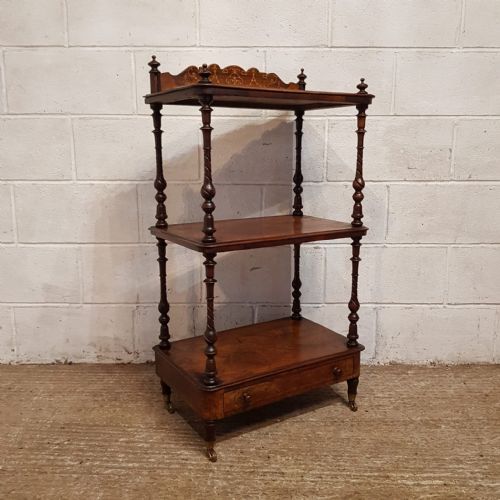
- A set of open shelves supported by slender pillars, sometimes combined with a drawer or enclosed cabinet space in the lower tier. These pieces served to display ornaments or hold books and papers in drawing rooms.
- Satinwood inlay
- A decorative technique involving contrasting light-toned wood veneers set into a darker primary timber such as mahogany. It appears frequently on Edwardian pieces to create geometric or floral borders.
Music Stand Drawer: Frequently Asked Questions
What is the difference between a canterbury and a music cabinet?
A canterbury is typically a low, open-framed rack with vertical partitions designed for easy access to current newspapers and sheet music, often resting on castors with a shallow drawer beneath. In contrast, a music cabinet is an enclosed vertical piece featuring a door, fall front, or stacked drawers to protect scores from dust.
While both serve the same fundamental purpose of organising paper, canterburys emphasise portability and open display, whereas cabinets offer structured, hidden storage suited to larger collections.
How do I identify a Regency period piece?
Regency stands often showcase rich rosewood or mahogany timbers, distinctive boat-shaped profiles, and elegant turned legs fitted with original brass castors. The lines tend to reflect classical restraint with subtle decorative elements rather than heavy carving.
Examining the construction methods and the quality of the timber grain helps confirm the Regency date, distinguishing them from later Victorian revivals.
Where were these pieces used in the home?
These stands and cabinets were kept in drawing rooms, parlours, and music rooms where family members gathered to play instruments or read periodicals. Their compact footprints allowed them to sit beside pianofortes or seating areas for immediate access to scores.
The inclusion of a drawer provided a convenient spot to store smaller items like tuning keys, bookmarks, or writing implements.
How should I care for antique mahogany and walnut?
Maintain these timbers by keeping them away from direct sunlight and sudden temperature shifts, which can dry out the wood and cause veneer to lift. Dust regularly with a soft, dry cloth and apply a quality furniture wax sparingly when the finish appears dry.
Avoid using silicone-based polishes or placing damp items directly onto the polished wood surfaces to preserve the original patina.