




Multicoloured Textile Wall Hanging
These pieces of multicoloured textile wall hanging bring together vibrant woven and embroidered traditions from Central Asia, Persia, and Europe.
Multicoloured Textile Wall Hanging
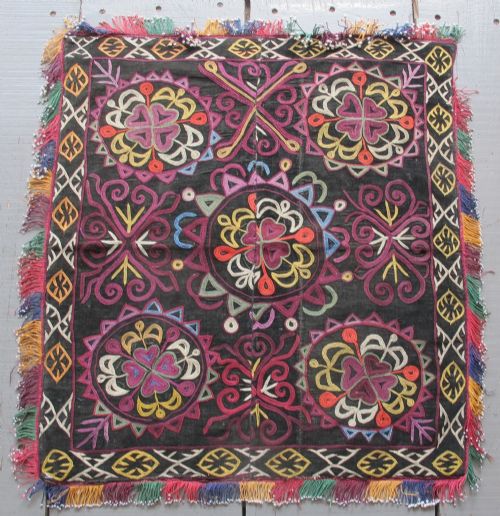
A multicoloured textile wall hanging covers a diverse group of works ranging from Central Asian ikat panels and embroidered mirror covers to Persian tribal storage bags and European tapestries. You will frequently encounter nomadic tribal pieces and regional textiles adapted for display on interior walls.
The selection includes specific regional forms such as Uzbek ikat panels, Lakai tribal hanging items, and French signed tapestries spanning the nineteenth and early twentieth centuries. These objects bring rich palettes of dyed fibres and intricate pattern work directly into domestic spaces.
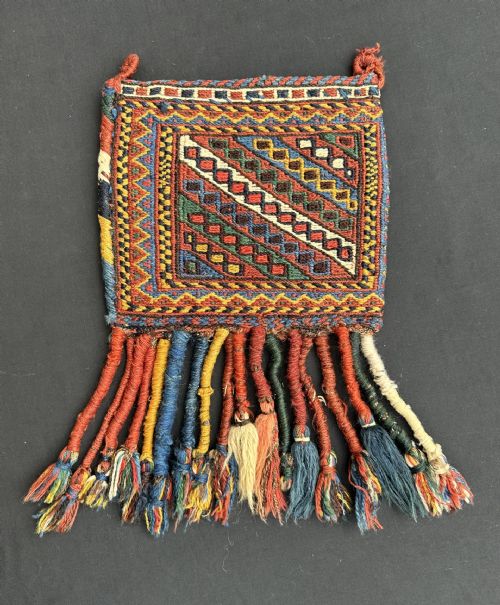
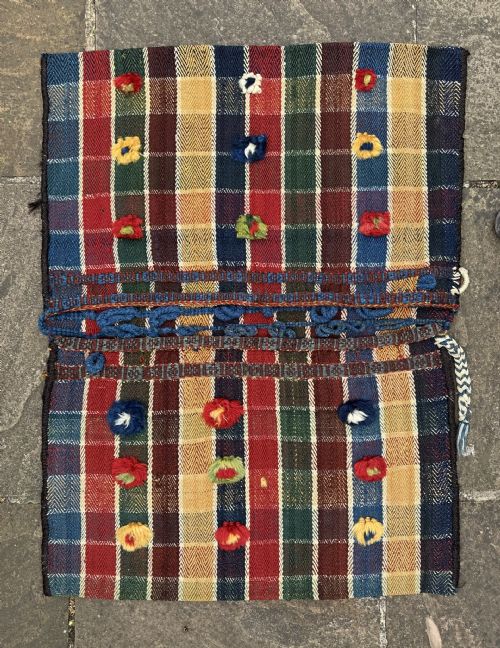
Tribal storage pouches, saddle-bags, and flatweaves form a significant portion of these textile works when hung as art. Their original utilitarian functions in Persian and Central Asian communities have transitioned into decorative wall displays.
Materials and construction methods
Maker communities utilised natural materials including wool, cotton, and silk, frequently combining them with decorative elements like cowrie shells, glass beads, and brass. These substances were worked through diverse techniques such as embroidery, patchwork, ikat dyeing, and traditional weaving.
Central Asian ikat panels and garments demonstrate complex resist-dyeing methods on silk grounds prior to weaving, producing characteristic blurred pattern edges. Tribal embroideries from the Lakai and other groups employ dense needlework stitches across cotton and wool foundations.
European examples rely on specialised tapestry weaving techniques on wooden stretcher frames, occasionally accompanied by signed textile art. Scandinavian rya pieces utilise thick knotted woollen piles for textural depth.
Some textile bags originally carried salt, spoons, or water-pipes across Persian mountains before ending up on modern walls.
Assessing quality in textile pieces
Quality rests in the precision of the needlework, the complexity of the dye patterns, and the integrity of the natural material base. Fine silk ikat panels and detailed mirror covers demonstrate superior execution through tightly packed threads and balanced proportions.
The sophistication of tribal design, whether in a Qashqa'i salt-bag or an Uzbek suzani kilim, distinguishes finer examples from simpler workshop output. Preservation of the original textile structure without extensive modern intervention elevates the standing of individual pieces.
The Multicoloured Textile Wall Hanging Glossary
- Ikat
- A dyeing technique where yarn bundles are tightly wrapped and dyed prior to weaving to create intricate patterns. This process results in characteristic feathered edges along the design motifs.
- Suzani
- A type of embroidered tribal textile originating from Central Asia, typically worked in silk on a cotton ground. These large panels often feature bold floral and geometric compositions.
- Torba
- A small utilitarian storage bag produced by nomadic and tribal groups in Central Asia. When used for display, these bags function as decorative wall hangings.
- Rya
- A traditional Scandinavian piled rug or wall hanging constructed with knotted woollen tufts. They provide thick texture and geometric folk art patterns.
- Sofreh
- A flatwoven spread or cloth traditionally used for dining or food preparation among Persian nomadic groups. Their diverse geometric weaves make them striking wall art.
Multicoloured Textile Wall Hanging: Frequently Asked Questions
How do I hang a textile safely?
Mount your textile using a non-invasive support system such as a stitched cotton sleeve paired with a flat wooden batten, ensuring the weight distributes evenly across the entire upper edge.
Avoid direct nails or pins piercing the historic fabric, as tension points can tear delicate wool, cotton, or silk fibres over time.
Are these pieces meant for walls?
Many items originate as utilitarian objects, including saddle-bags, storage pouches, mirror covers, and coats, rather than purpose-made wall decorations.
Collectors and interior designers have repurposed these regional textiles for wall display to showcase their complex dyes and patterns.
How do I clean an antique textile?
Professional textile conservation is the only recommended method for cleaning historic wool, silk, and cotton pieces.
Household washing or chemical treatments will damage fragile natural fibres, historical dyes, and added elements like glass beads or cowrie shells.
How do I date a tribal textile?
Dating relies on identifying the specific tribal group, regional dye chemistry, and structural weave characteristics recorded in comparative examples.
Nineteenth- and early twentieth-century pieces display distinct natural colour palettes and hand-spun materials that shifted with the introduction of synthetic aniline dyes.