



Multicoloured Staffordshire Pottery
Multicoloured Staffordshire pottery brings character to a room through hand-painted earthenware figures and jugs that capture historical moments, stories, and domestic animals.
Multicoloured Staffordshire Pottery
When you search for multicoloured Staffordshire pottery, you are looking at earthenware ceramic figures, Toby jugs, and tobacco jars that reflect British domestic taste from the Georgian period through to the early twentieth century. The selection ranges from flatback portrait figures and spill vases to robust Toby jugs and decorative animal pairs.
You are most likely to meet Victorian examples on this page, including theatrical characters, literary subjects, and royal portrait pieces produced in the nineteenth century. Earlier Georgian models and occasional Edwardian pieces also appear, spanning historical scenes such as the Crimean War alongside everyday figures.
The objects serve as a direct record of popular culture, depicting figures like Little Red Riding Hood, Robin Hood, and Napoleon III alongside biblical scenes such as Abraham and Isaac. Makers utilised simple earthenware bodies shaped by hand or in moulds, finished with lively enamel paint over glazes.
Materials and production methods
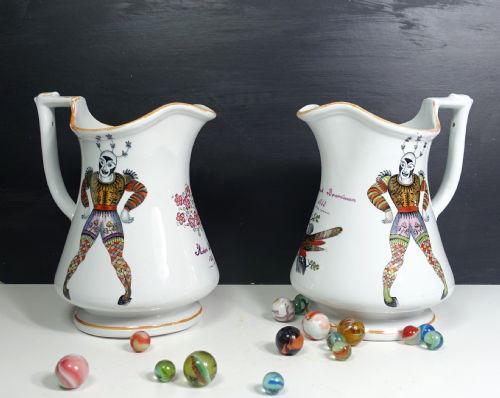
Potters built these pieces using local earthenware and pearlware bodies, which were shaped in press moulds to create the hollow forms required for large figures and Toby jugs. Ironstone also appears among utility jugs, providing a denser ceramic structure.
Ceramic goats and tobacco jars sit alongside solemn temperance figures on the mantelpiece.
Distinctions in quality and execution
The weight and presence of the ceramic body also separate standard productions from more ambitious pairs, such as large royal goats or detailed theatrical figures. Finer items retain clean glazes and well-defined details that resist rubbing and wear.
Lakin & Poole·Wedgwood & Co. Ltd·Booths
The Multicoloured Staffordshire Pottery Glossary
- Earthenware
- Porous pottery fired at lower temperatures than stoneware or porcelain. It forms the standard body for nearly all nineteenth-century Staffordshire figures.
- Flatback
- A figure moulded with a finished front and a plain, unpainted flat back intended to sit against a mantelpiece wall. This technique saved time and material during production.
- Spill vase
- A hollow figural vase designed to hold wooden spills for lighting pipes and fires. These pieces combine decorative subjects like dogs with practical domestic utility.
- Enamel paint
- Coloured glass paste applied over the fired glaze and fixed in a second, lower-temperature kiln. It provides the bright palette characteristic of these ceramics.
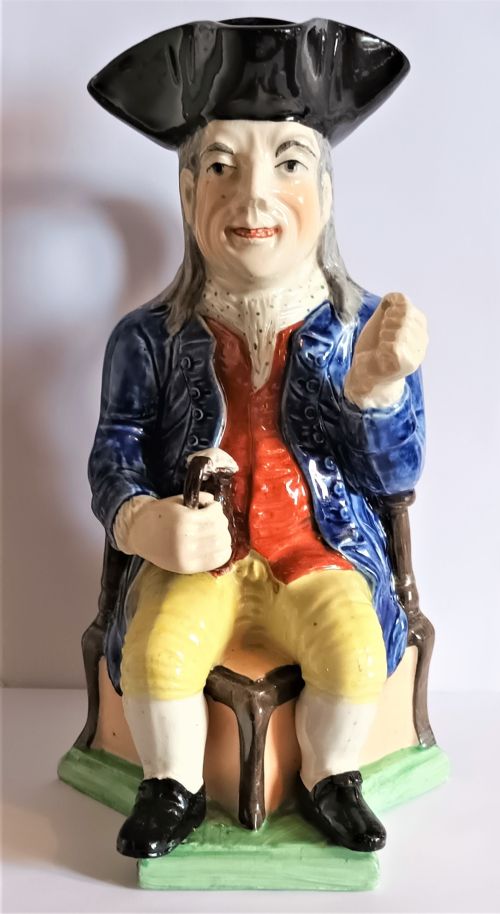
- Toby jug
- A ceramic jug modelled as a stout, cheerful eighteenth- or nineteenth-century person holding a mug or jug of ale. They remain central to British pottery traditions.
Multicoloured Staffordshire Pottery: Frequently Asked Questions
What are Staffordshire flatbacks?
Staffordshire flatbacks are figures designed with detailed fronts and flat, unglazed backs so they could sit flush against a wall.
Potters made them in moulds during the Victorian era to decorate mantelpieces across British homes.
How do I date a Staffordshire figure?
Dating relies on the style of clothing, historical subjects, and the type of ceramic body, such as pearlware or ironstone.
Victorian pieces often feature bright enamel colours and flat backs, while Georgian examples tend to show earlier pearlware glazes.
Were Toby jugs used for drinking?
Toby jugs served as functional drinking vessels for ale in homes and public houses during the Georgian and Victorian periods.
Over time, many transitioned into decorative display pieces rather than everyday tableware.
What is a spill vase?
A spill vase incorporates a small cylindrical holder beside a figure to store wooden splints used for lighting candles and fires.
They stood on hearths to keep spills dry and ready for daily use.