

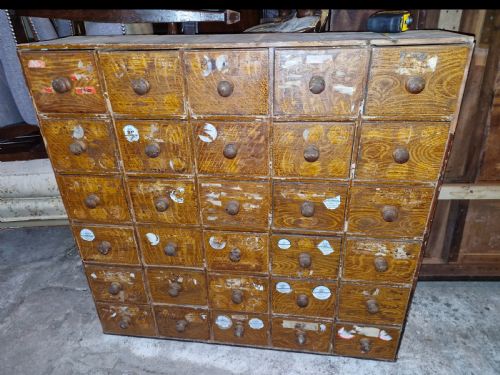
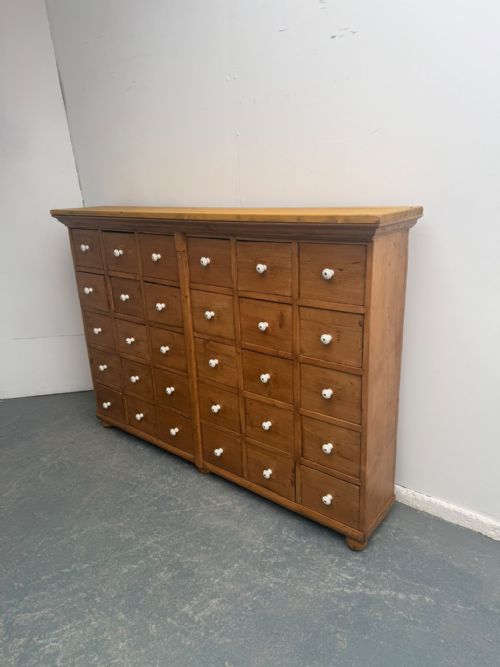
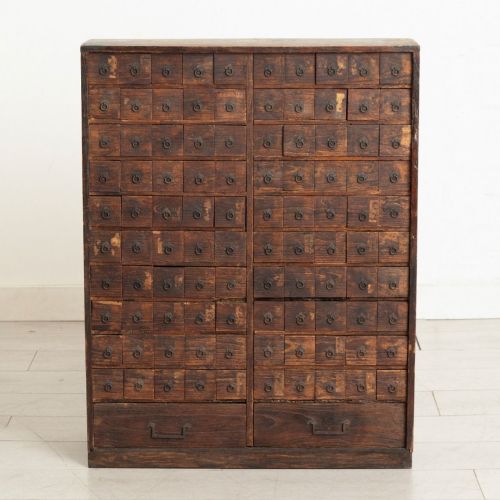
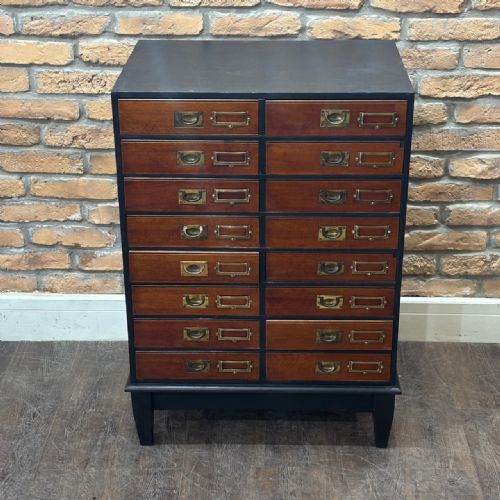
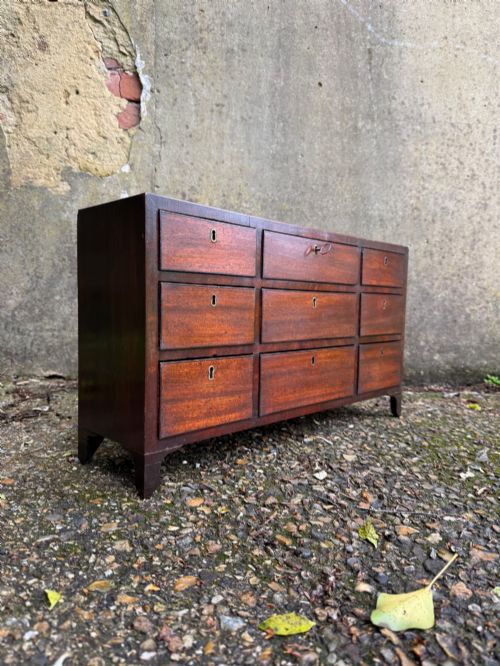


Multi Drawer Collector Chest
A multi drawer collector chest brings order to small specimens, and the pieces found here range from modest trade pine to substantial mahogany cabinets.
Multi Drawer Collector Chest
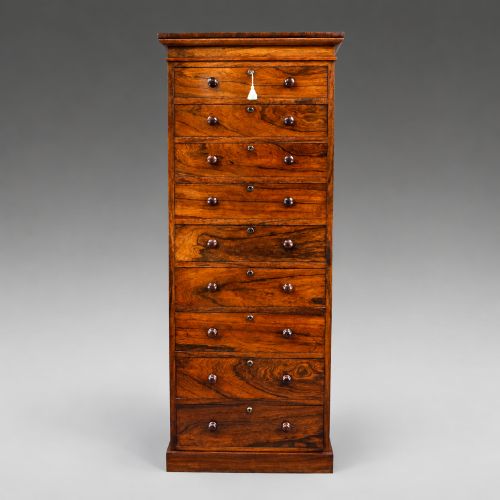
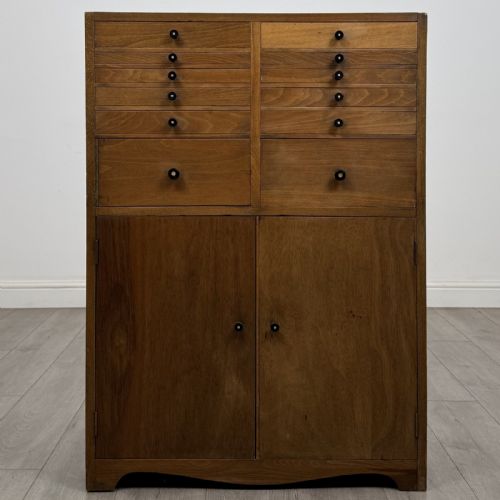
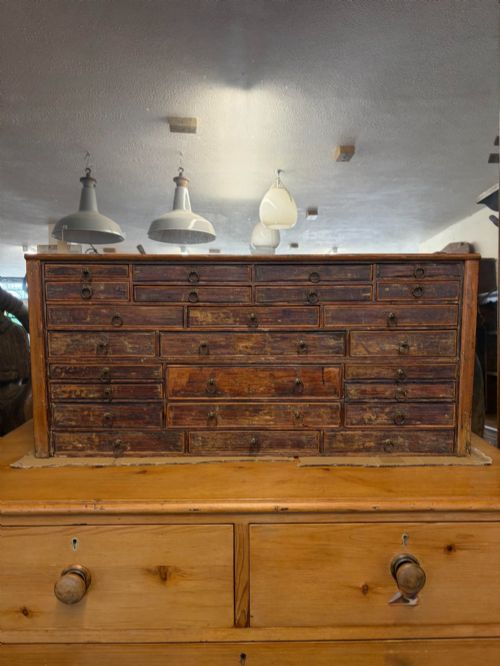
A multi drawer collector chest provides numerous shallow compartments originally built for natural history specimens, coins, or small goods. You will encounter forms varying from compact table models to massive banks with dozens of individual drawers.
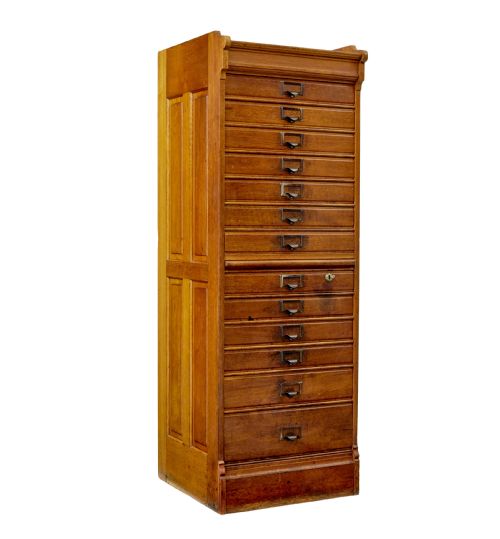
The pieces on this page span the Georgian, Victorian, and Edwardian eras, alongside later industrial and medical examples. Common domestic and commercial versions include apothecary chests, haberdashery units, and filing cabinets.
Originating from utilitarian workshops and specialist cabinet makers, these items served tradesmen, doctors, and serious hobbyists. Their enduring appeal lies in the sheer repetition of small, tidy handles and identical pulls.
How they were made
Makers relied heavily on solid hardwoods like mahogany and walnut for finer examples, while utility pieces utilised pine, deal, and oak. Drawer construction typically involved tight dovetail joints designed to withstand constant daily sliding.
Hardware additions such as brass drop handles, card holders, and small glass panels allow contents to be identified swiftly. Surfaces finished in polish, paint, or wax protect the timber from regular handling over decades.
Multi Drawer Collector Chest Retail Price Guide 2026
Typical asking prices for multi drawer collector chest among the pieces listed under this phrase on Sellingantiques today, from the lower quarter to the upper quarter. They describe what is for sale here now, not the wider market.
Listings feature periods spanning the Georgian era through the 1930s, utilising materials such as pine, mahogany, oak, teak, and walnut.
What varies in quality
The standard of timber selection and internal drawer fit distinguishes a high-grade specimen cabinet from a basic workshop bank. Superior pieces exhibit precise secondary woods and uniform grain across every single drawer front.
Original brasswork and intact glass panels elevate a piece well above those modified or stripped of their fittings. The integrity of the carcass frame and smooth movement of the drawers dictate the ultimate utility of the chest.
Luxmore's of Ilfracombe
The Multi Drawer Collector Chest Glossary
- Bank of drawers
- A multi-tiered set of numerous small compartments arranged vertically or horizontally. These units were standard in trades and offices before modern filing systems.
- Apothecary cabinet
- A specialist storage chest featuring many small drawers for herbs, medicines, or dry goods. They often display handwritten labels or remnant paper tags on the pulls.
- Haberdashery cabinet
- A commercial shop fitting designed with glass-fronted or shallow wooden drawers to display small items of clothing and sewing goods. They bring a distinct retail aesthetic to domestic interiors.
- Specimen chest
- A cabinet specifically built to house natural history collections such as insects, minerals, or botanical samples. The drawers are usually exceptionally shallow to protect delicate items.
- Dovetail joint
- An interlocking woodworking joint formed by alternating wedge-shaped fingers. This traditional method ensures drawer corners remain sturdy under frequent use.
Multi Drawer Collector Chest: Frequently Asked Questions
What were multi drawer collector chests used for?
These chests were designed to organise and protect large quantities of small items without cluttering a workspace. Owners stored everything from geological specimens and coins to medical supplies and haberdashery stock.
The large number of shallow compartments ensured that delicate or tiny objects remained separated and easy to locate. Today, they serve a similar organisational purpose in modern homes.
How do I date a collector chest?
Dating relies on observing the timber types, construction methods, and hardware styles present on the carcass. Georgian and Victorian pieces often feature hand-cut dovetails and solid mahogany, whereas later industrial examples utilise metal pulls and simpler softwood.
Secondary woods inside the drawers also provide clues regarding the period of manufacture. Patent stamps or makers' marks can narrow down the decade of production further.
Are these chests suitable for modern homes?
Their compact footprints and compartmentalised storage make them exceptionally practical for organising modern clutter. Collectors and homeowners use them for stationery, jewellery, craft supplies, and small keepsakes.
Placing one in a study, hallway, or kitchen introduces both historical character and functional surface space. The varied heights and widths of the available pieces accommodate different room proportions.
What is the difference between an apothecary and a collector cabinet?
Apothecary chests were built for medical and herbal storage, frequently featuring numerous small drawers labeled for specific ingredients. They emerged from chemist shops and dispensaries rather than private studies.
Collector cabinets generally catered to natural historians or numismatists who required dust-proof drawers for delicate display items. Both share a multi-drawer format but served distinct professional trades.