

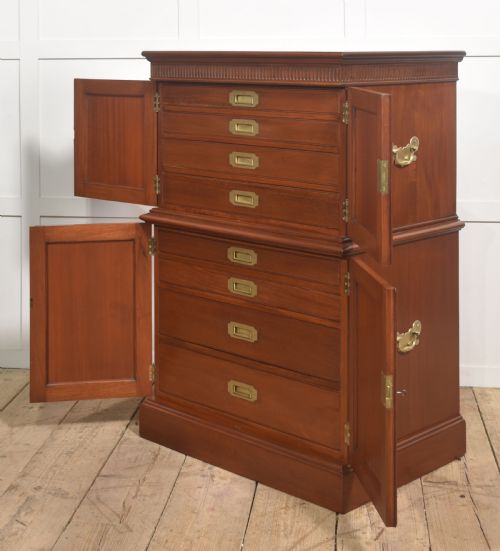


Brass Handle Specimen Drawers
Brass handle specimen drawers offer compact storage for small collections, bringing period craftsmanship into modern rooms.
Brass Handle Specimen Drawers
Brass handle specimen drawers comprise collectors cabinets, banks of drawers, and miniature chests that house natural history items and small objects. These pieces originate from various periods including the nineteenth century and the early twentieth century.
Buyers most frequently encounter Victorian examples alongside pieces dated from eighteen sixty through to nineteen thirty. The designs span standard Victorian styles, campaign influences, and Arts and Crafts movements.
How they were made
Cabinetmakers utilised hardwoods such as mahogany, walnut, and oak to construct the frames and internal drawers. These timbers provided the structural stability required for housing delicate specimens and small objects.
Brass fittings, including drop handles and scalloped pulls, were secured to the drawer fronts to facilitate frequent access. Glass elements appear on specialised cases designed to display contents while protecting them from dust.
Brass Handle Specimen Drawers Retail Price Guide 2026
Typical asking prices for brass handle specimen drawers among the pieces listed under this phrase on Sellingantiques today, from the lower quarter to the upper quarter. They describe what is for sale here now, not the wider market.
One exceptional nineteenth century microscope slide cabinet comes complete with two hundred and eighty slides ready for inspection.
What varies in quality
The grade of timber and the precision of the drawer construction define the upper tier of these pieces. Selection of figured woods like flame mahogany or rich walnut elevates the visual presence of a cabinet.
Hardware execution and structural integrity distinguish fine examples from simpler utility pieces. Well-fitted drawers running smoothly within solid oak or mahogany carcases demonstrate superior workshop practice.
The Brass Handle Specimen Drawers Glossary
- Specimen cabinet
- A piece of furniture fitted with multiple shallow drawers designed to organise natural history collections, minerals, or slides. These cabinets protect delicate items from light and dust.
- Wellington chest
- A tall narrow chest of drawers characterised by a hinged locking stile that secures all drawers simultaneously. This form often serves as a compact storage unit for collectors.
- Flame mahogany
- A veneer cut from the fork of the mahogany tree that creates a distinctive swirling flame pattern. Cabinetmakers utilised this timber on prominent surfaces to showcase decorative grain.
- Bank of drawers
- A multi-drawer unit originally intended for commercial or professional sorting rather than domestic use. These pieces provide substantial compartmentalised storage in a compact footprint.
Brass Handle Specimen Drawers: Frequently Asked Questions
What were specimen drawers originally used for?
Specimen drawers stored natural history collections, geological samples, insects, and microscope slides for study and display. Naturalists and collectors relied on these compartmentalised banks of drawers to keep fragile items organised and protected.
Over time, these cabinets found homes with collectors of various small objects, medals, and jewellery who required secure and orderly storage.
How do I date a Victorian specimen cabinet?
Dating relies on timber choices, construction techniques, and stylistic markers recorded across the nineteenth century. Pieces from eighteen sixty often feature rich walnut and specific brass hardware designs.
Later Victorian and Arts and Crafts examples from eighteen eighty introduce distinct aesthetic movements, while nineteen ten and nineteen thirty pieces show evolving hardware and timber treatments.
Are these drawers suitable for modern jewellery storage?
The shallow drawer depths and compartmentalised layouts make these cabinets ideal for organising rings, watches, and small accessories. The solid wood construction protects valuables from everyday wear.
Placing a jeweller cabinet or miniature chest on a dressing table provides practical storage with period character.
What is the difference between an oak and a mahogany cabinet?
Oak cabinets from the Victorian and Arts and Crafts periods display prominent grain patterns and robust structural properties. Mahogany and flame mahogany versions offer smoother surfaces and deeper reddish-brown tones.
Both timbers provide the durability necessary for housing heavy banks of small drawers.