

Brown Tabletop Drawers
Brown tabletop drawers span miniature chests, dressing table mirrors, and small cabinets from the eighteenth and nineteenth centuries.
Brown Tabletop Drawers
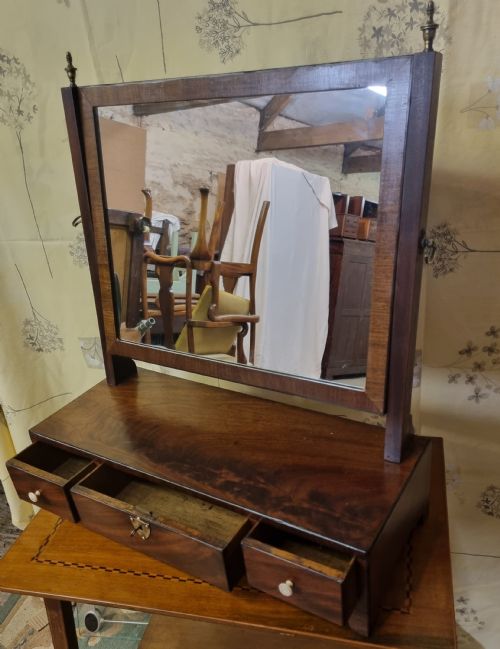
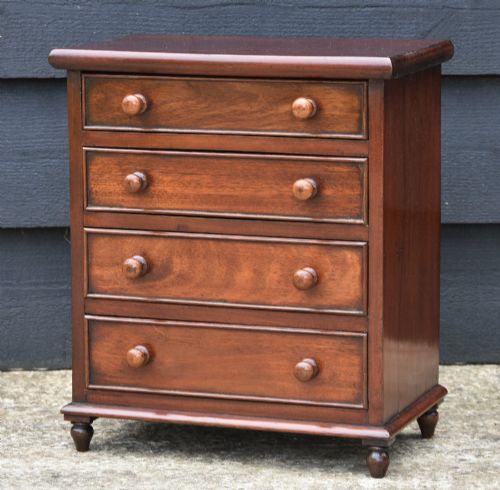
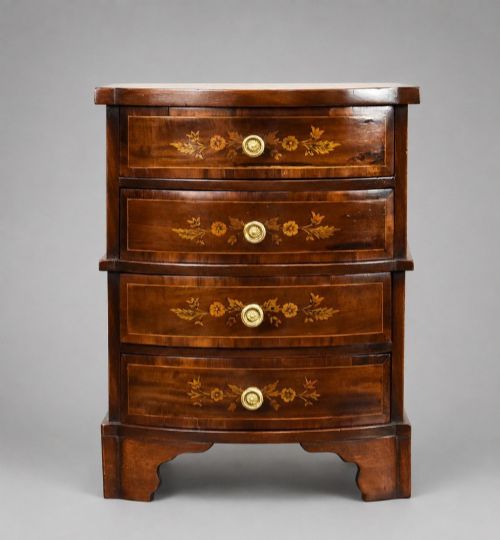
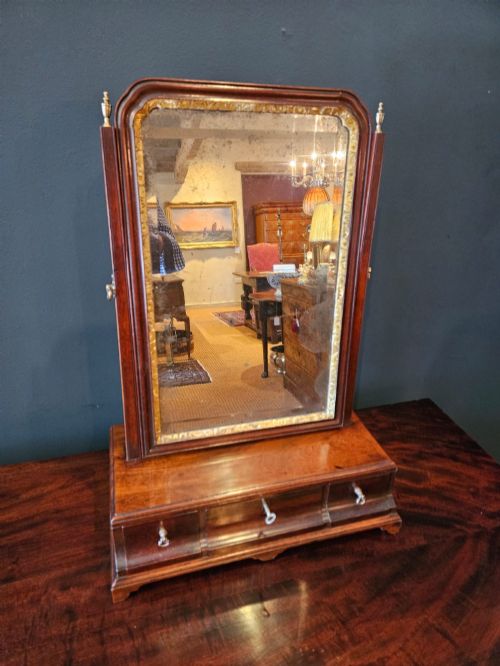
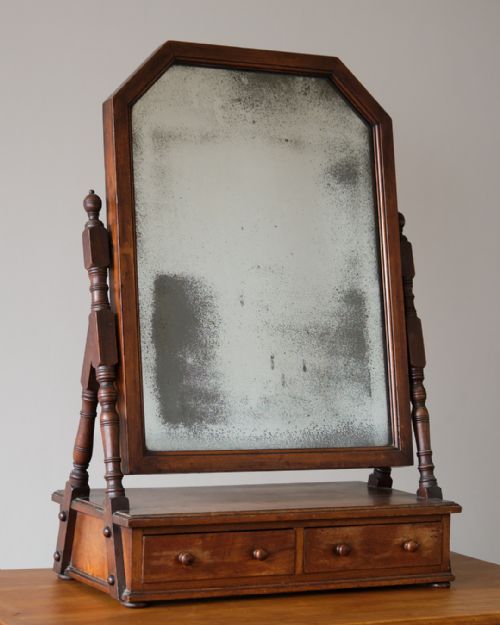
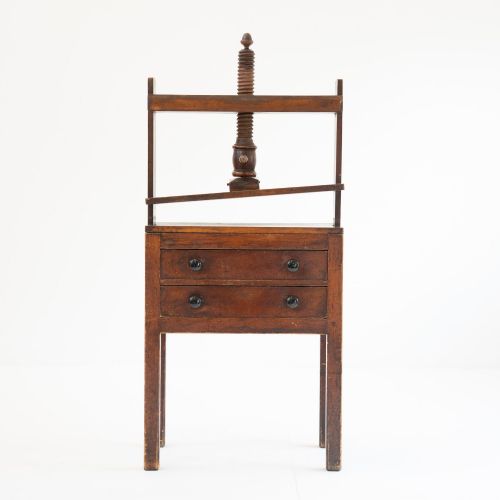
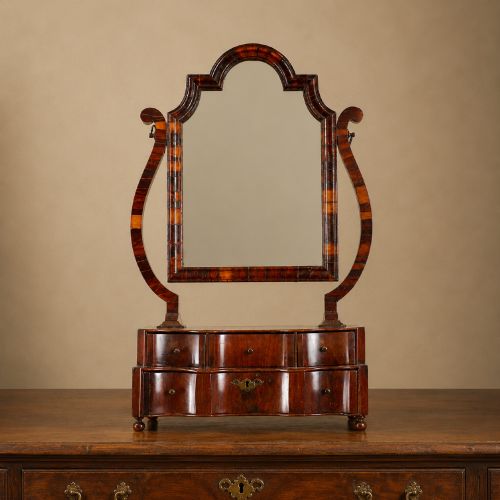
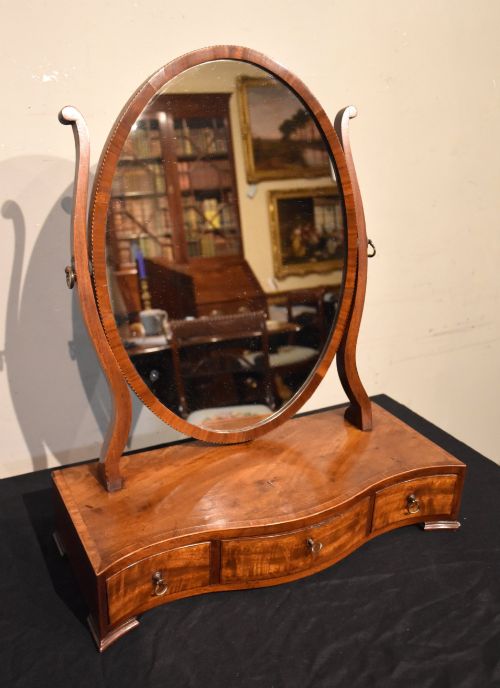
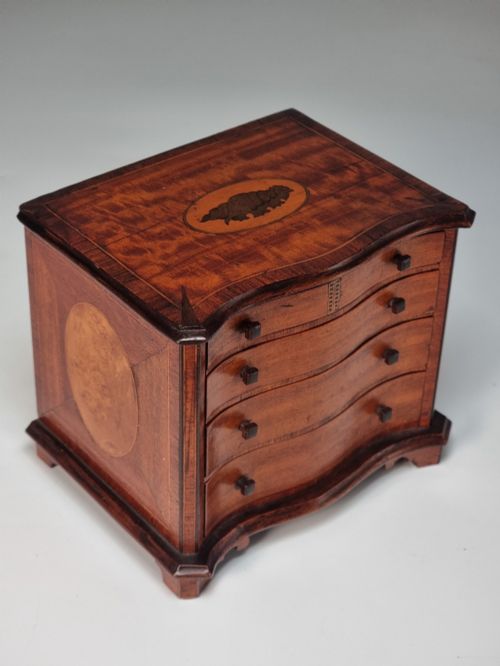
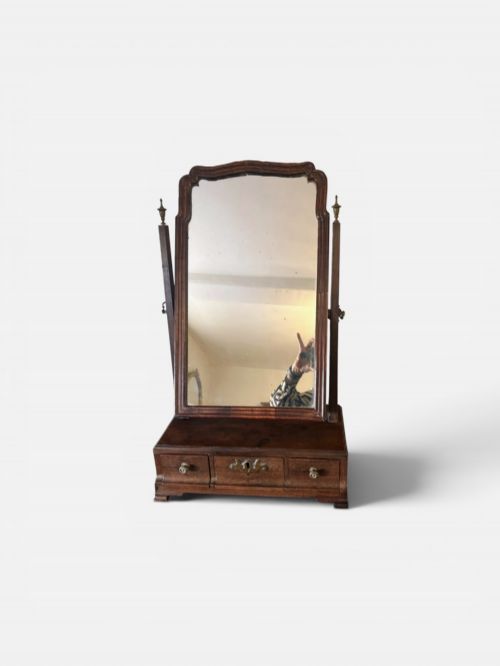
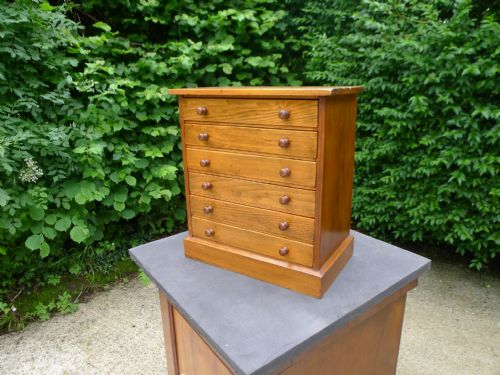
Brown tabletop drawers encompass compact pieces designed to sit on larger furniture, including miniature chests of drawers, dressing table mirrors with fitted drawer bases, and small storage cabinets. These items serve practical organisational needs on a small scale, ranging from jewellery storage to desktop filing.
The selections encountered here lean heavily towards nineteenth-century and Georgian pieces, with Victorian and Edwardian examples appearing frequently alongside earlier eighteenth-century designs. Mahogany and walnut dominate the forms, supplemented by pine, satinwood, and fruitwood.
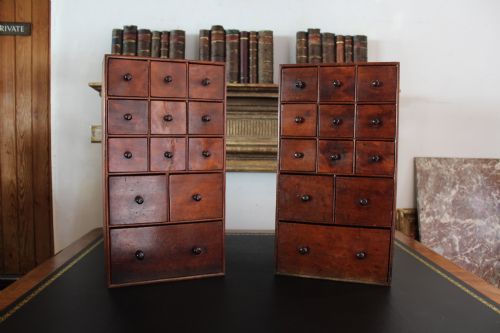
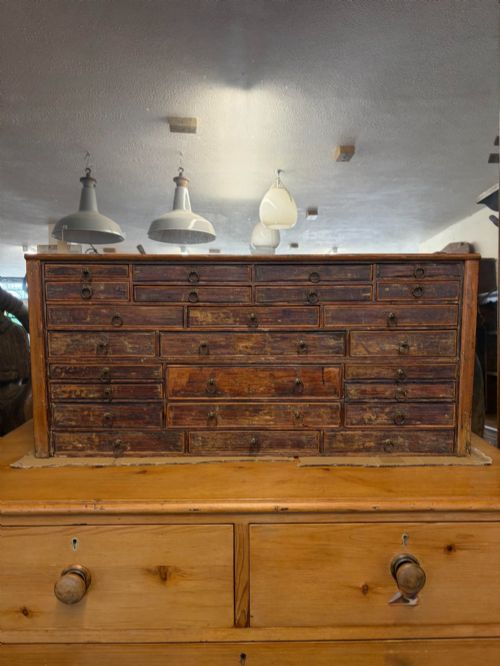
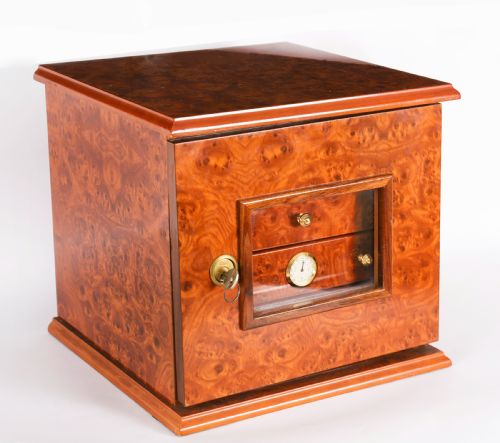
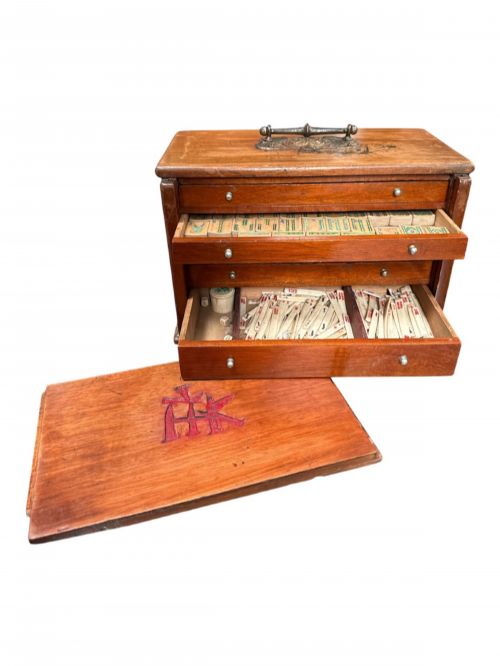
Miniature chests and toilet mirrors form the backbone of the selection, accompanied by specialist pieces such as apothecary chests, collectors' cabinets, and cigar humidors. Each piece reflects the domestic and professional storage habits of its period, scaled down for tabletop use.
How they were made
Cabinet makers utilised dense hardwoods like mahogany, walnut, and satinwood, frequently employing veneers and crossbanding to create figured surfaces on small drawer fronts and mirror frames. Secondary timbers such as pine appear on interior elements and carcases.
Joinery techniques involve dovetailing for drawer construction and precise mortise and tenon joints for frames, ensuring stability across miniature scales where tolerances are tight. Brass handles, escutcheons, and swing mirror pivots provide the metalwork detailing.
Surface finishes rely on traditional polish and wax, bringing out the natural grain patterns of burr elm, fruitwood, and laburnum without obscuring the timber.
Listings feature 18th-century walnut and mahogany pieces alongside 19th-century mahogany, pine, and satinwood examples.
What varies in quality
The standard of timber selection largely defines the upper tier of these pieces, where cabinet makers deployed exceptionally figured veneers, matching grain patterns symmetrically across drawer fronts and framing elements. Lesser examples utilise plain or hastily matched timbers with less visual depth.
The refinement of the joinery and hardware execution separates workshop output. Finely cut dovetails, neatly fitted internal dividers, original brasswork, and subtle crossbanding distinguish pieces produced by established makers from simpler utilitarian items.
Heal And Sons·A F Lloyd
The Brown Tabletop Drawers Glossary
- Toilet mirror
- A small swing mirror mounted on a box base containing one or more drawers. These pieces sat atop dressing tables to assist with grooming.
- Miniature chest of drawers
- A small-scale chest built either as a master craftsman's demonstration piece or as a specialised receptacle for jewellery and small valuables. They replicate the proportions of full-sized furniture in miniature.
- Crossbanding
- A decorative border technique where thin strips of veneer are laid perpendicular to the surrounding grain. This frames drawer fronts and mirror surrounds with a contrasting grain direction.
- Apprentice piece
- A small item of furniture created by a learner to demonstrate mastery of joinery and woodworking techniques to a guild or master. These often replicate standard furniture forms on a reduced scale.
- Collectors cabinet
- A small multi-drawer housing unit designed to store specimens, slides, or small objects. They feature banks of shallow drawers tailored to specific collections.
Brown Tabletop Drawers: Frequently Asked Questions
What were miniature chests used for?
Miniature chests served various domestic functions, acting as jewellery boxes, desktop organisers, or receptacles for keepsakes in period homes.
Some were built by trainees to prove their woodworking capabilities before entering a trade guild.
How do I date a toilet mirror?
Dating relies on examining the timber species, the profile of the mirror frame edges, and the construction of the drawer boxes.
Earlier pieces from the eighteenth century utilise walnut and simpler box bases, while nineteenth-century versions frequently employ mahogany with serpentine fronts.
Are tabletop drawers sturdy enough for daily use?
Most pieces handle light everyday storage, such as stationery or small accessories, without issue.
Care should be taken with antique hinges, drawer stops, and delicate brass pivots on swing mirrors to prevent strain.
What is the difference between a toilet mirror and a dressing mirror?
Toilet mirrors specifically feature a built-in drawer base beneath the pivoting mirror frame.
Dressing mirrors can refer to larger cheval glasses or tall table-standing units with varying base configurations.