



Mounted Bird in Case
A mounted bird in case brings preserved specimens into domestic rooms through Victorian natural history displays.
Mounted Bird in Case
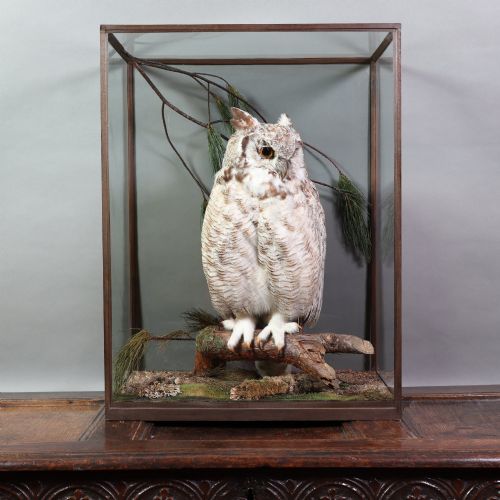
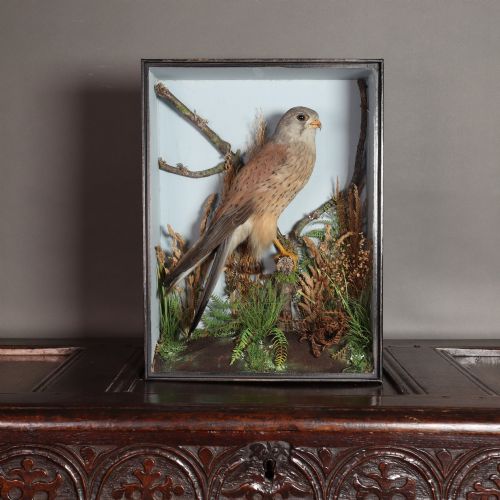
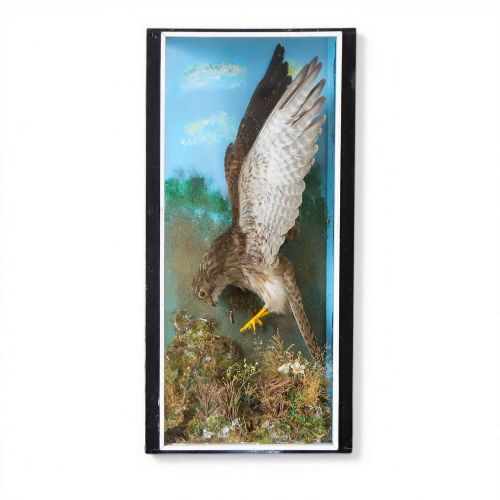
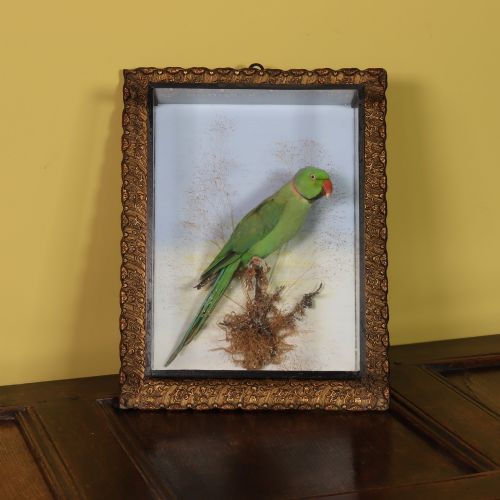
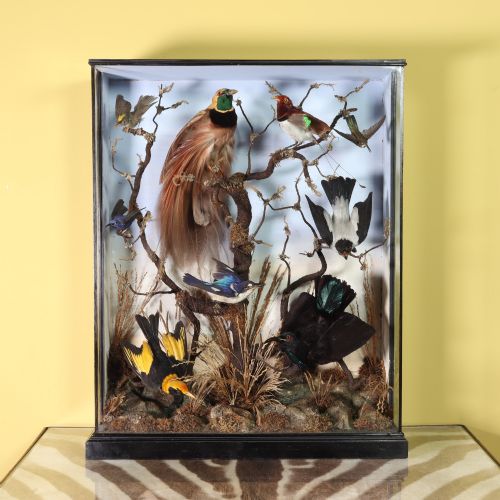
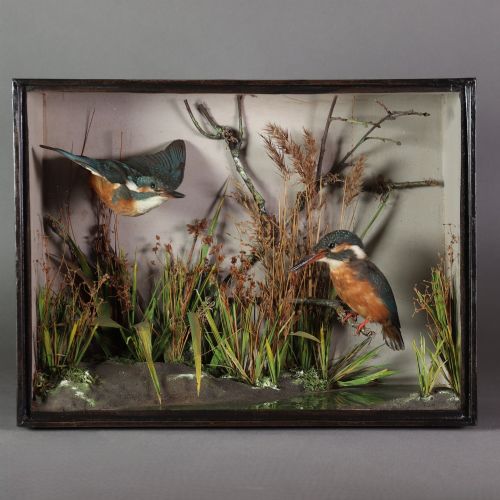
A mounted bird in case represents the Victorian tradition of taxidermy display, housing avian specimens within glass-fronted wooden boxes, frames, or domes. These pieces originate primarily from the nineteenth and early twentieth centuries, spanning periods from the 1870s to the 1920s.
Collectors encounter single specimens such as owls, kestrels, and kingfishers, alongside complex dioramas containing multiple birds. Pair compositions and mixed species groupings from various global regions also appear regularly across the selection.
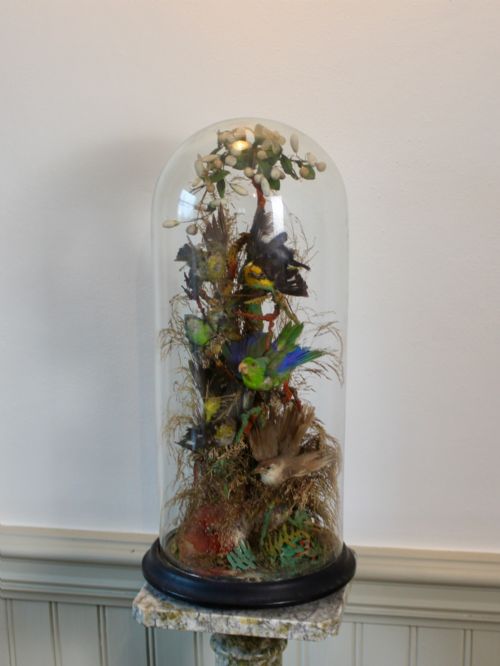
The forms range from simple oak or painted display cases to picture frames and circular glass domes. Most examples reflect natural history study and curiosity cabinet decoration popular in British homes during the Victorian and Edwardian eras.
Materials and construction
Taxidermists utilised preserved bird specimens arranged alongside dried vegetation, moss, and paper components to recreate natural habitats inside protective glass enclosures. Wood forms the primary structure of the cases, which frequently feature painted interiors to set snow scenes or woodland backdrops.
Glazing protects the delicate feathers from dust and environmental damage while allowing clear visibility from the front and sides. The mounting technique secures the birds firmly to internal bases, maintaining realistic postures whether perched or grouped in composition.
Listings feature Victorian, Edwardian, and early 20th-century pieces utilising glass, wood, feathers, moss, and preserved specimens.
Assessing quality and origin
Quality separates professional studio work from anonymous output, largely determined by the skill involved in taxidermy preparation and taxidermist attribution. Documented makers such as Rowland Ward, James Gardner, and T. E. Gunn command higher regard through their established workshop standards.
The complexity of the composition influences distinction, moving from single common specimens to multi-bird dioramas or exotic species from New Guinea and South America. The condition of the plumage and the original integrity of the wooden case and glass enclosure further shape the standing of each piece.
Rowland Ward Ltd·T. E. Gunn·James Gardner·William Bazeley and Sons·W.F. Homer London
The Mounted Bird in Case Glossary
- Taxidermy
- The art of preparing, stuffing, and mounting the skins of animals for display. This practice formed the foundation of nineteenth-century natural history collections.
- Diorama
- A three-dimensional scene depicting wildlife within a constructed habitat. These settings often include painted backgrounds, moss, and dried vegetation behind glass.
- Specimen
- An individual animal or plant used as an example of its species for scientific study or display. Preserved specimens form the central focus of these historical cases.
- Dome
- A rounded glass cover placed over a mounted display to protect the contents from dust. Domes sit upon wooden bases to enclose circular arrangements.
- Curiosity cabinet
- A collection of diverse natural history items and oddities assembled for display. Mounted birds served as prominent decorative pieces within these domestic cabinets.
Mounted Bird in Case: Frequently Asked Questions
Where should I place these cases?
Keep mounted birds away from direct sunlight to prevent feather colours from fading over time. Stable room temperatures protect the dried organic materials from humidity fluctuations.
Position cases on sturdy furniture or shelves where accidental knocks are unlikely, preserving both the fragile glass and the internal arrangement.
How do I identify the maker?
Look for paper trade labels pasted onto the backboards or interior bases of the wooden cases. These signatures often name the taxidermist and their workshop location.
Unsigned pieces rely on stylistic traits, framing methods, and traditional mounting techniques associated with specific regional studios of the period.
Are these birds ethically sourced?
Historical specimens reflect nineteenth and early twentieth-century collecting practices focused on natural history study and domestic decoration. The birds originate from periods long before modern conservation legislation.
Acquiring antique taxidermy preserves existing historical artefacts without creating new demand for contemporary wildlife specimens.