


Mountain Landscape Oil Painting
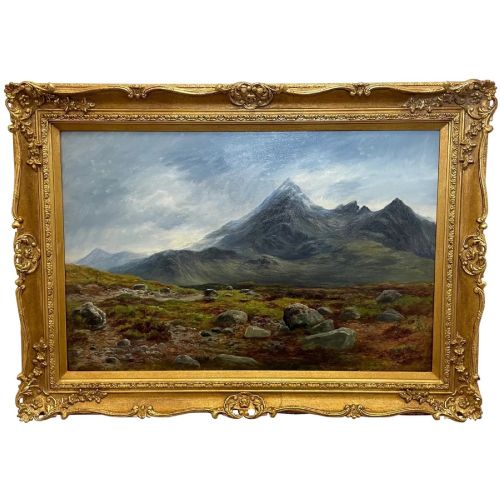
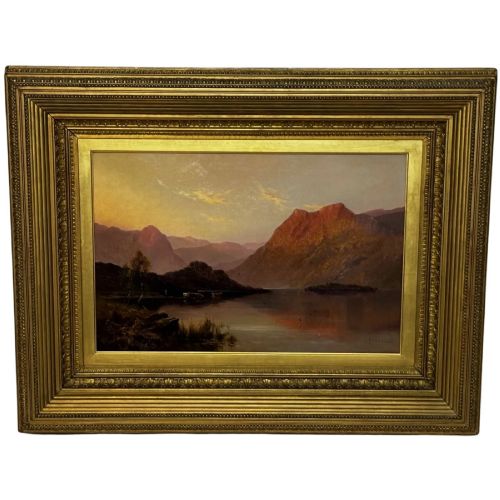
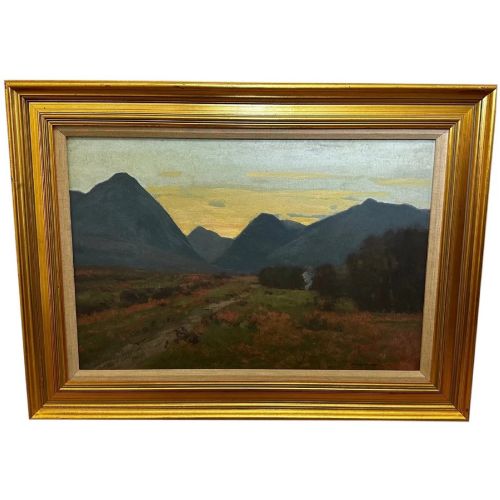
These mountain landscape oil painting works capture craggy peaks and quiet lochs through oils on canvas and wood panel.

Mountain Landscape Oil Painting
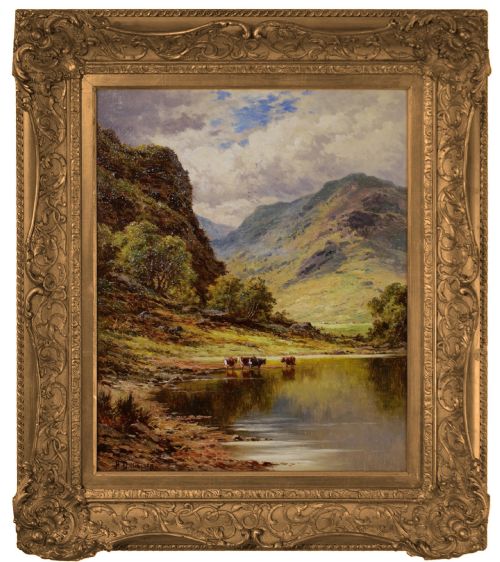
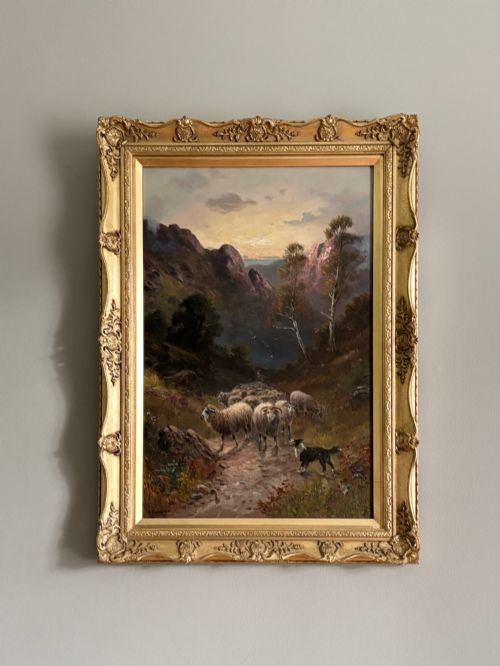
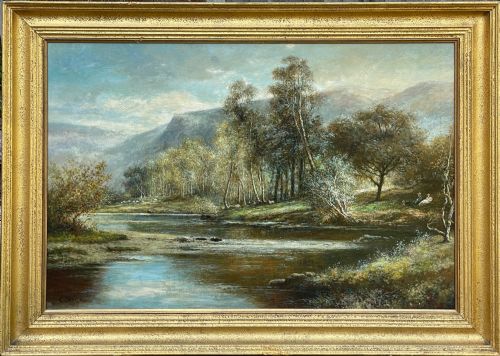
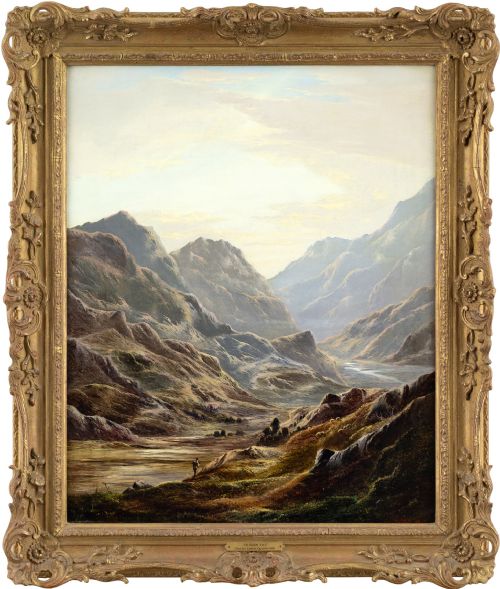
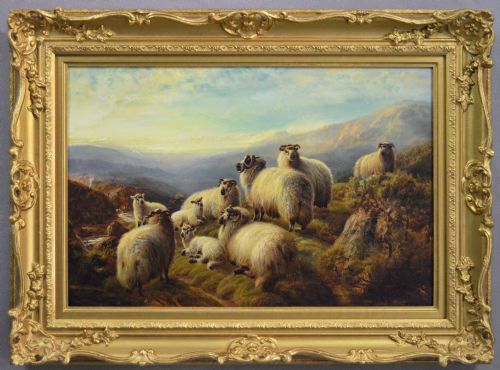
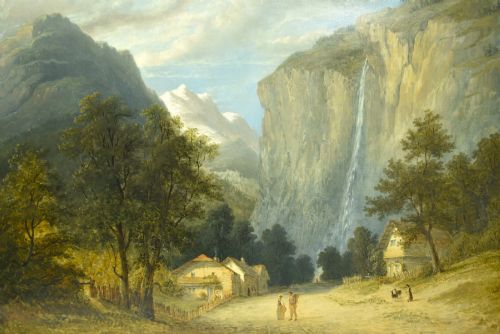
A mountain landscape oil painting records elevated terrain, from Scottish highlands and Welsh valleys to Bavarian castles and continental summits. The subjects frequently incorporate lakes, rivers, cattle, figures in the foreground, and distant ranges rendered in naturalistic detail.
The pieces span the Victorian era, the nineteenth century, and mid-century modern periods. Buyers encounter nineteenth-century British and continental school canvases alongside twentieth-century treatments like expressionism and impressionism.
Compositions range from large gilt-framed works intended for formal interiors to smaller panels on wood or board depicting intimate river scenes and moonlit torrents.
Materials and Techniques
Artists apply oil paint to prepared supports including canvas, wood panels, canvas laid onto board, and gesso grounds. Many historical works incorporate thick impasto application to build texture in crags and foliage.
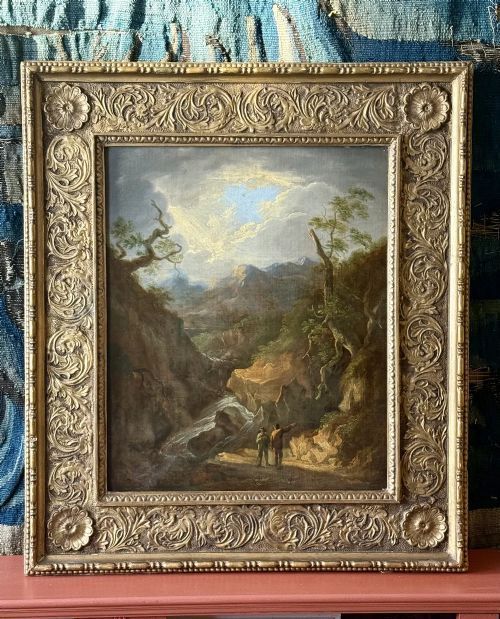
Surviving works retain their original housing, utilising carved giltwood frames, gesso ornamentation, and fabric slips to complement the canvas.
Retail Price Guide 2026
Typical UK retail prices for mountain landscape oil painting, calculated from the Sellingantiques database of over a million retail prices indexed since 2003. This retail price guide relies exclusively on Sellingantiques data; no external sources or auction records are used, so the figures do not describe the wider market.
Several Victorian artists populated their grand alpine vistas with remarkably tiny cows and wandering travellers.
Assessing Quality
The success of a mountain landscape oil painting rests upon atmospheric depth, handling of light across water and peaks, and anatomical precision in figures and cattle. Stronger examples command attention through confident brushwork and balanced compositional weight.
The integrity of the original support and surface condition distinguish superior works, alongside the presence of period-appropriate gilt framing that suits the scale of the canvas.
Karl Herrle·Sidney Richard Percy·Edward John Niemann·James Baker Pyne·Rudolf Giffinger·Henry Cheadle·James Peel·Arthur Knowles·Archer L Smith·Frank Hider·Denis Peploe·Francis E Jamieson·Clement Castelli·William J Solby·Thomas Barker Of Bath·Henry Charles Heath·Charles W Oswald·Colum Robert Gore Booth·Benjamin Hold
The Mountain Landscape Oil Painting Glossary
- Impasto
- Paint applied thickly to a surface, leaving visible brush or palette knife marks that catch the light. This technique adds tactile relief to rocky crags and turbulent water.
- Canvas
- Woven fabric stretched across a wooden frame to serve as a painting support. It provides a flexible surface for oil pigments.
- Gesso
- A plaster-like mixture applied to wood panels or frames to prepare a smooth surface for painting or gilding. It gives structural rigidity and a bright base.
- Giltwood
- Wood carved and coated with a thin layer of gold leaf or metallic paint. It frames numerous nineteenth-century paintings.
Frequently Asked Questions
How do I date an antique mountain painting?
Dating relies on stylistic clues, canvas preparation, stretcher construction, and artist signatures where available. Nineteenth-century works frequently feature heavier gilt frames and traditional naturalism.
Twentieth-century examples introduce broader brushwork, board supports, and impressionist or expressionist mark-making that departs from Victorian academic detail.
Where were these landscape subjects painted?
Artists sought subjects across the British Isles, recording Scottish lochs, Welsh valleys, and English lakes alongside continental ranges in Germany and beyond. These locations reflected a Victorian fascination with picturesque and sublime geography.
Many compositions add narrative elements like cattle watering or travellers resting beside mountain rivers to anchor the vast scenery.
What is the difference between canvas and panel?
Canvas provides a woven, slightly resilient surface stretched over a wooden frame, allowing for expansive historical compositions. Wood panels and boards offer a rigid support favoured for smaller, portable landscape studies.
Both materials require stable environmental conditions to prevent cracking in the oil paint layer over time.
How should I hang an oil painting in a gilt frame?
Gilt frames require secure wall fixings suited to the combined weight of the wood, gesso, and stretched canvas. Positioning away from direct sunlight and heat sources protects the oil pigments and the delicate gilt surface.
Maintaining stable indoor humidity prevents warping in the wooden stretcher bars and panel supports.