



Mountain Lake Painting
A mountain lake painting captures sweeping topography and reflective water, drawing the eye toward distant peaks and tranquil shores.
Mountain Lake Painting
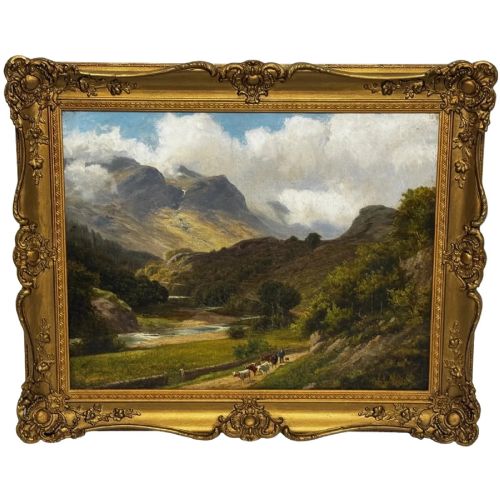
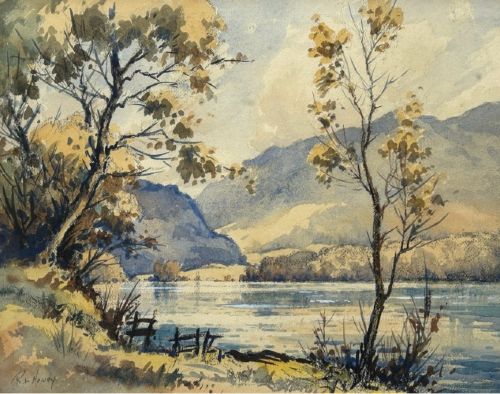
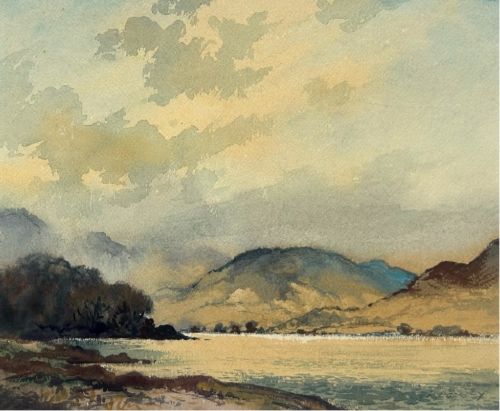
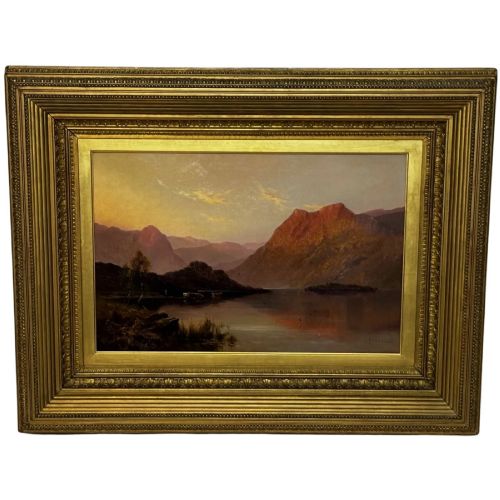
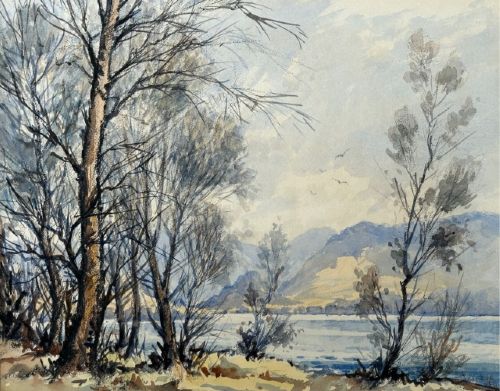
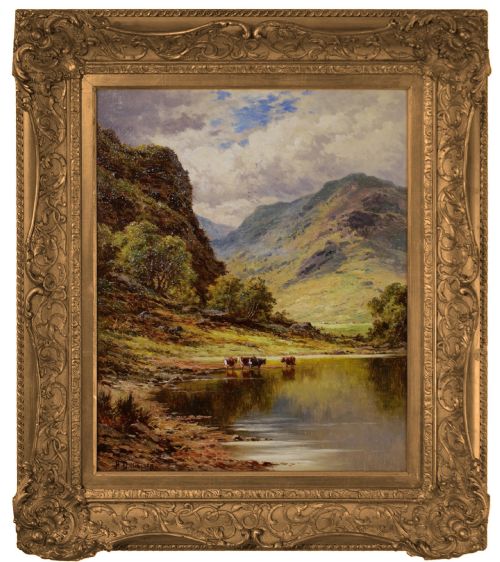
A mountain lake painting depicts serene bodies of water bordered by dramatic peaks, capturing topography from British, European, and New Zealand vistas.
The selections available range from detailed Victorian oils to mid-century watercolours and gouache works, reflecting changing stylistic approaches across decades.
Common subjects include specific regional landscapes such as the English Lake District, Scottish highlands, and Alpine ranges rendered on canvas or paper.
How they were made
Artists utilised oil on canvas or panel to build rich, textured surfaces, often applying pigment thickly to convey the rugged weight of stone and earth.
Watercolour and gouache on paper were frequently employed for lighter, more fluid depictions of atmospheric weather and translucent lake waters.
Finished works were typically housed in decorative wood, gesso, or giltwood frames that complemented the traditional subjects.
Mountain Lake Painting Retail Price Guide 2026
Typical asking prices for mountain lake painting among the pieces listed under this phrase on Sellingantiques today, from the lower quarter to the upper quarter. They describe what is for sale here now, not the wider market.
Listings span from the Victorian era through the mid-twentieth century, utilising oil, watercolour, and gouache on canvas, paper, and panel.
What varies in quality
The handling of natural light and atmosphere separates accomplished compositions from more formulaic topographical records.
Mastery is evident in the confident brushwork and tonal depth used to render distant mountain ranges and reflective water surfaces.
Alfred Fontville de Breanski·Robert Leslie Howey·Benjamin Williams Leader·Sidney Richard Percy·James Baker Pyne
The Mountain Lake Painting Glossary
- Gouache
- An opaque watercolour paint consisting of pigment, water, and a binding agent such as gum, producing a flat, matte finish.
- Giltwood
- Wood carved and coated with gold leaf or a metallic gilding finish, commonly used for traditional picture frames.
- Canvas
- A heavy woven fabric stretched across a wooden frame to serve as a sturdy support for oil paintings.
- Panel
- A flat piece of wood or board used as a rigid painting surface by artists working in oils.
- Watercolour
- A painting method where water-soluble pigments are suspended in a water-based solution on paper.
Mountain Lake Painting: Frequently Asked Questions
How do I identify the region in the painting?
Artists often inscribed specific geographical locations onto the reverse of the canvas or within the lower margins of the composition.
Local landmarks, flora, and architectural hints can also point toward regions like the Lake District or Scottish highlands.
Are these works painted outdoors?
Many Victorian and early twentieth-century artists made initial sketches in the open air to capture shifting light and weather conditions.
Studio finishing was then common for larger canvases intended for formal exhibition and sale.
How should I display a framed canvas?
Display paintings away from direct sunlight and sudden humidity shifts to protect both the pigmented surface and the underlying support.
Ensure wall fixings are rated to support the weight of heavy giltwood or wood frames.
What is the difference between oil and watercolour?
Oil paint offers a rich texture and extended working time, allowing artists to build dense layers of colour over weeks.
Watercolour relies on transparent washes on paper, capturing rapid atmospheric effects and delicate light.