



Shepherd Landscape Canvas
These shepherd landscape canvas works capture pastoral scenes of flocks and herds, offering a quiet window into traditional rural life that collectors prize.
Shepherd Landscape Canvas
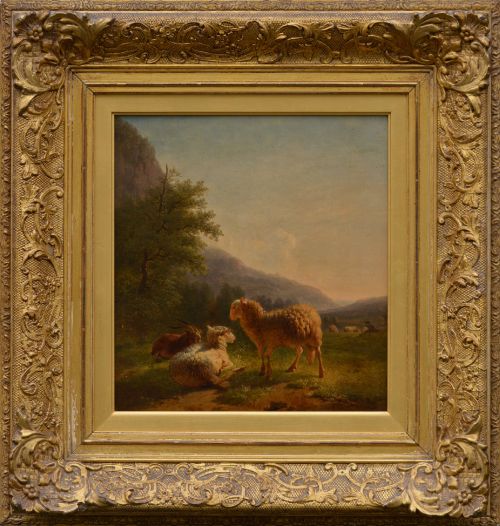
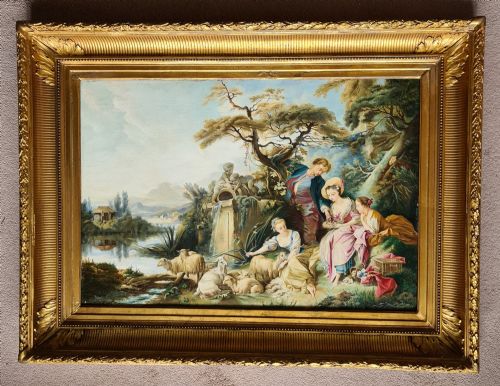
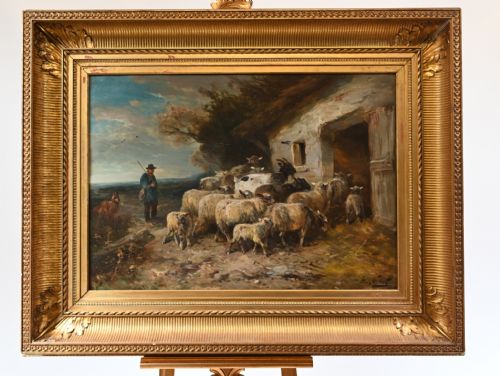
A shepherd landscape canvas depicts pastoral rural scenes featuring shepherds tending flocks, cattle, or sheep in settings ranging from English lanes to French ideal landscapes. These artworks span periods from the early nineteenth century through to mid-century works, encompassing regional British and European traditions.
Buyers will encounter oil paintings on canvas framed in wood or giltwood, often incorporating gesso details. The subjects vary from realistic portrayals of sheep and drovers to romanticized pastoral views with mountains, lakes, or barns.
Materials and construction
These works use oil paint applied to canvas supports, which are stretched over wooden frames and frequently housed within giltwood or gesso frames. The combination of oil paint and gold leaf or gesso detailing provides the textural depth characteristic of these periods.
The technique relies on layered oil pigments to build light and shadow across pastoral vistas, capturing the atmosphere of rural fields, wooded paths, and heather landscapes.
Shepherd Landscape Canvas Retail Price Guide 2026
Typical asking prices for shepherd landscape canvas among the pieces listed under this phrase on Sellingantiques today, from the lower quarter to the upper quarter. They describe what is for sale here now, not the wider market.
Recorded periods span from the early 19th century through 1950, encompassing British Impressionism and European realism.
Judging the quality
Quality in these pastoral oils lies in the handling of light, brushwork fluidity, and the naturalistic depiction of animals and figures within their environment. Finer examples display confident draughtsmanship in the rendering of sheep, flocks, and landscape depth.
The preservation of the original canvas and the craftsmanship of the period frame, such as carved giltwood or gesso ornamentation, also distinguish superior examples from standard works.
Eugène Verboeckhoven·Henry Schouten·Giulio Cecchini·Herbert Royle·George Turner·Owen Bowen·William Greaves·Anthonij Anton Mauve·David Cox Senior·Baxter Morgan
The Shepherd Landscape Canvas Glossary
- Canvas
- A heavy woven fabric used as a surface for oil painting. It provides the flexible yet durable foundation for the pigment layers.
- Giltwood
- Wood that has been treated with a thin layer of gold leaf or gold paint. This finish commonly frames nineteenth-century oil paintings to enhance their visual weight.
- Gesso
- A plaster-like mixture applied to wood or canvas to prepare a smooth surface for painting or to build up decorative frame mouldings. It creates a solid base for subsequent gilding or paint.
- Pastoral
- A genre of art that idealizes rural life, shepherds, and agricultural settings. These scenes emphasise tranquility and harmony between humans, animals, and nature.
Shepherd Landscape Canvas: Frequently Asked Questions
What periods do these paintings date from?
The available and archived pieces span the nineteenth century, including specific dates from the 1860s, 1890s, and early twentieth-century decades up to mid-century.
These dates reflect movements such as British Impressionism, Romanticism, Realism, and pastoral traditions.
How were these canvas works framed?
Many of these oil paintings retain their period frames constructed from wood, often finished with giltwood or decorative gesso moulding.
Original framing complements the artwork and indicates the historical presentation style of the nineteenth and early twentieth centuries.
Where were these pastoral scenes painted?
The evidence shows origins across Britain, Belgium, and France, depicting regional settings such as Wharfedale, Provence, and various wooded paths or lowland pastures.
European and British artists recorded these distinct rural topographies through oil on canvas.
What subjects besides shepherds appear?
Alongside shepherds and their flocks of sheep, these canvases feature cattle, cowherds, farmsteads, and natural elements like mountains, lakes, and heather landscapes.
These components combine to create traditional pastoral and winter droving scenes.